
Legal SEO is brutally competitive.
Fighting for rankings at the top of Google can be a frustrating (and expensive) process.
And the immigration niche keeps getting more crowded. As of January 2025 there were 53.3 million immigrants living in the U.S. — the largest number ever recorded. Every one of them is a potential client typing a question into Google or ChatGPT right now.
Over the last 10 years we've perfected the process — we've helped countless law firms get more customers from Google.
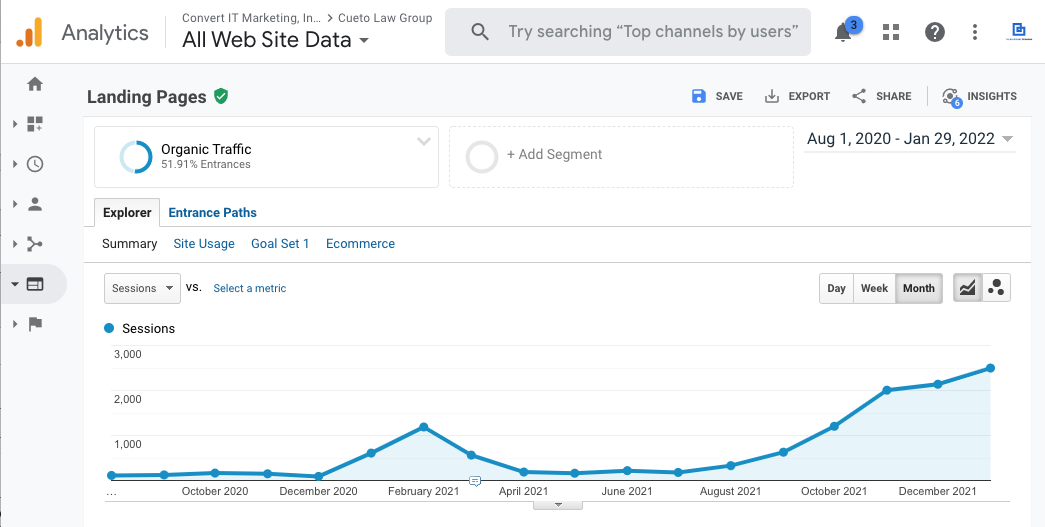
A screenshot of the increase in Google traffic for one of our law firm clients, Cueto Law Group.
We've since done the same for immigration firms like Kingwell Immigration Law, whose organic traffic grew 322% after a single SEO Sprint™. We'll use Kingwell as our working example alongside the audit below.
Within the legal industry, there are nuances. A DUI attorney requires a slightly different approach than a divorce attorney.
In this post, we're going to break down the specific process of how to rank an immigration attorney's website — then hand you 13 tips you can act on today.
Let's get into it.
The 3-Part SEO Process
For demonstration purposes, we've chosen to use the website of George Giosmas, an immigration attorney in Hollywood, Florida.

Our analysis always focuses on the 3 core parts of an SEO strategy:
- Technical SEO
- Content (web copy, landing pages, blogs)
- Links (also known as backlinks)
Immigration has one extra wrinkle: a huge share of your clients search in Spanish, and more of them start their research in AI tools every month. We cover both below. First, a few goals to keep front of mind.
Campaign Goals
For an immigration attorney wanting to win new clients and increase revenue, the goals of SEO are:
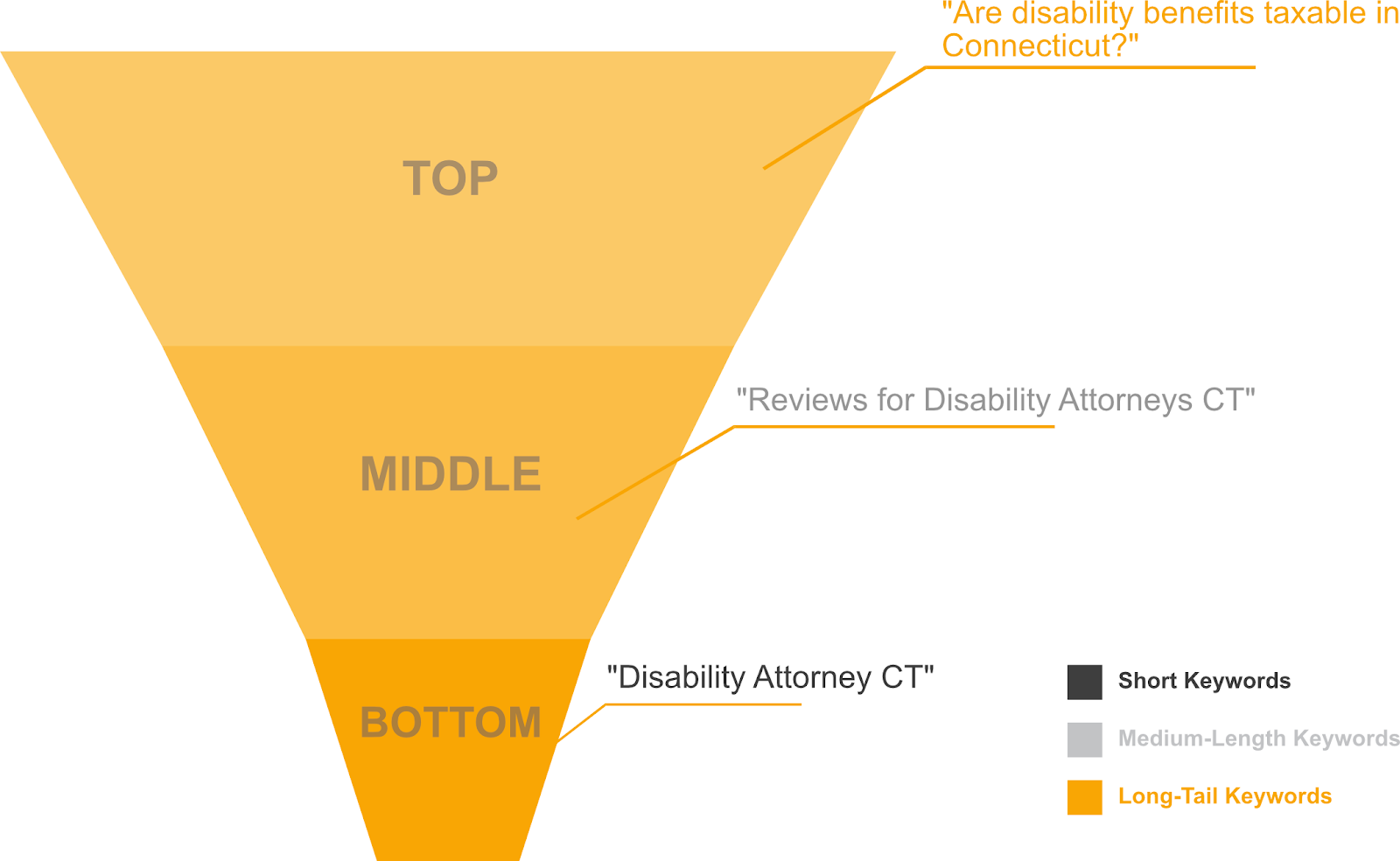
- Increase rankings for bottom-funnel keywords (e.g. “immigration attorney South Florida”). These pages convert visitors into clients.
- Rank top-of-funnel keywords to generate more warm inbound leads from people actively looking for help.
- Increase reach and brand awareness in your local market.
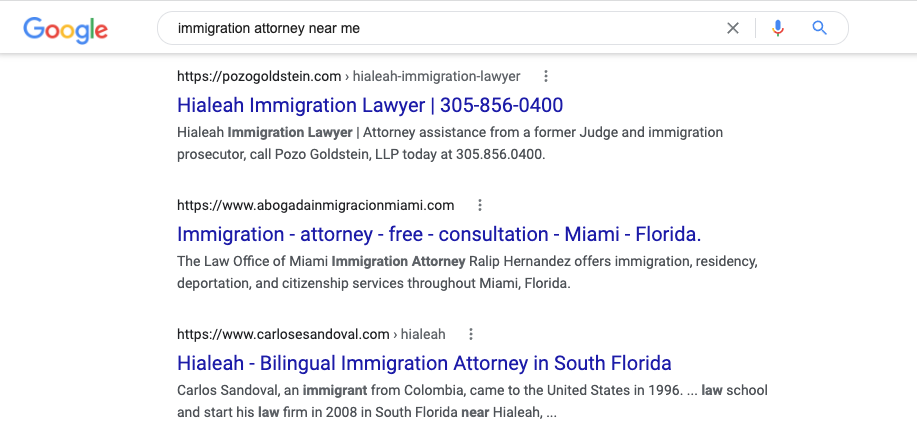
This matters because your clients start online. 86.7% of consumers use Google to research a lawyer, and in the 2024 survey, 97% used a search engine to find the attorney they contacted. You can do a lot of this yourself — or work with an agency like WEBRIS to get there faster.
1. Find And Fix Technical Roadblocks
At WEBRIS, we always start every SEO Sprint™ with a technical SEO review. If a site has technical problems blocking traffic, those get fixed before any other SEO tactics or tools.
We use Sitebulb, a crawling tool that shows how search engines see a website.
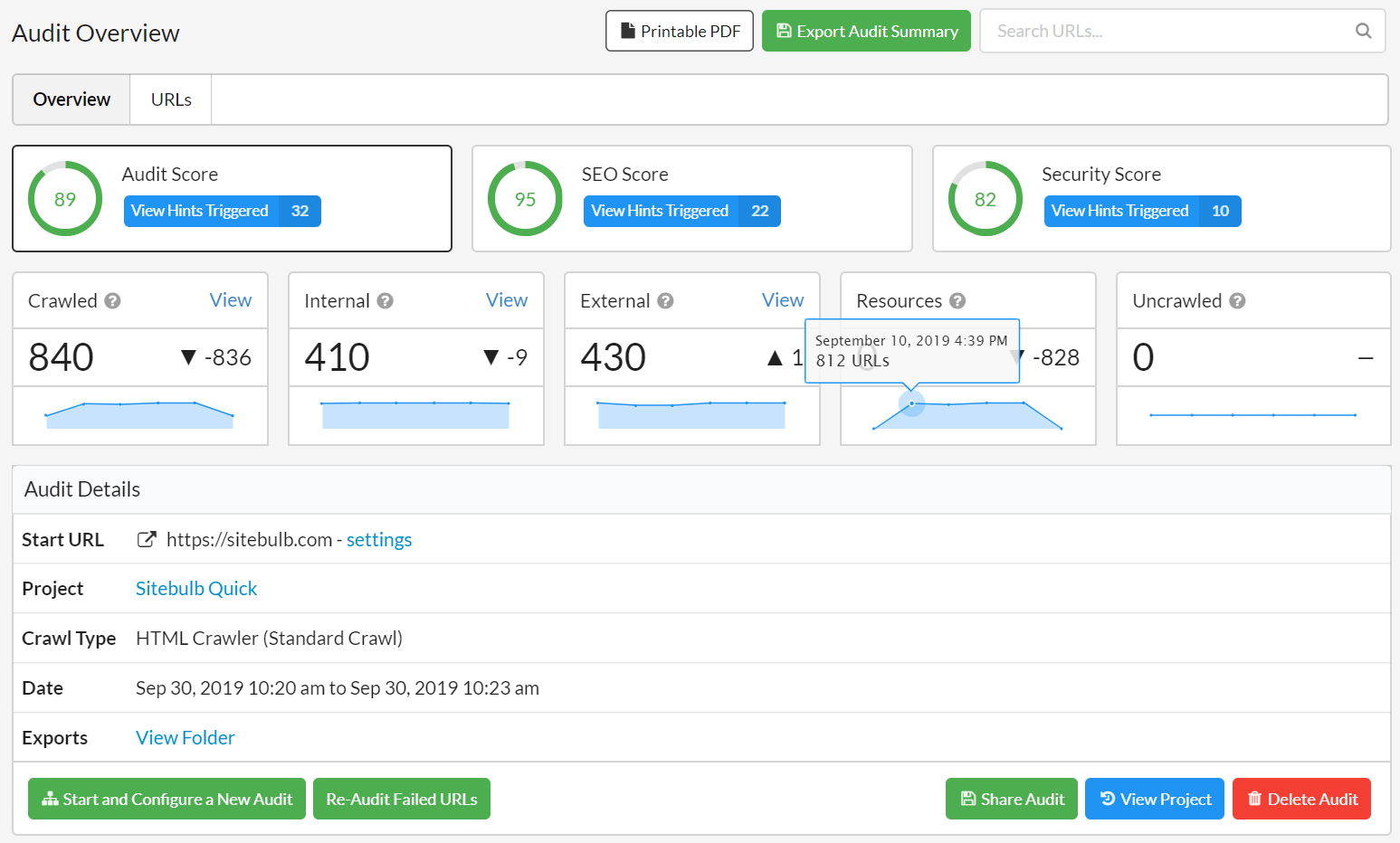
When we crawl a site, we look for:
- Are pages being crawled and indexed by Google?
- Are there misused directives (canonical tags, NOINDEX tags)?
- Any 404 errors or broken links?
- Any broken backlinks? (Ahrefs is great for this.)
- Any pages thin on copy or no longer relevant?
Most legal sites are small and don't have many technical issues. Giosmas Law was no different — no major red flags, aside from blog content not making it into Google's index. Next, we review the content, which is usually the real reason a site isn't getting traffic.
2. Build Out A Proper Page Ecosystem
Google wants to rank websites structured according to its search guidelines. Applied to a legal site, here's the high-level structure to follow:
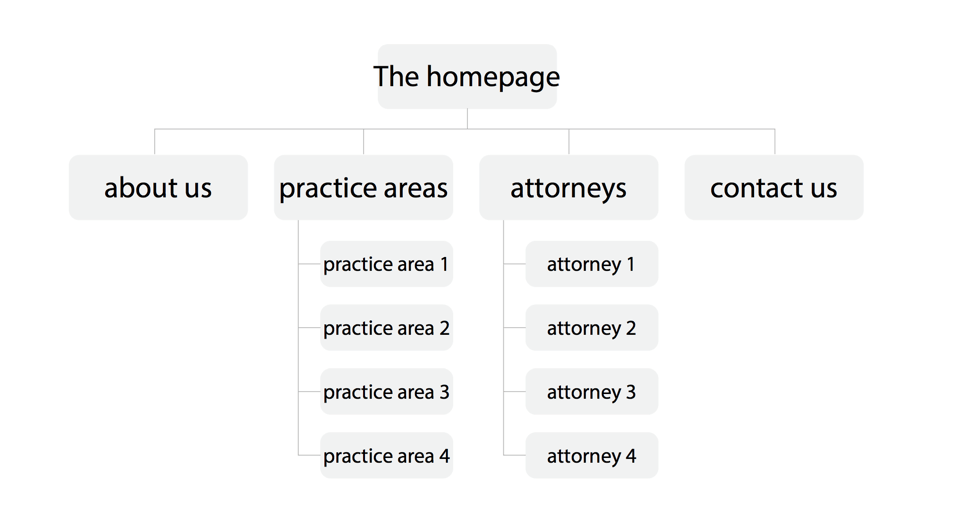
Giosmas Law uses a top-level navigation and a side navigation covering all practice areas.
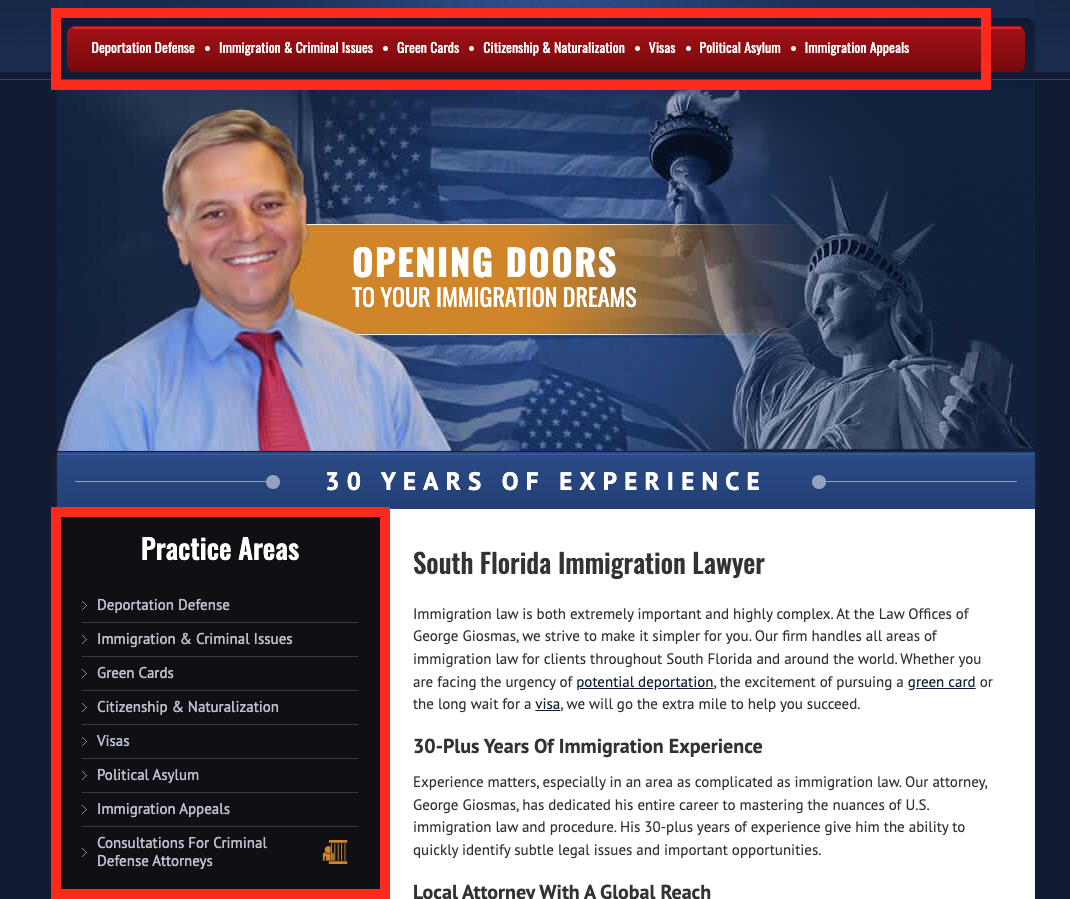
We'd prefer a folder structure organizing practice areas:
- /practice-areas/
- /practice-areas/deportation
- /practice-areas/green-cards
- /practice-areas/visas
This gives the site room to scale — adding attorney pages, case pages, and testimonial pages under each area.
3. Improve On-Page Elements For Key Pages
Practice-area pages have two jobs: give Google enough context to rank, and convince visitors to hire you.
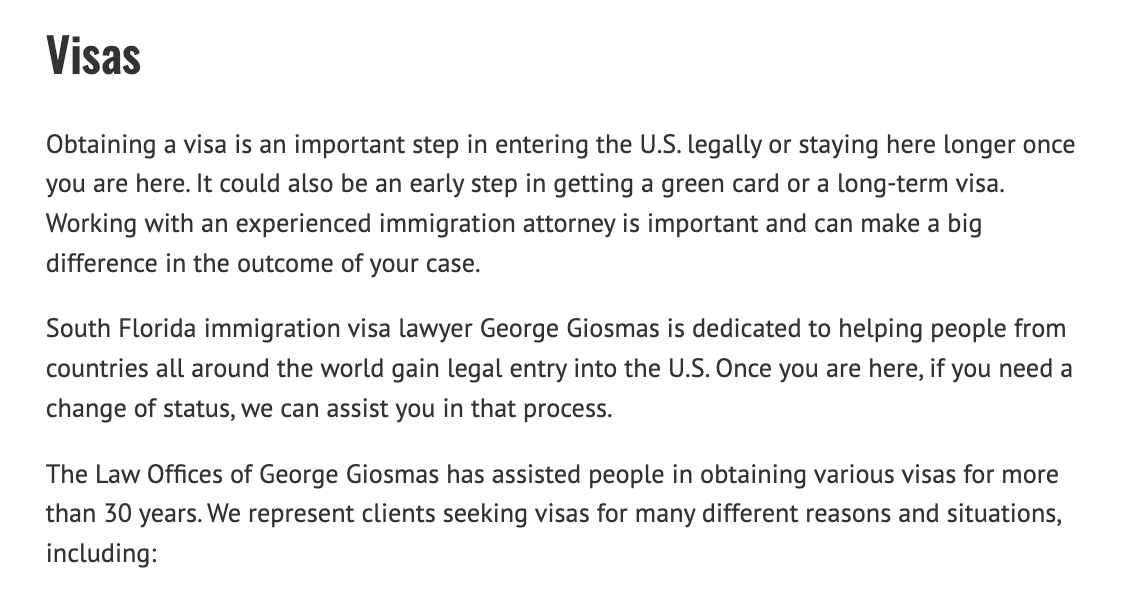
On the site we audited, these pages were far too thin to do either. Our recommendations:
- Build out pages targeting bottom-funnel keywords.
- Improve subheadings, internal links, and persuasive copy.
- Increase the amount of quality copy on the page.
- Add personality: images, video, testimonials.
- Go up-funnel with search-intent content.
People scan; search engines read every word. Pages with more text (over 2,000 words) tend to rank higher because they're more comprehensive — and they earn more backlinks.
4. Use Scannable Subheadings, Internal Links & Persuasive Copy
People don't read every word. They scan quickly, usually on a phone.

- Subheadings should map out your argument on their own. A skimmer reading only your H2s should still get the point.
- Internal links help Google rank pages higher. Use keyword-rich anchor text and link between related pages and blogs.
Web copy should be persuasive, especially on service pages. Every line should nudge the reader to call, email, or fill out a form.
5. Add Personality: Images, Video & Testimonials
People buy from people. What made you read this article? Maybe you saw a video on YouTube or TikTok. You were curious and wanted to learn more.

That's the power of video. Start recording — all you need is an iPhone (it shoots 4K) and simple editing software. Videos put a face to the name.
Use real photos too — you at your desk, meeting clients, in court. And publish every testimonial you can get. Reviews aren't optional anymore: 82% of people who hired an attorney used online reviews to decide.
6. Go Up-Funnel With Search-Intent Content
At the top of the funnel, you pull in traffic from the questions people ask, such as:
- “How do I get a green card if I'm from Cuba?”
- “Who's the best green card attorney in South Florida?”
- “Immigration attorney Miami”
Attorneys are hired on referrals — which means friends and family are searching on behalf of relatives too. Create search-intent content that answers those questions and captures that demand.
7. Publish Content In Your Clients' Languages
This is the immigration firm's unfair advantage — and it's about far more than Spanish. More than 68 million U.S. residents speak a language other than English at home, across over 350 different languages. Your clients live in that reality; most of your competitors publish in English only.
Spanish is the biggest single opportunity: 44.9 million people speak it at home, a number that has more than doubled since 1990. But depending on your market, Chinese, Tagalog, Vietnamese, Arabic, Haitian Creole, Portuguese, Korean, and Russian speakers can be just as valuable. In the Giosmas example, roughly 90% of clients came from Spanish-speaking countries — so Spanish was the obvious first move there.
Identify the top languages your clients actually speak, then for each one:
- Write native-language pages for your core services — written by a fluent speaker, not machine-translated.
- Give each language its own clean URL structure.
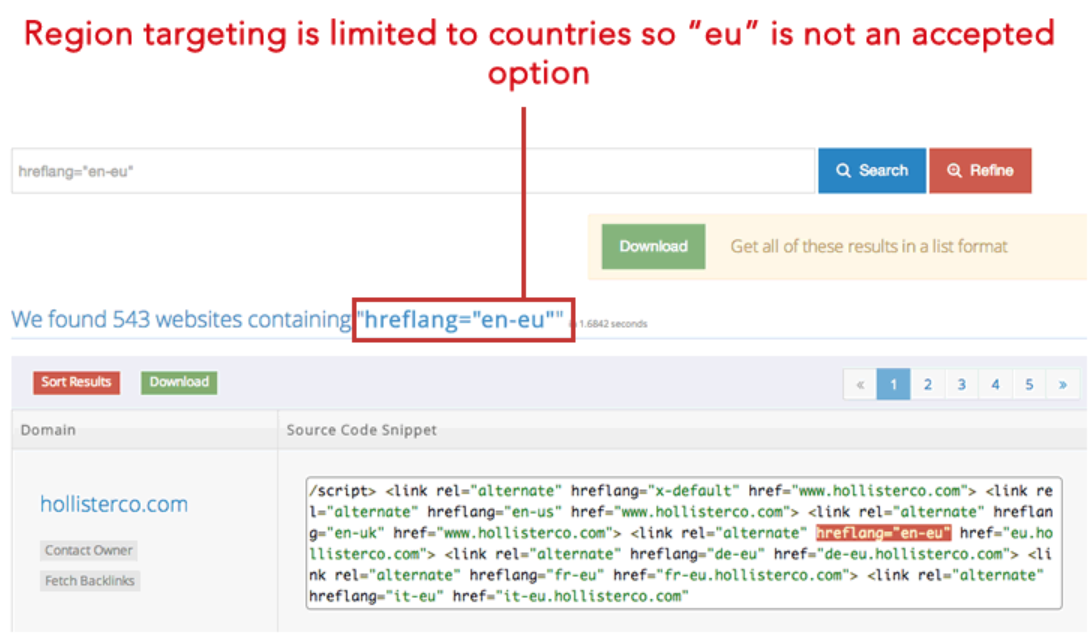
- Add hreflang tags and translated metadata so Google serves the right page to the right searcher.
Almost no one else is competing for this traffic. It's some of the easiest ranking you'll ever do.
8. Optimize For AI Search (GEO)
Search isn't just Google anymore. Use of ChatGPT to research lawyers jumped to 28.1% of consumers in 2025 — and most of them verify what they find back on Google.
Generative Engine Optimization (GEO) gets your firm named in those AI answers. It runs on the same foundation as SEO: clear, well-structured pages, strong reviews, consistent mentions across the web, and content that directly answers the questions people ask the models. Ignore it and your competitors become the default recommendation.
9. Use Links To Increase Rankings And Traffic
Links are Google's way of registering votes in a giant online popularity contest. If a high-traffic site lists George Giosmas among the top immigration attorneys in Miami, that backlink signals he's one of the best.
Getting backlinks isn't easy for immigration attorneys, but here's how:
1. Fill out directory profiles. Claim and complete profiles on Avvo, Justia, FindLaw, and your local bar. They're free or cheap, add credibility, and occasionally send leads.
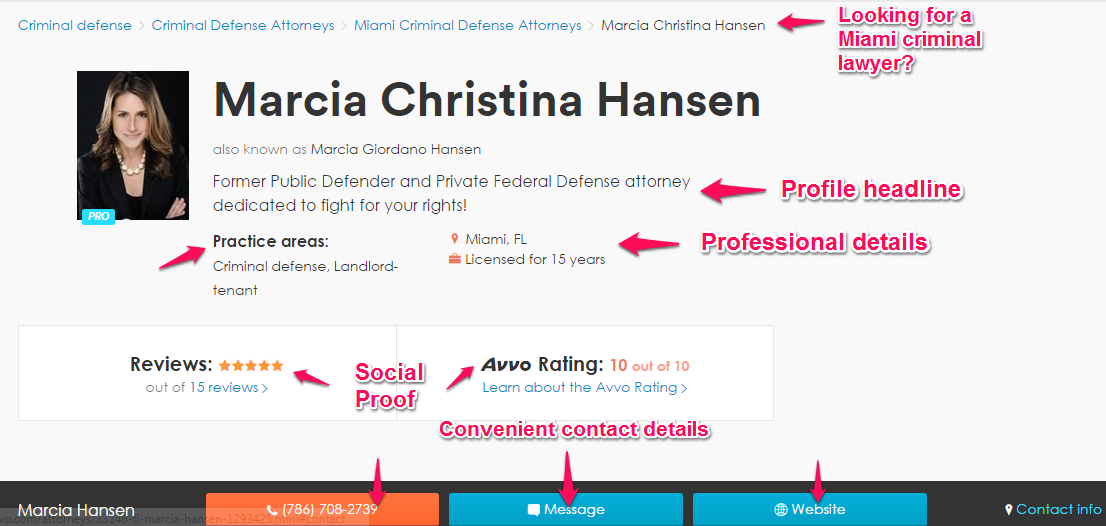
Check out our guide to Avvo marketing here.
2. Digital PR. Respond to journalist requests on platforms like Qwoted and Connectively (the successors to HARO) so reporters quote you on immigration stories. Every feature is a high-authority link.
3. Guest posting. Pitch articles to legal and community sites where you don't compete directly.
Focus on quality, not quantity — 20–30 strong links a year moves the needle. And the easiest way to earn them is the top-funnel content from tip 6: assets other sites actually want to link to.
10. Dominate Local Search & Google Business Profile
Local Search runs on a different algorithm than core search — it's driven by Google Maps and your Google Business Profile (formerly Google My Business). This is where “immigration lawyer near me” searches are won.
To rank in the local pack:
- Fully complete your Google Business Profile — website, phone, description, and every service you offer.
- Put your correct address on the map.
- Upload 20+ real photos.
- Keep your name, address, and phone identical everywhere online.
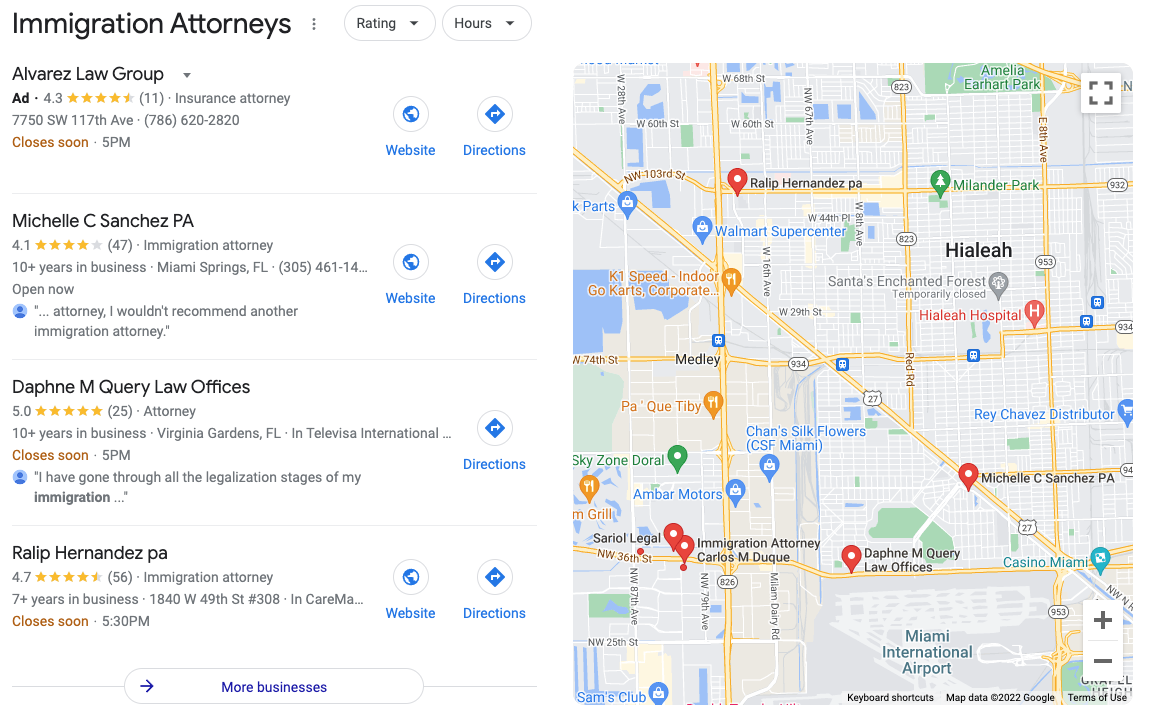
You can also bid for ads inside Map listings using Local Service Ads. Start small, see what works, then scale.
11. Get — And Show Off — Reviews
Reviews fuel both local rankings and conversions. Only about 4% of consumers say they never read online reviews, and profiles rated 4.7 stars and up convert far more leads than lower-rated ones.
Ask every happy client for a Google review — automate the request right after you've delivered a win. Then republish your best reviews on your site as social proof. It's the cheapest, highest-return work on this list.
12. Answer Questions With FAQs & Schema
Immigration clients arrive with the same anxious questions: cost, timeline, eligibility, what happens next. Answer them directly on the page in a clear FAQ, then mark it up with FAQ schema so Google (and AI engines) can pull those answers into results.
This does double duty: it reassures the reader and it makes your page eligible for rich results and AI citations — reinforcing the GEO work in tip 8.
13. Track The Metrics That Matter
SEO is a compounding investment, so measure it like one. Skip vanity metrics and watch the numbers that tie to revenue:
- Rankings for your money keywords (e.g. “green card attorney [city]”).
- Organic traffic to service pages — not just the blog.
- Calls and form fills from organic and local.
- Cost per signed case from SEO vs. paid channels.
If a channel isn't producing signed cases, fix it or move the budget. That's the difference between SEO as an expense and SEO as growth.
Key Takeaways
- Fix technical issues before anything else.
- Structure practice areas under one clean folder.
- Make money pages deep, keyword-focused, and persuasive.
- Write scannable copy with strong internal links.
- Add photos, video, and testimonials.
- Publish top-funnel, search-intent content.
- Create native Spanish-language pages.
- Optimize for AI search (GEO), not just Google.
- Build authority with directories, digital PR, and guest posts.
- Own local search through your Google Business Profile.
- Collect and showcase reviews relentlessly.
- Answer client questions with FAQs and schema.
- Track the metrics that tie to signed cases.
Immigration Attorneys: Do You Want More Clients?
This is the same playbook that grew Kingwell Immigration Law's organic traffic 322%. Get started with a free growth plan and we'll show you exactly where the opportunities are for your firm.