
If you're a lawyer, you've probably heard this promise before:
"Facebook ads will transform your practice."
Maybe you've even tried it yourself, only to get a handful of tire-kickers and time-wasters who never convert to actual clients.
Here's the thing - most lawyers are doing Facebook advertising completely wrong.
You're treating it like a digital billboard instead of understanding how social media marketing actually works in 2025. The result? Wasted ad spend, frustrated attorneys, and a belief that "Facebook Ads don't work for lawyers."

But what if I told you that law firms across the country are quietly using Facebook ads to generate not just leads, but signed clients?
What if there was a proven system that could deliver 73 qualified car accident leads at $98 / lead, or 133 property damage leads at $46 / lead, with documented conversions to actual cases?
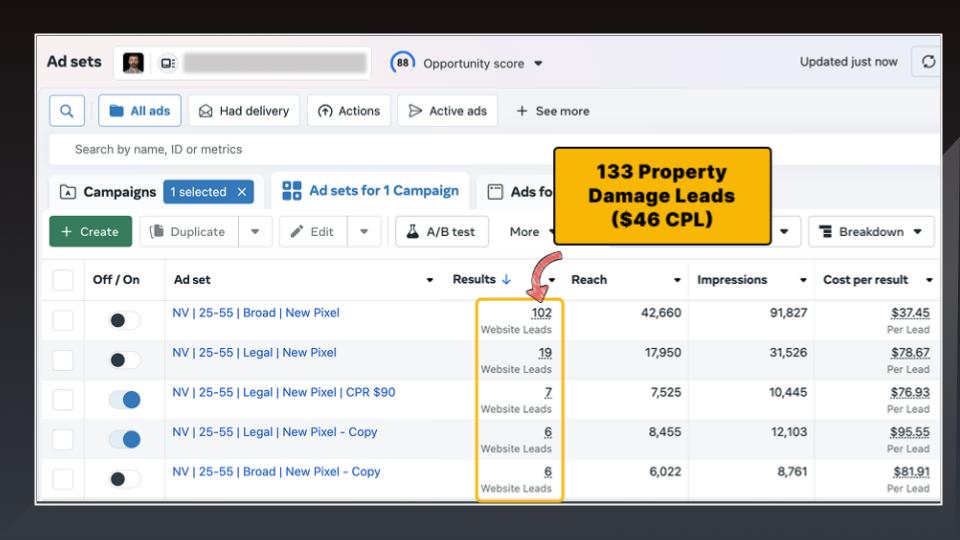
That's exactly what we're going to cover in this comprehensive guide. You'll discover the complete Facebook ads system that's working for attorneys right now, including real case studies, actual ad examples, and the step-by-step process you can implement in your own practice.
Subscribe On YouTube For Weekly Videos
Real Results: Law Firms Getting Signed Clients with Facebook Ads
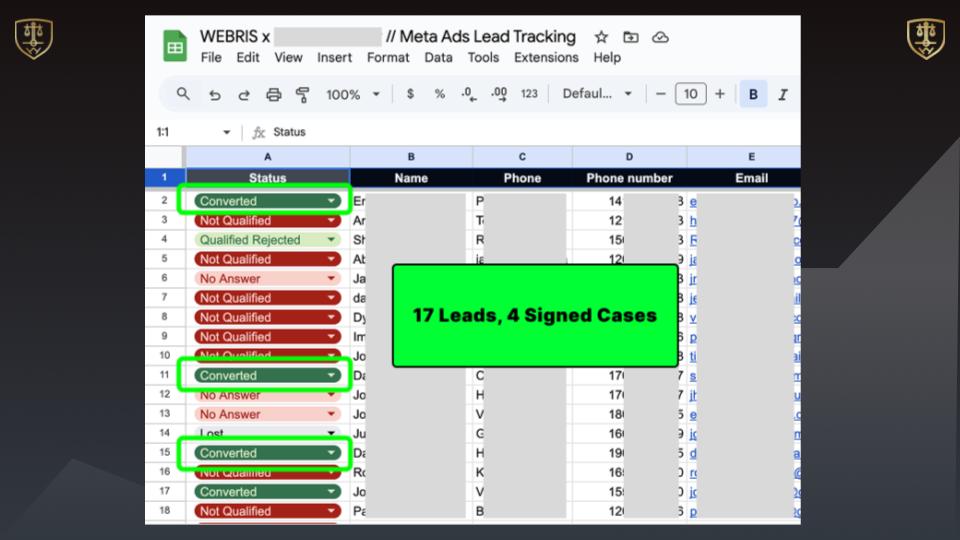
Let's start with proof, because I know you're skeptical. Every lawyer I talk to has the same reaction: "Show me the results."Case Study 1: Car Accident Attorney (Los Angeles)
- 73 car accident leads in one month
- $98 cost per lead
- Multiple signed cases from these campaigns
- 65 workers compensation leads at $196 cost per lead
- 7 Social Security Disability leads at $25 cost per lead
- Consistent month-over-month growth
Why Lawyers Think Facebook Ads Don't Work (And Why They're Wrong)
Every attorney has the same objections when it comes to Facebook advertising. Let me address the big three:"My Target Clients Aren't on Facebook"
This is the biggest misconception in legal marketing today. Here's the reality: every single person in America has either Facebook, Instagram, or WhatsApp installed on their phone. They're checking these apps 8-10 times per day and spending hours scrolling through content.The amount of data Facebook has access to is mind-boggling. They know more about your potential clients than you do. When someone searches "divorce attorney near me" on Google, they're logged into Facebook on the same device. When they text their friends about their car accident, Facebook has access to that conversation data through WhatsApp and Messenger.
Facebook doesn't just know who's on their platform—they know who's in-market for legal services.
"Facebook Leads Are Low Quality Because People Are Just Scrolling"
This objection reveals a fundamental misunderstanding of how Facebook's algorithm works. Yes, people are scrolling, but Facebook knows who's actively looking for legal services based on their behavior across all platforms.Think about it: if you've ever been going through a major life event—divorce, accident, business dispute—you've probably noticed ads for lawyers appearing in your feed. That's not coincidence. Facebook's algorithm identifies intent through hundreds of data points you're not even aware of.
The platform knows when someone is researching legal topics, visiting law firm websites, or engaging with legal content. They're not just randomly showing your ads to people watching cat videos—they're targeting people with genuine legal needs.
"I Don't Want to Be 'That Guy' on Social Media"
I get it. You're worried about your professional reputation. You don't want to be the ambulance chaser with cheesy commercials plastered all over social media.But here's the hard truth: it's 2025. If you're willing to put up a billboard or run a TV commercial, social media advertising is no different—except it's more targeted, more measurable, and more effective.
The key is doing it right. The attorneys getting results aren't making cringe-worthy commercials or walking around with selfie sticks. They're using strategic, professional content that positions them as authorities in their field.
The 4-Step Facebook Ads System That Gets Lawyers Signed Clients
Now let's dive into the actual system that's generating these results. This isn't theory—it's the exact process being used by successful law firms right now.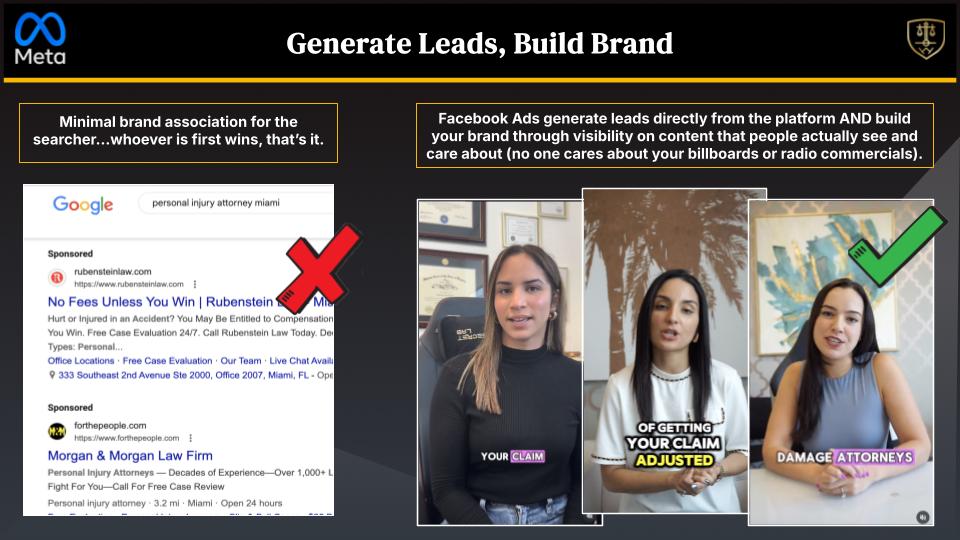
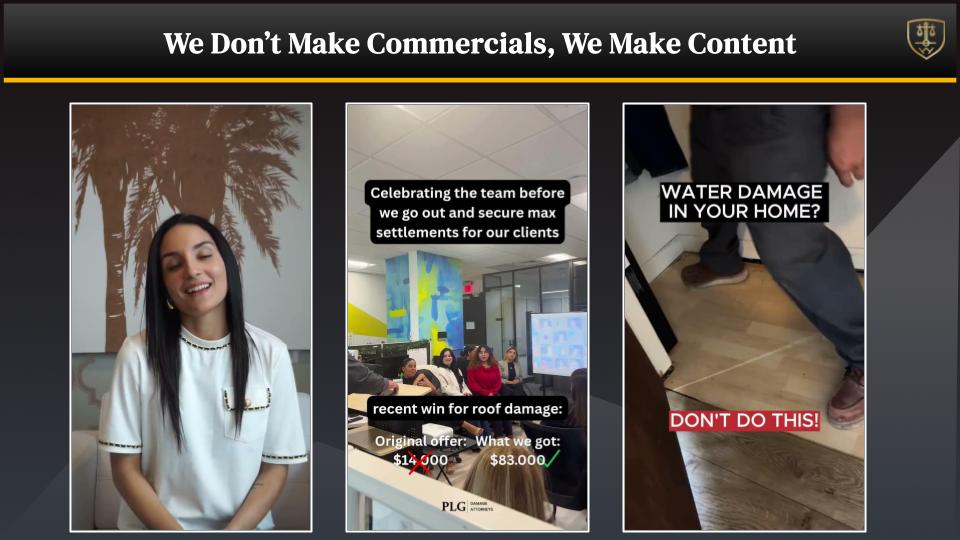
Step 1: Strategic Ad Creation (Stop Making Commercials)
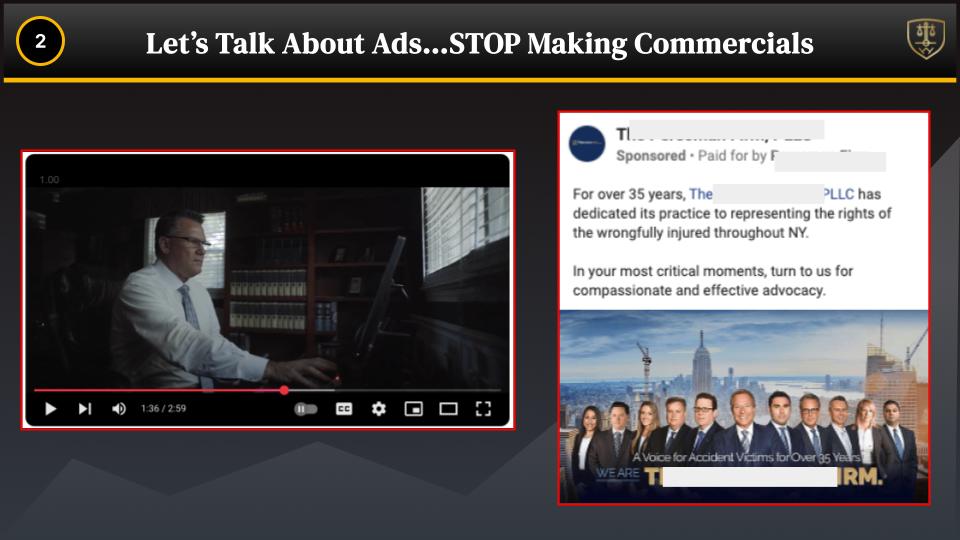
The biggest mistake lawyers make is creating ads that look like advertisements. Nobody wants to see commercials when they're scrolling through their feed at midnight. They want content that feels natural, native, and organic.What Doesn't Work:
- Walking out of the courthouse in slow motion
- "For 35 years we've been serving the community" messaging
- Talking head videos that feel like TV commercials
- Generic lawyer stock photos
Example 1: The Results Video A 5-second video showing a settlement check being handed to a client. No talking, no lawyer on camera—just the visual proof of results. The text overlay provides context and qualification.
Example 2: The Behind-the-Scenes Content Video of the intake process, showing the human side of the firm. Maybe it's staff preparing case files or a text conversation with a client (with permission). Again, no attorney on camera required.
View this post on InstagramA post shared by Shook & Stone Injury & Disability Lawyers (@shookstonelaw)
Example 3: The Educational Native Content Quick tips or legal insights presented in a way that feels like organic social media content, not a commercial.
The key is making content that people would actually want to watch and share, not something that screams "advertisement."
Step 2: Quiz Funnel Landing Pages
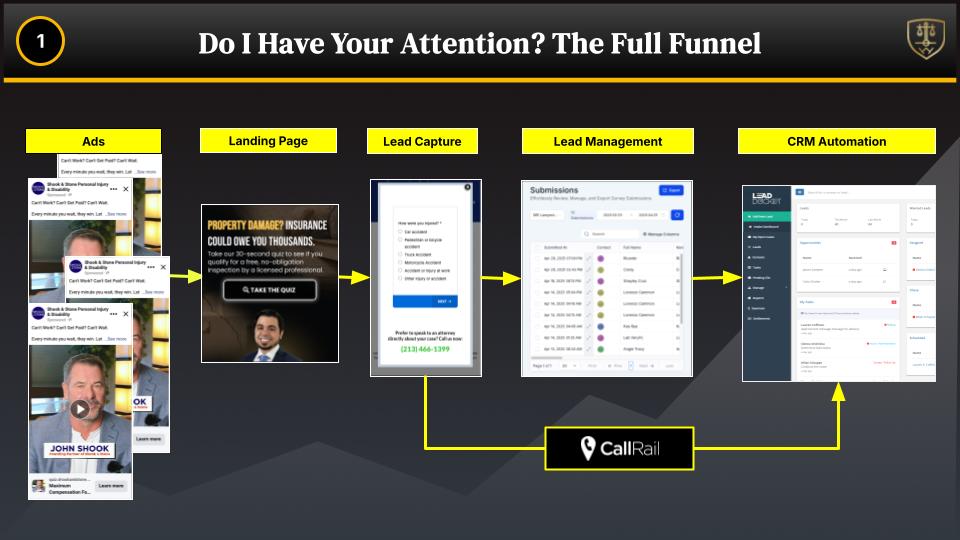
This is where most lawyers go wrong with their Facebook campaigns. They send traffic to their main website or a generic contact form. Instead, successful campaigns use quiz funnels that mirror the actual intake process.Why Quiz Funnels Work:
- They qualify leads before they reach you
- They mirror your existing sales process
- They provide multiple conversion opportunities
- They filter out unqualified prospects automatically
- When did your accident occur?
- Were you injured?
- Do you have medical records?
- Have you spoken to insurance companies?
Multiple Conversion Paths: The quiz isn't the only way to convert. There's also a prominent phone number with call tracking integration. Some prospects prefer to call directly, and you capture both form submissions and phone calls as conversions.
Everything integrates directly with your CRM system, so qualified leads flow seamlessly into your existing process.
Step 3: Advanced Targeting Strategy (The "Pizza Quality" Approach)
Here's where most lawyers overthink things. They try to get overly specific with targeting, thinking they need to find people who were in car accidents in the last 30 days.That targeting doesn't exist - and it's actually illegal for Facebook to provide it.
The Better Approach: Broad Targeting + Specific Creative
Instead of trying to micro-target, successful campaigns use broad geographic targeting combined with hyper-specific creative messaging.
- Geographic: Your service area (city, county, or state)
- Demographics: Basic age ranges appropriate for your practice area
- Interests: Minimal, let Facebook's algorithm do the work
Facebook's algorithm is incredibly sophisticated. When someone with a genuine legal need stops scrolling and engages with your content, Facebook recognizes that pattern and finds similar people in your target area.
This approach works because Facebook has access to data we can't see as advertisers. They know who's been researching legal topics, visiting law firm websites, or showing other intent signals.
Step 4: Performance Tracking and Optimization
This is what separates professional Facebook advertising from amateur attempts. Everything gets tracked, measured, and optimized based on actual results.Complete Tracking System:
- Central database of all leads
- CRM integration for seamless lead management
- Call tracking for phone conversions
- Weekly performance reports
- Lead-to-signed-client reconciliation
- Quiz questions are refined
- Landing page messaging is updated
- Ad creative is optimized
- Targeting is adjusted based on performance data
What to Expect: Your 60-Day Facebook Ads Journey
Managing expectations is crucial for Facebook advertising success. Here's the realistic timeline:Week 1: Campaign Launch
- Ads go live within 7 days
- Initial lead generation begins
- Cost per lead will be higher than final targets
- Facebook begins learning your audience
Month 1: Initial Optimization
- Lead volume increases
- Cost per lead begins to decrease
- Quality feedback helps refine targeting
- Initial signed clients typically appear
Month 2: Scale and Efficiency
- Facebook's algorithm fully understands your audience
- Cost per lead reaches optimal levels
- Lead quality significantly improves
- Consistent signed client flow established
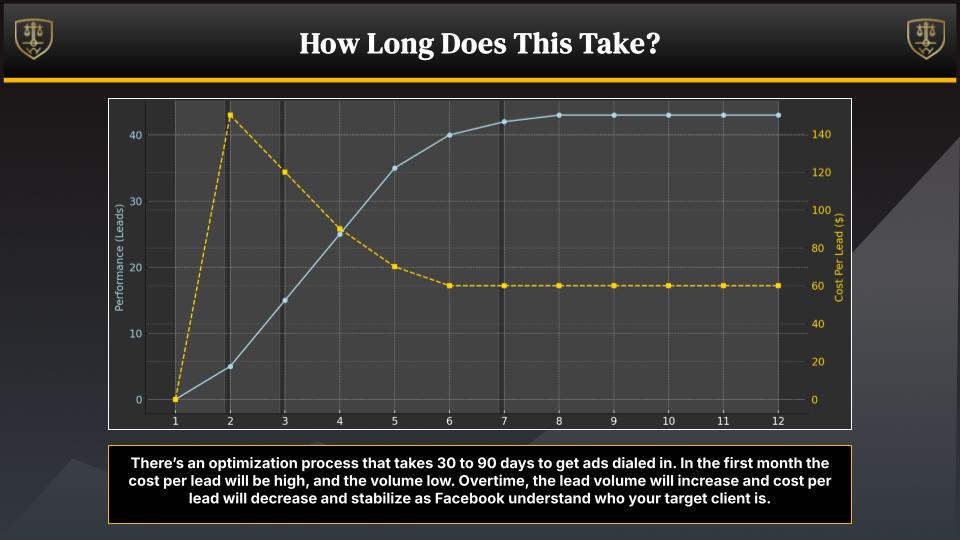
Why This Timeline Matters: Facebook's algorithm needs time to learn who responds to your ads. The platform gets better at finding qualified prospects as it gathers more data about who engages with your content and converts to clients.
Most lawyers quit too early, right when the system is about to hit its stride. Those who stick with it through the optimization period see the best results.
Which Types of Law Firms See the Best Results
While Facebook ads can work for various practice areas, some see better results than others:High-Performance Practice Areas:
- Personal Injury: Car accidents, slip and falls, medical malpractice
- Workers Compensation: Workplace injuries, disability claims
- Family Law: Divorce, custody, domestic relations
- Criminal Defense: DUI, drug charges, white-collar crimes
- Social Security Disability: SSDI and SSI claims
- Business Law: Contract disputes, business formation
- Estate Planning: Wills, trusts, probate
- Real Estate Law: Property disputes, transactions
- Emotional urgency (people need help now)
- Clear value proposition (obvious benefit)
- Broad market appeal (affects many people)
- Higher case values (justify advertising spend)
Getting Started: Next Steps for Your Law Firm
If you're ready to implement this system in your practice, here's what you need to prepare:Before You Start:
- Define Your Ideal Client: What cases do you want more of?
- Audit Your Current Process: How do you currently handle leads?
- Prepare Creative Assets: What content can you create or have created?
- Set Your Budget: What can you invest in advertising monthly?
- Choose Your CRM: How will you track and manage leads?
- Strategy Session: Define goals, target audience, and messaging
- Creative Development: Create native, engaging ad content
- Landing Page Setup: Build quiz funnels and tracking systems
- Campaign Launch: Start with broad targeting and specific creative
- Optimization Phase: Refine based on performance data
- Scale and Expand: Increase budget as ROI proves positive
Frequently Asked Questions About Facebook Ads for Lawyers
Q: How much should I budget for Facebook ads? A: Most successful campaigns start with $3,000-$5,000 per month in ad spend, plus management fees. This provides enough volume for Facebook's algorithm to optimize effectively.Q: Do I need to appear in videos? A: No. Many successful campaigns use no attorney appearances at all. Results videos, behind-the-scenes content, and text-based ads often outperform talking head videos.
Q: How long before I see results? A: You'll get leads within the first week, but optimal performance typically takes 60 days as Facebook's algorithm learns your audience.
Q: Can I target people who were recently in accidents? A: No, this type of targeting is illegal. Instead, use broad targeting with specific creative messaging that resonates with people who have legal needs.
Q: What's the difference between this and lead generation companies? A: Lead generation companies sell the same leads to multiple attorneys. This system generates leads exclusively for your firm and focuses on conversion to signed clients, not just lead volume.
Q: Do Facebook ads work for all practice areas? A: While most practice areas can see results, personal injury, workers comp, family law, and criminal defense tend to perform best due to emotional urgency and clear value propositions.
Transform Your Legal Practice with Strategic Facebook Advertising
The legal marketing landscape has fundamentally changed. While other attorneys are still relying on outdated methods like Yellow Pages ads and basic Google AdWords, smart lawyers are using Facebook's sophisticated targeting capabilities to reach clients at the exact moment they need legal help.This isn't about posting random content and hoping for the best. It's about implementing a systematic approach that treats Facebook advertising like the serious marketing channel it is—one that's generating real, measurable results for law firms across the country.
The attorneys getting results aren't necessarily the biggest firms or the ones with the largest marketing budgets. They're the ones who understand that modern legal marketing requires a modern approach. They're willing to adapt their strategies to meet potential clients where they actually spend their time: on social media.
The Bottom Line: Facebook ads for lawyers work when done correctly. The system outlined in this post isn't theoretical—it's being used right now by attorneys who are generating qualified leads and converting them to signed clients at predictable rates.
The question isn't whether Facebook advertising works for lawyers. The question is whether you're ready to implement a system that can transform your practice's marketing results.
Ready to see if this system is right for your law firm? Book a strategy session to review your current marketing approach and discover how Facebook advertising could fit into your growth strategy. You'll see real campaign examples, performance data, and get a customized plan for your specific practice area and market.
Don't let another month pass wondering if there's a better way to market your practice. The attorneys already using this system are building competitive advantages that will be harder to overcome as time goes on.