
Type “buy car accident leads” into Google and you'll get buried in vendors promising a firehose of injury cases for a flat fee. It's tempting. Signing car accident cases is worth a fortune, and earning them yourself feels slow and expensive.
Before you hand a lead vendor your credit card, read this. We're going to break down what buying auto accident leads actually costs, why it quietly loses money for most firms, and the exact Facebook ad system we use to generate your own exclusive leads and signed cases — often for less than a single shared lead costs.
WATCH THE FULL VIDEO STRATEGY BELOW:
What Buying Auto Accident Leads Actually Costs
Lead pricing sounds reasonable until you do the real math. Here's the going rate for auto accident leads in 2026:
According to industry lead-cost data, shared auto-accident leads run roughly $50–$150, exclusive leads $300–$600 or more, and live-transfer leads for high-value cases like trucking can top $1,000. In big metros, it's the high end of every range.
But a price per lead is not a price per signed case, and that's the number that matters. Once you account for the leads that never answer, don't qualify, already hired someone, or were never real, your effective cost per signed case balloons. Buy shared leads at $100 with a 5–10% sign rate and you're paying $1,000–$2,000 in lead spend for one case — before your intake team's time. We break the full math down in our guide to personal injury lead costs.
Why Bought Leads Lose (Even The "Exclusive" Ones)
Cost is only half the problem. The bigger issue is what you're actually buying.
Shared leads are sold to your competitors. A shared lead goes to three, four, or five firms at once, so you're racing everyone else to the phone on a person who's already getting five calls. And this just got worse: in 2025 the Eleventh Circuit vacated the FCC's “one-to-one consent” rule, and the FCC reinstated the older standard — meaning a lead-gen site can once again collect a single consent and legally resell that person's information to many firms simultaneously.
You build no asset. Every dollar you spend on leads buys exactly one shot at one contact. Stop paying and the flow stops that day. You own nothing — no audience, no brand, no pipeline.
Quality is a coin flip. Recycled, aged, incentivized, and mis-sold leads are rampant. You're trusting a vendor whose incentive is to sell more leads, not better ones.
“Exclusive” leads fix the sharing problem but not the economics: you pay a premium, you're still renting, and it still stops when you stop paying. Buying the occasional lead to fill slow capacity is fine. Building your practice on bought leads is a subscription to someone else's business.
The Better Model: Own Your Leads With Facebook Ads
Here's the shift. Instead of renting shared contacts, you generate your own exclusive leads — people who raised their hand to your firm and nobody else's — and you build a brand and an audience that compound while you do it.
The reason this works is simple: your future clients live on Facebook and Instagram, not in the Google search box. 71% of U.S. adults use Facebook and about half visit it every day, with 37% on it multiple times a day. Google only catches someone in the two-second window they're actively searching — and that window is the most expensive real estate in advertising, where high-intent injury clicks can run into the hundreds of dollars. Meta lets you reach the same people all day, before and after they'd ever type “car accident lawyer” into Google.
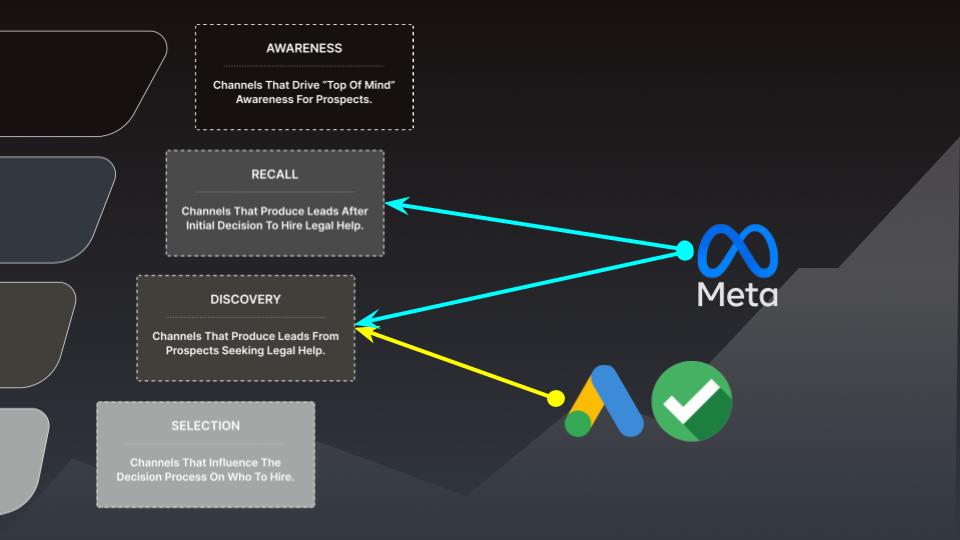
Do this right and every lead is exclusively yours, your cost per case drops as the system learns, and you stop feeding a lead vendor forever. Here's exactly how to build it.
Your Car Accident Facebook Ads Funnel
This is the same four-part system we run for law firm paid social clients. None of it requires a Hollywood budget — it requires the right structure.
1. Your Ad Creative Is Everything
In 2026, targeting is largely automated — Meta's Advantage+ finds the audience for you. That means the ad itself is the entire lever. The single biggest mistake attorneys make is creating content about themselves instead of their potential clients.
Forget slow-motion office shots and “dedicated to justice” taglines. What drives cases is content about what clients care about: compensation, and what to do next.
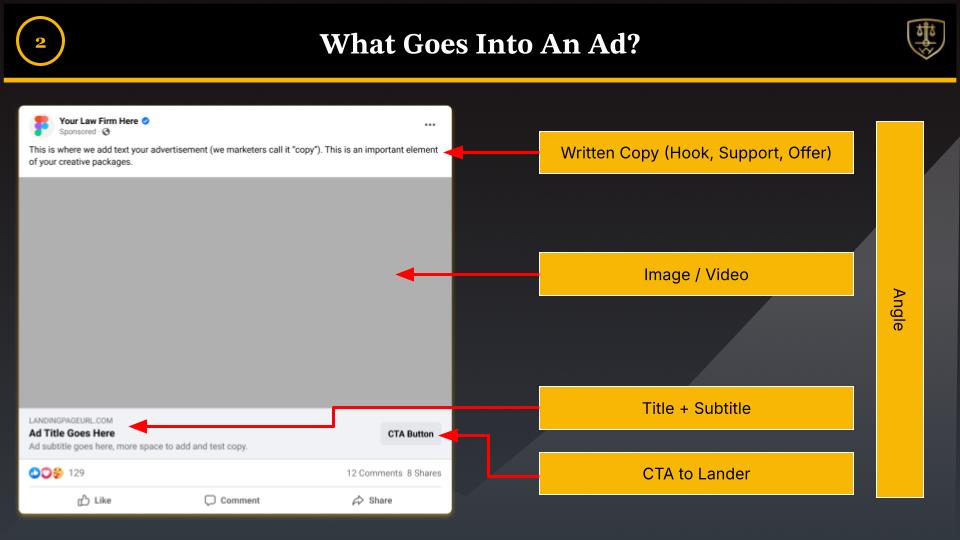
Effective car accident ad creative should:
- Lead with specific results and settlement amounts (where your state bar allows it)
- Speak to the fears an accident victim actually has — bills, missed work, dealing with the insurer
- Communicate urgency (the statute of limitations, evidence disappearing)
- Look native and authentic — phone-shot video beats a polished commercial almost every time
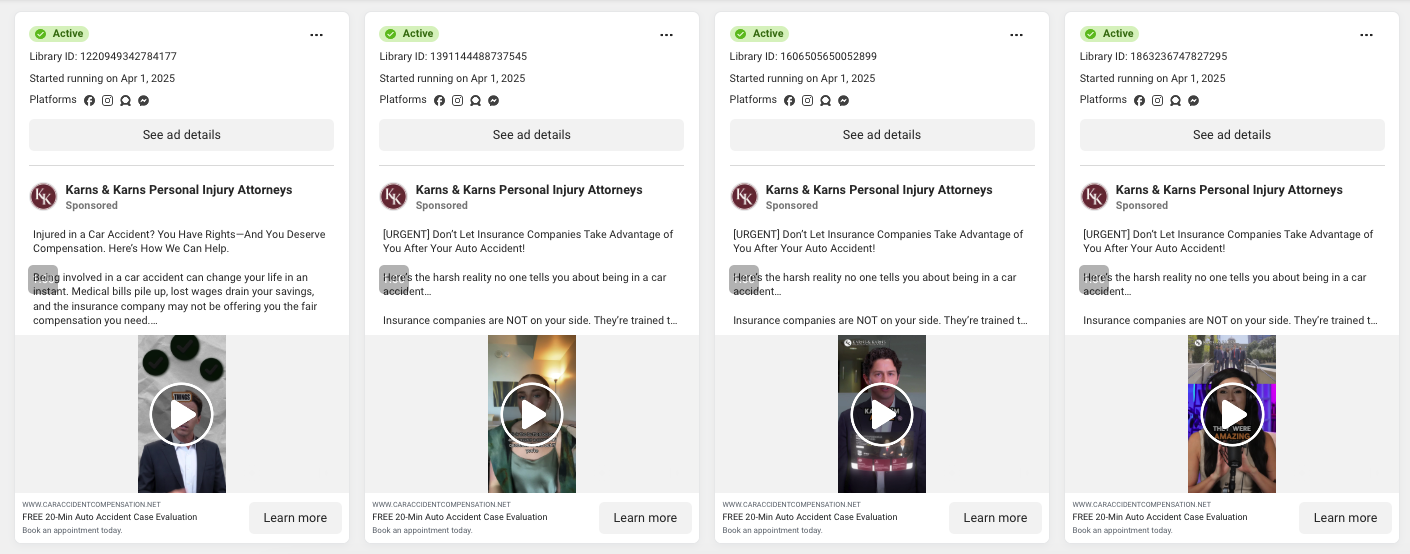
Here's sample copy that consistently drives qualified leads: “Car accident that wasn't your fault? Don't let the insurance company lowball you. We recently recovered $1.2M for a client hurt in a similar crash. Free case review — find out what your claim is worth before time runs out.” It's not award-winning; it works because it speaks to what the client cares about.
2. Qualify With A 30-Second Quiz
Never send ad traffic straight to a phone number — you'll drown your intake team in tire-kickers. Send every click to a short qualification quiz first.
- The ad speaks to people who were injured, not at fault, and still within your state's statute of limitations.
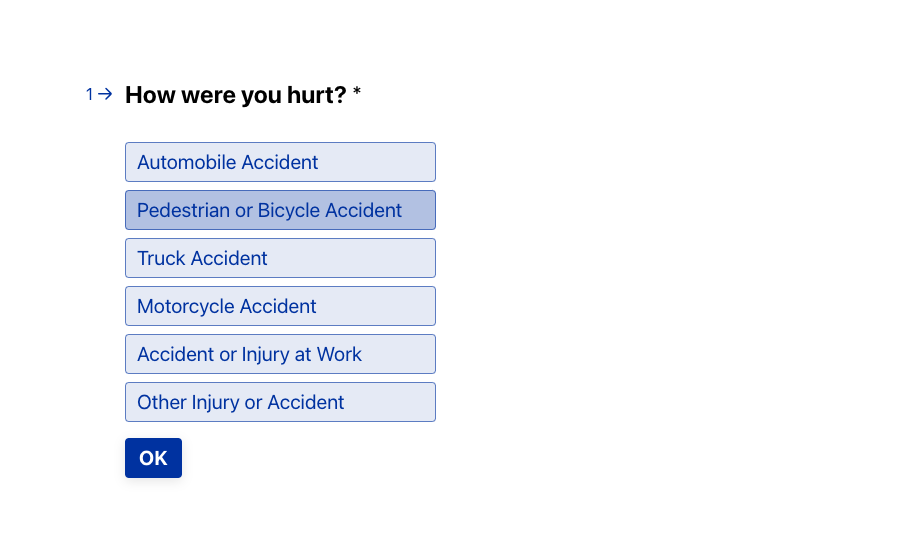
- The quiz asks a handful of questions — Were you injured? Whose fault was it? Have you seen a doctor? Are you already represented? — to confirm a real case in under 30 seconds.
- Qualified leads push instantly to your CRM so your intake team can call within minutes.
- High-intent prospects get a click-to-call option right from the ad.
Here's a live example of a client's quiz. This one funnel filters out the junk and captures the serious cases at the moment they're ready to act.
3. Targeting: How To Find People With A Case
The most common objection is targeting: “How do I find people who were just in a wreck?” You can't target that directly — Meta prohibits it. In 2026 you don't need to. You give the algorithm strong creative and a clear conversion event, and it finds the people who respond.
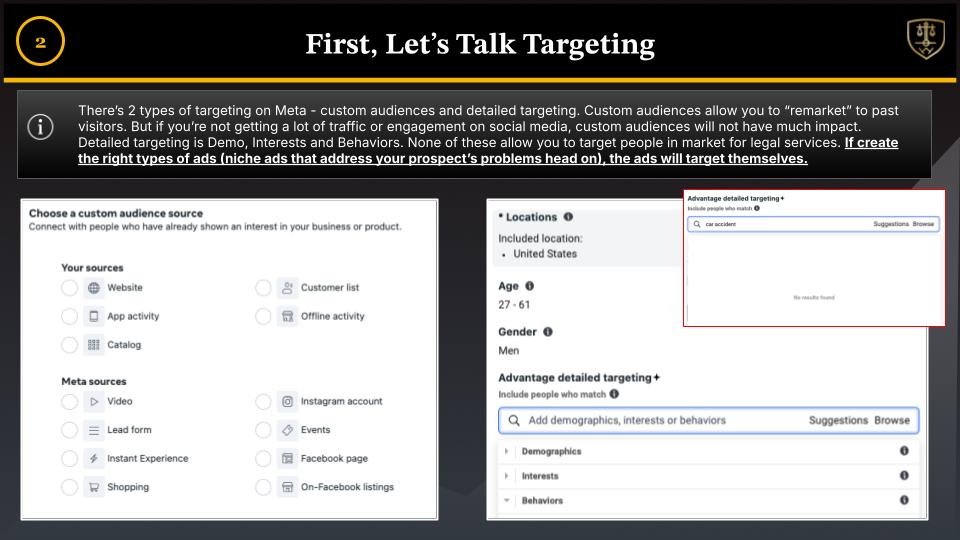
Run broad and let creative do the targeting. With Advantage+ audiences, a well-made ad that speaks to accident victims will self-select them out of a broad audience far better than manual interest targeting ever did.
Then layer in custom audiences for retargeting and lookalikes:
- Website visitors and people who watched even a few seconds of your video
- People who started but didn't finish the quiz
- Instagram and Facebook engagers
- Uploaded past-client lists to build lookalike audiences
- Geographic focus on your service area and higher-accident corridors
The magic is volume of creative plus a clean conversion signal — that's how you “teach” Meta who your future clients are. Our complete guide to Facebook ad targeting for lawyers goes deeper.
4. Run 10+ New Ads Every Month
Volume matters more than you'd think. The firms winning on Meta keep 20–30 ads live at once. It's not just testing — it's giving the algorithm enough signal to optimize, and enough fresh creative to beat ad fatigue.
Your monthly content should include short educational videos by case type, client testimonials (bar-rules permitting), case-result announcements, FAQ clips, and direct-response conversion ads. Don't overproduce: a phone, a $50 ring light, and authentic delivery outperform scripted perfection. Batch 8–10 videos in a single 2–3 hour session and deploy them across the month.
5. Win On Speed-To-Lead (Where Budgets Die)
This is the step firms forget, and it's where most ad budgets quietly die. A lead that fills out your quiz at 7 p.m. and hears back tomorrow is a signed case for someone else. Exclusive leads only beat shared leads if you actually call them fast.
Answer every qualified lead within minutes, staff intake for evenings and weekends when crashes happen, and automate an instant text-back the moment the quiz is submitted. Fixing intake is almost always cheaper than buying more leads — and unlike a lead vendor, it makes every dollar you already spend work harder.
6. Retarget The 90% Who Don't Convert First
Most people won't call on the first touch — they're shaken up, comparing firms, or not ready. Retargeting brings them back for a fraction of a new click.
Show a follow-up video to everyone who watched your ad, visited the site, or abandoned the quiz. A simple “still dealing with your accident? here's what to do next” clip, served for pennies, rescues cases you already paid to reach once. This is the compounding advantage a bought lead can never give you.
The Outcome: Exclusive MVA Cases For ~$1,500
Run this system properly and it consistently delivers signed motor vehicle cases for around $1,500 — exclusive cases nobody else is calling, at a fraction of what shared or exclusive bought leads cost per signed case.
A typical pattern: first traction within 2–3 weeks of launch, first signed cases around the 30-day mark, and a steadily falling cost per case as the algorithm learns. A mid-sized Florida PI firm ran this exact system on a $5,000/month budget and signed eight motor vehicle cases in 60 days — roughly $1,250 per case, against an average case value north of $25,000. They also saw a 22% lift in direct site traffic and a 15% bump in conversions from their existing Google campaigns, because a firm people recognize converts better everywhere.
That's the difference between renting and owning. For the bigger picture across every channel, see our guide to personal injury marketing.
FAQs
Should I ever buy car accident leads?
Occasionally, to fill slow capacity while you build your own pipeline — not as your foundation. Bought leads stop the day you stop paying and build you no asset. Treat them as a stopgap, not a strategy.
Are bought leads exclusive to my firm?
Usually not. Most are shared with several firms at once, and since the FCC's one-to-one consent rule was vacated in 2025, that resale is fully legal again. Even genuinely exclusive leads are expensive and still leave you renting.
What budget do I need to start with Facebook ads?
A realistic minimum is $2,500–$3,000/month — enough to gather data, reach enough people to sign cases, and test multiple creatives and audiences. Smaller budgets can work but take longer to optimize.
Is this compliant with legal advertising rules?
Yes, with care. Each state bar regulates claims about results and the use of testimonials. Use proper disclaimers, avoid guaranteeing outcomes, and follow your state's rules on contacting accident victims. Build compliance into your templates once and the whole team can move fast.
How fast will I see results?
Expect early traction in 2–3 weeks and the first signed cases around 30 days, with cost per case improving as the algorithm optimizes. Speed-to-lead on your end is the biggest variable.
Want Us To Run This For Your Firm?
You can keep renting shared leads and racing four other firms to the phone — or you can own an exclusive pipeline that gets cheaper over time. If you want us to build and run this Facebook ads system for your firm, book a free consultation and we'll map it to your market.