
Your law firm's ads aren't working.
The leads aren't coming in. The phone isn't ringing. And you're throwing money away on Facebook ads that generate nothing but frustration.
Here's the truth: It's not the platform. It's not your budget. It's not even your competition.
It's your messaging and offers.Most law firms make one critical mistake in their advertising that dooms them to failure before they even start. Let's fix that.
Want more videos? Subscribe on YouTube
The Fatal Flaw in Law Firm Advertising: It's All About "We"
Here's a typical law firm ad you've probably seen:"For over 35 years, our law firm has dedicated its practice to representing the rights of the wrongfully injured. In your most critical moments, turn to us for compassion and effective advocacy."If this sounds familiar, you might be making one of the most costly mistakes in legal advertising. The harsh truth? Nobody cares about your firm's history or accomplishments – at least not initially.
Why Your Prospects Don't Care About Your Law Firm (Yet)
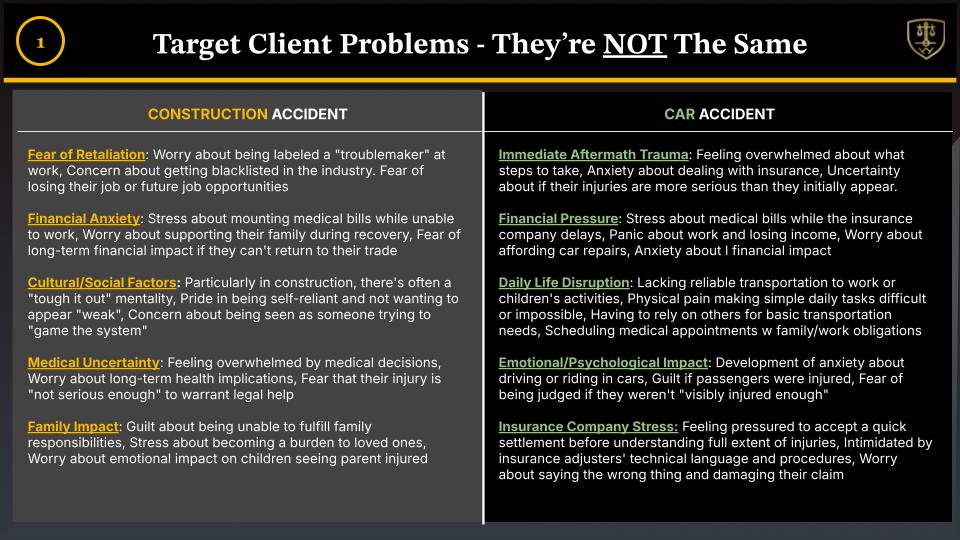
Your potential clients are dealing with real problems:- Mounting medical bills after an accident
- Anxiety about their legal situation
- Fear of making the wrong choice
- Uncertainty about their rights
- Concern about costs and outcomes
The key to successful legal advertising lies in understanding a fundamental truth: people care about themselves, their problems, and their outcomes. They don't care about your firm until you demonstrate that you understand their situation.
The Wrong Approach vs. The Right Approach
Let's contrast two different ad approaches:Traditional (Ineffective) Approach: "We have 35 years of experience. We're dedicated to representing the injured. Trust us for compassionate advocacy."
Client-Centered (Effective) Approach: "Car accident wasn't your fault? Don't let potential compensation escape. Accident within 2 years? Free consultation - 100% confidential."
The difference? The second approach focuses entirely on the prospect's situation and desired outcome.
Understanding the Two Types of Legal Marketing Offers
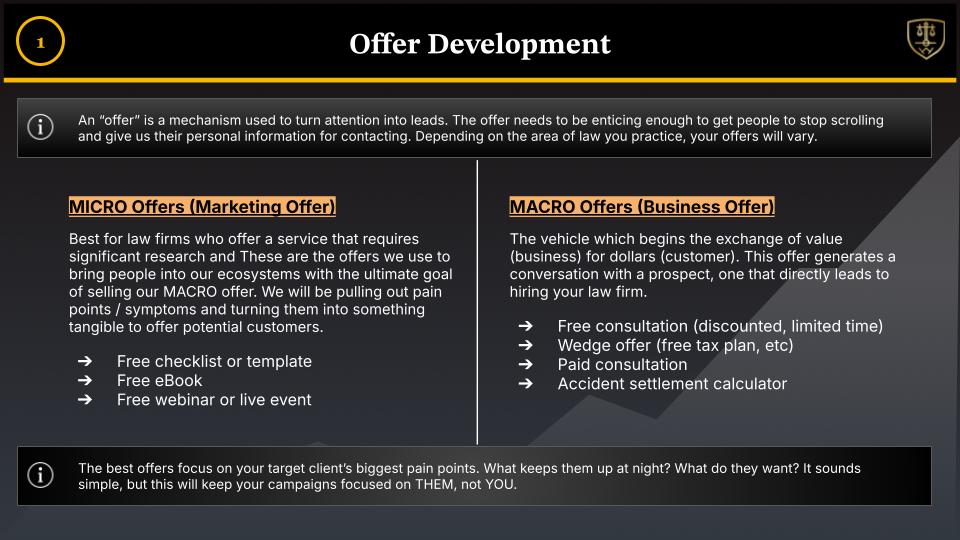
1. Micro Offers (Marketing Offers)
Best for practice areas with longer research phases:- Divorce law
- Tax law
- Estate planning
- Educational ebooks
- Legal checklists
- Free webinars
- Planning templates
2. Macro Offers (Business Offers)
Direct pathways to client acquisition:- Free consultations
- Discounted initial meetings
- Settlement calculators
- Case evaluations
How to Create Offers That Convert
The most effective legal marketing offers share these characteristics:- Client-Centric Focus
- Address specific pain points
- Speak to immediate concerns
- Offer clear value
- Clear Outcomes
- Explain what clients will gain
- Highlight potential compensation
- Emphasize immediate benefits
- Risk Removal
- Free initial consultations
- Confidentiality guarantees
- No-win, no-fee promises
The Framework for Success: Speaking to Pain Points
To create effective advertising, focus on:- Identifying specific client problems
- Addressing their fears and anxieties
- Offering clear solutions
- Demonstrating proven outcomes
Practical Steps to Improve Your Law Firm's Advertising
- Audit Your Current Messages
- Remove "we" and "our" focused language
- Replace with "you" and "your" centered messaging
- Focus on client outcomes
- Revise Your Offers
- Match offers to practice area needs
- Create appropriate micro or macro offers
- Test and optimize based on results
- Refine Your Copy
- Address specific pain points
- Focus on client outcomes
- Include clear calls to action
Conclusion: The Path Forward
The success of your law firm's advertising doesn't depend on having the biggest budget or the most experience. It depends on your ability to connect with potential clients through relevant messaging and valuable offers that address their immediate needs and concerns.Remember: Your potential clients don't care about your firm's history until they know you can solve their problems. Start with their needs, and you'll see your advertising performance improve dramatically.
Ready to transform your law firm's marketing? Start by reviewing your current advertising messages. Count how many times you use "we" versus "you." The results might surprise you – and show you exactly where to start making improvements.
Want us to do this for you? Book a FREE consultation.