
If your law firm is investing in marketing without proper tracking, you're likely throwing money down the drain.
Many agencies know that most lawyers don’t understand what to track.So they use "vanity metrics" to make campaigns look successful and to cover up failures.
But your marketing dollars aren't working for you if those metrics don’t translate into leads and signed cases.
That’s why it’s crucial to hold them accountable using key performance indicators (KPIs)—the only way to measure real success.
So, in this guide, we’ll break down the essential KPIs for lawyer lead tracking through SEO, paid ads, local SEO, and Local Service Ads (LSA), ensuring your firm isn’t fruitlessly spending money but actually growing.
What Is a KPI and Why Is It Important?
A key performance indicator is a measurable value that shows whether your marketing efforts are effective.Think of it as keeping score in a football game. You wouldn’t watch a game without knowing the score, and you shouldn’t run a marketing campaign without knowing your numbers.
They can tell you things like:
- How much are we paying per lead? Per signed case?
- How does our performance compare to last month? Last year?
- Are we profitable on our marketing spend? Or are we flushing money down the drain?
- Leads Generated – The total number of inbound leads from all marketing channels.
- Cost Per Lead (CPL) – The average cost to acquire a new lead.
- Lead-to-Client Conversion Rate – The percentage of leads that become paying clients.
- Cost per signed client - The amount you're paying to generate a new client.
It's up to you to hold your agency accountable!
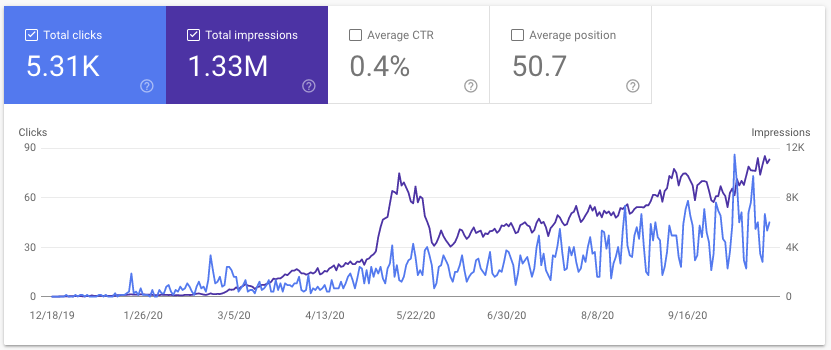 "Vanity metrics" are things like traffic and keyword rankings. These metrics are easy to manipulate - if you're not signing cases, the marketing is NOT working!
Set Targets To Track Progress
KPIs alone aren’t enough—you also need targets. A target is a specific benchmark that determines success and gets everyone on the same page. It gives you a goal to work toward and allows you to measure progress.For example:
- KPI = phone calls, target = 100
- KPI = cost per lead, target = $250
- KPI = signed cases, target = 25
SEO Tracking Metrics For Lawyers
SEO is about optimizing your firm’s visibility in search engines like Google. It’s a long-term strategy that drives organic traffic to your website.Here’s what you should be tracking to know if your SEO strategy is working for your law firm.
KPI #1: Total Organic Traffic Sessions
What It Is: Organic traffic refers to the number of visitors coming to your website from unpaid search results on Google.Why It’s Important: More organic traffic means more potential leads, but not all visitors are valuable. Tracking organic traffic helps ensure you’re attracting potential clients, not just random visitors.
How to Track It:
- Use Google Analytics 4 (GA4) → Go to Reports → Acquisition → Traffic Acquisition and filter for "Organic Search."
- Check Google Search Console for keyword insights and track which pages are bringing in the most relevant visitors.

KPI #2: Organic Engagement Metrics
What It Is: Engagement metrics measure how visitors interact with your website. This includes metrics like:- Bounce rate: Are visitors leaving your site immediately?
- Time on page: Are they reading your content, or just skimming?
- Scroll depth: Are they consuming the full page?
How to Track It:
- Use Google Analytics 4 (GA4) to monitor:
- Bounce Rate – Are visitors leaving immediately?
- Time on Page – Are they reading your content?
- Scroll Depth – Are they consuming the full page?
Deeper analysis: a blog post is an informational type of page. So things you may want to measure include:
- How much time are users spending on the page?
- Are they scrolling down and reading all the content?
- If you have a video, are they engaging with it?
But you also want them to contact you about their car accident.
So, you should measure whether users click the calls to action on the page. Are they calling your firm, engaging in a live chat, or filling in your form?
Understanding engagement metrics helps you improve user experience and increase conversions.

KPI #3: Conversion Rate (Lead Conversion Rate)
What It Is: Conversion rate measures the percentage of website visitors who take an action, like calling your firm, submitting a form, or using live chat.Why It’s Important: A high conversion rate means your website is successfully turning visitors into leads. Low conversion rates suggest issues with your messaging, design, or user experience.
How to Track It:
- Use Google Analytics 4 (GA4) to track form submissions, call clicks, and chat interactions. Improve conversion rates by adding clear calls to action, an easy-to-fill contact form, and a visible phone number on every page.
- Monitor high-priority pages (like practice areas) to optimize performance.
KPI #4. Keyword Rankings
What It Is: Keyword rankings show where your website appears in search results for specific terms.Why It’s Important: Higher rankings for the right keywords (e.g., “car accident lawyer near me”) increase visibility and lead potential. Rankings alone don’t guarantee leads, but they’re essential for long-term SEO success.
How to Track It: Use Google Search Console, Ahrefs, or SEMrush to monitor rankings. Track baseline rankings early and measure progress over time. Focus on month-over-month trends rather than daily fluctuations to assess long-term SEO growth.

Local SEO Tracking Metrics For Lawyers
Local SEO is all about optimizing your visibility in Google Maps and the map pack. It’s not your website that will show up in these features—rather, it’s your Google Business listing.While it’s good practice to fill out all the information you can in your listing, most people won’t spend time checking it out. They’ll likely pay attention to your reviews first and if your firm meets their criteria, then they’ll call you.
So the metrics to track are different compared to website SEO.
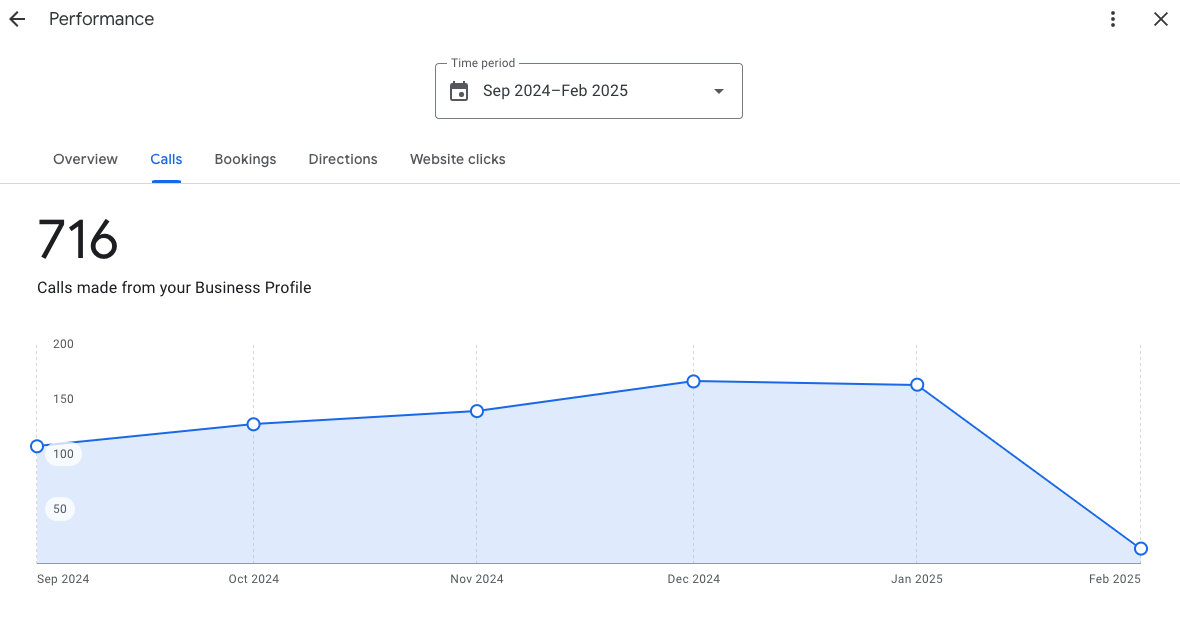
KPI #1: Calls from Google Business Profile
What It Is: This metric tracks how many people call your law firm directly from Google search results, especially on mobile devices.Most people search for legal services on mobile devices. Which means they are able to call directly from Google search results.
For instance, imagine being involved in a vehicle accident on a freeway. You’re stranded on the side of the road looking for help. One of the first actions people take is to search Google for a car accident lawyer near them.
Why It’s Important: Many legal clients search for help in urgent situations, like after a car accident. If your firm appears in search results, you have a higher chance of capturing these leads.
How to Track It: Use Google Business Profile Insights to monitor call volume from your listing. This helps measure how well your local SEO efforts are converting searchers into potential clients.
KPI #2: Clicks To Website
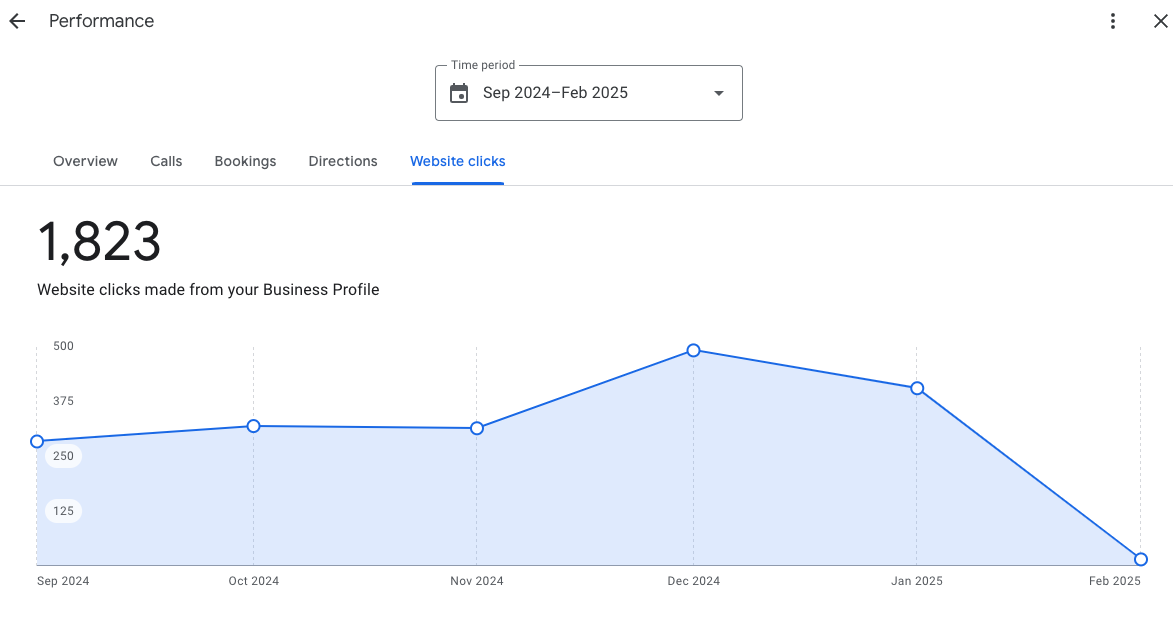
What It Is: This metric tracks how many people click on your website from your Google Business Profile (Google Maps).Why It’s Important: More clicks mean potential clients are interested in learning about your firm. Tracking this helps compare the effectiveness of different marketing channels.
How to Track It: Use Google Business Profile Insights to monitor website clicks. Analyzing trends can help optimize your listing and improve local SEO performance
KPI #3: Review Velocity And Quality
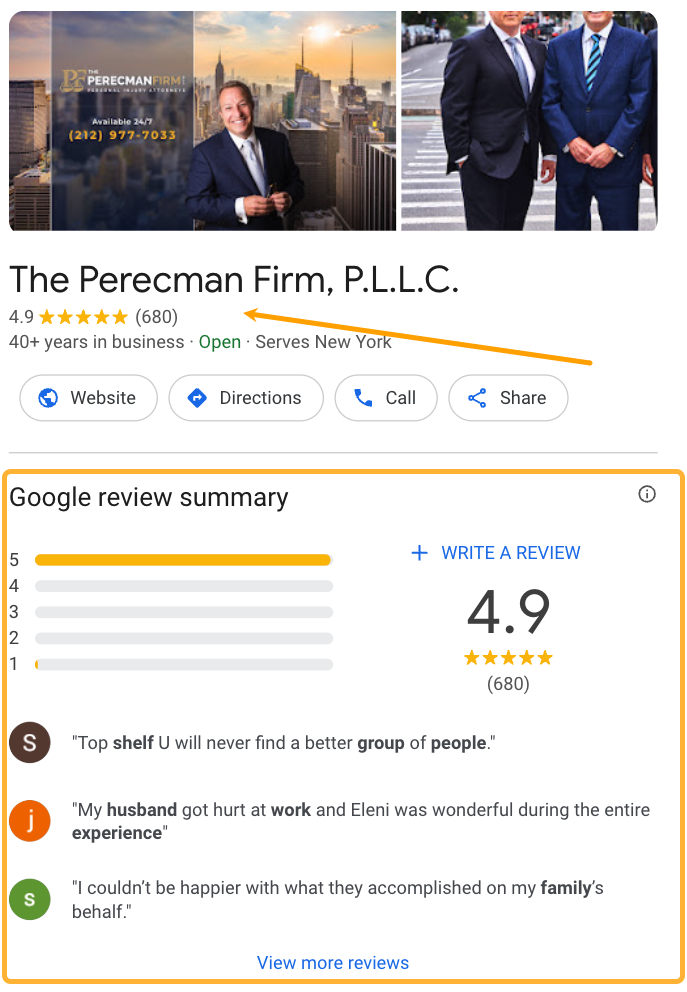
What It Is: This metric tracks the number and quality of reviews on your Google Business Profile and other platforms.Reviews are one of the most important features of your business listing.
You should keep tabs on how many new reviews you’ve been getting each week.
Why It’s Important: A strong reputation builds trust and increases conversions. Law firms with more positive reviews are more likely to attract and close new cases.
How to Track It: Regularly check your Google Business Profile for new reviews. Make it a habit to request reviews from past clients, current clients, professional acquaintances, and industry contacts to strengthen your online reputation.
Local Service Ads (LSAs) KPIs For Lawyers
Local Service Ads are pay-per-lead ads that show up for keywords containing a location. This means that you would only pay for these ads when they deliver phone calls to your law firm.They’re different from regular Google Ads because they use your Google Business listing instead of your website:
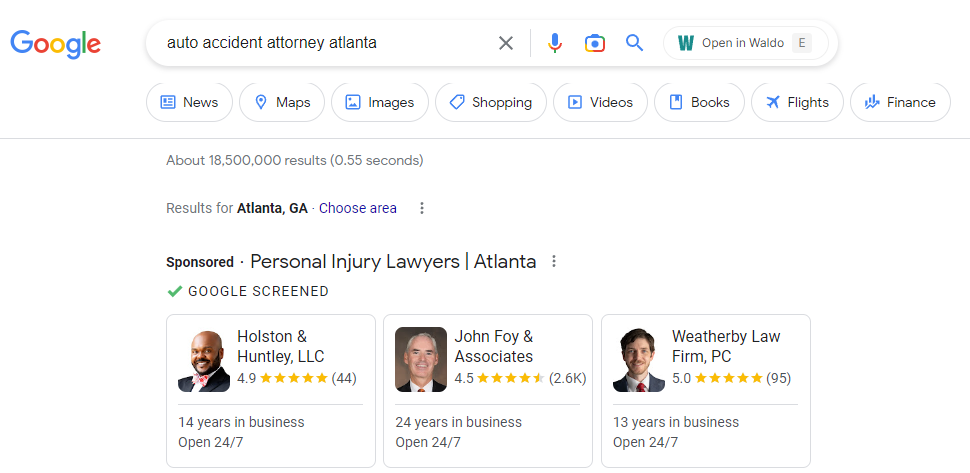
KPI #1: Phone Call Leads
LSAs are specifically designed to bring in phone calls. If you don’t get calls, you don’t pay for these ads, it’s that simple.In most cases, since these ads are the first thing people see after they search, it means you’ll often be the first person they call.
You need to be tracking the volume and quality of calls coming through to judge how effective this marketing channel is for your law firm.
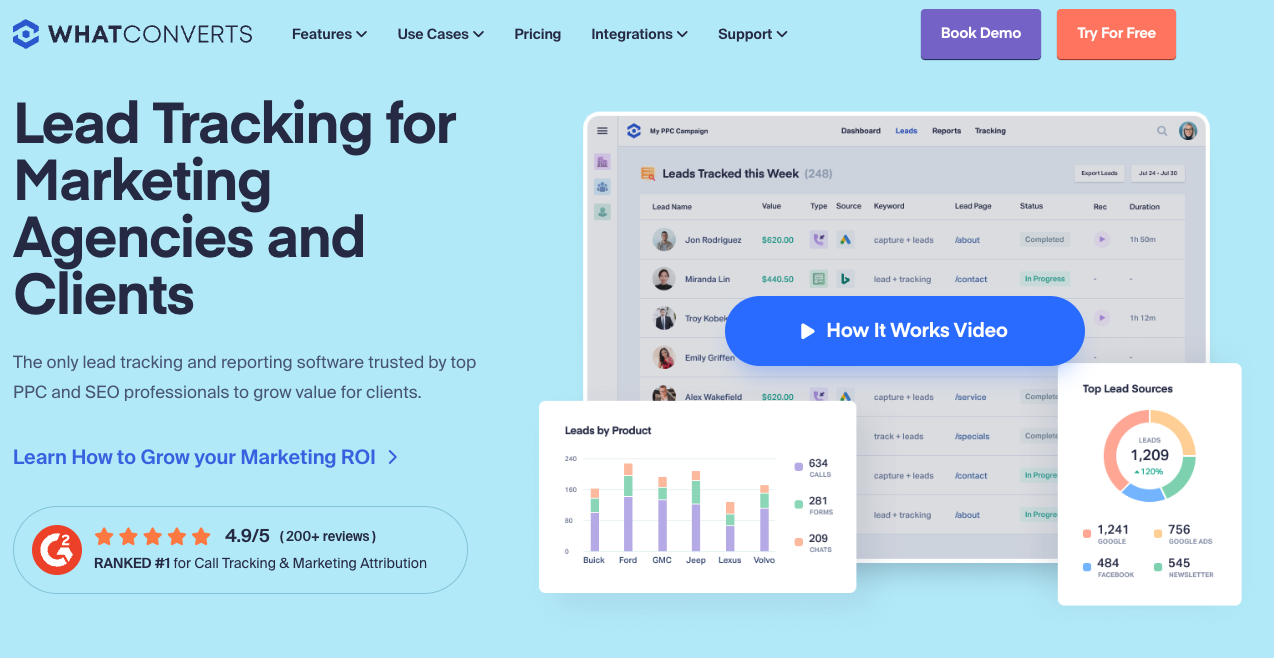
We use (and recommend) call tracking software like WhatConverts to help you do this.
KPI #2: Cost-per-lead
Quote: “The good thing with local service ads is that it’s not cost per click, it’s cost per lead.”— Cesar Cobo
Cost-per-lead is a metric you’ll be able to find inside the dashboard for local service ads. It measures how much you paid (on average) to receive a phone call from the ads.
Google will tell you if they’re charging you for a phone call and it specifically has to meet the criteria of:
- How long was a lead on the call?
- Whether you answered the call
- Whether it was about the services you offer
Because of that, each lead can cost upwards of $100, depending on your practice area, location, and competition levels.
The goal is to find ways to reduce the cost per lead by optimizing your ads strategically. For LSAs, having lots of reviews and a stellar reputation on your Google business listing also goes a long way.
KPI #3: Cost Per Signed Case
This metric is similar to tracking the cost per lead above, but it draws on your CRM data to record how many signed cases your local service ads contributed to.It is by far the most powerful metric you can track as it measures performance in the area you care most about—signed cases.
If you don’t already have a CRM set up, we recommend Lead Docket.

f you need help setting up your CRM, reach out. We can help you set it up for free along with tracking all the essential marketing KPIs you’ll need - get in touch.
Paid Ads KPIs for Law Firms
There are two types of ad campaigns you can run on search engines:- Pay-per-lead: Local service ads (as mentioned above).
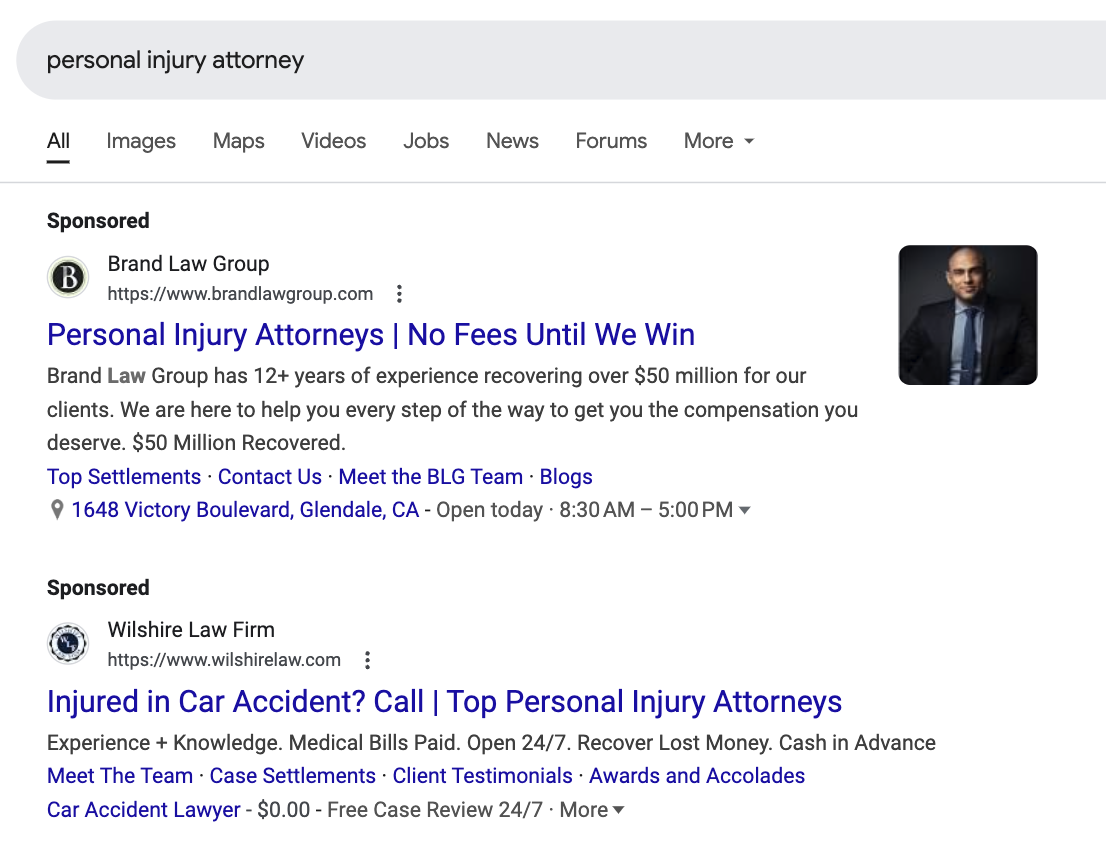
- Pay-per-click: All other Google Ads.
KPI #1: Cost per click
Cost-per-click refers to how much you spend for someone to visit your website from a Google Ad. You can track this metrics within the Google Ads dashboard for each campaign you’re running.Although the cost can be significantly lower than the cost of getting a phone call directly from an LSA, in the law industry, ad costs are still relatively high.
For instance, it’s not uncommon for a single click to a personal injury lawyer’s website to cost upward of $200. In general, the higher the value of a potential case, and the more competition in your area, the more it costs.
The disadvantage compared to LSAs is that not everyone who visits your website will contact you. On average, only one out of ten people might call you from your website.
However, you’ll have much more creative and strategic control over which keywords these ads show for. This means you’ll have a higher degree of influence on the costs and will be able to reduce the cost per click over time.

KPI #2: Calls / Leads Generated From Ads
Unlike LSAs, you won’t be able to directly track calls from pay-per-click ads.Rather, you’ll need to set up your reporting tools to attribute any calls you get from your website to an ad campaign if the caller visits your site after clicking an ad.
It can get complex tracking phone calls without the right tools and setup. Thankfully, we can help you get your reporting and tracking in order, for free.
We offer this to all law firms we work with, as it is an essential bedrock of success.
Need help tracking all these law firm KPIs?
Without tracking the right KPIs, your law firm is flying blind when it comes to marketing.Agencies love to show vanity metrics, but real success comes down to cost per lead, conversion rates, and signed cases.
By consistently monitoring KPIs and setting clear targets, your firm can optimize its marketing spend and maximize growth. We can help you start tracking the right KPIs for free.
Get in touch today