
Your website is losing organic traffic, and it has nothing to do with the "quality" of your SEO work.
It has everything to do with how Google changed.
I do 3 to 5 consults a week with law firms. Almost every one shows me the same traffic graph, going down and to the right.
Most of them think it's their agency. Sometimes it is. But usually, it's something you can't fix with more blog posts.
Here's the short version:
- AI is answering your clients' questions before they reach your site.
- The traffic you're losing was mostly informational, and it wasn't signing cases.
- The firms that win now go after visibility everywhere, not rankings in one place.
Why Is Your Law Firm's Website Traffic Dropping?
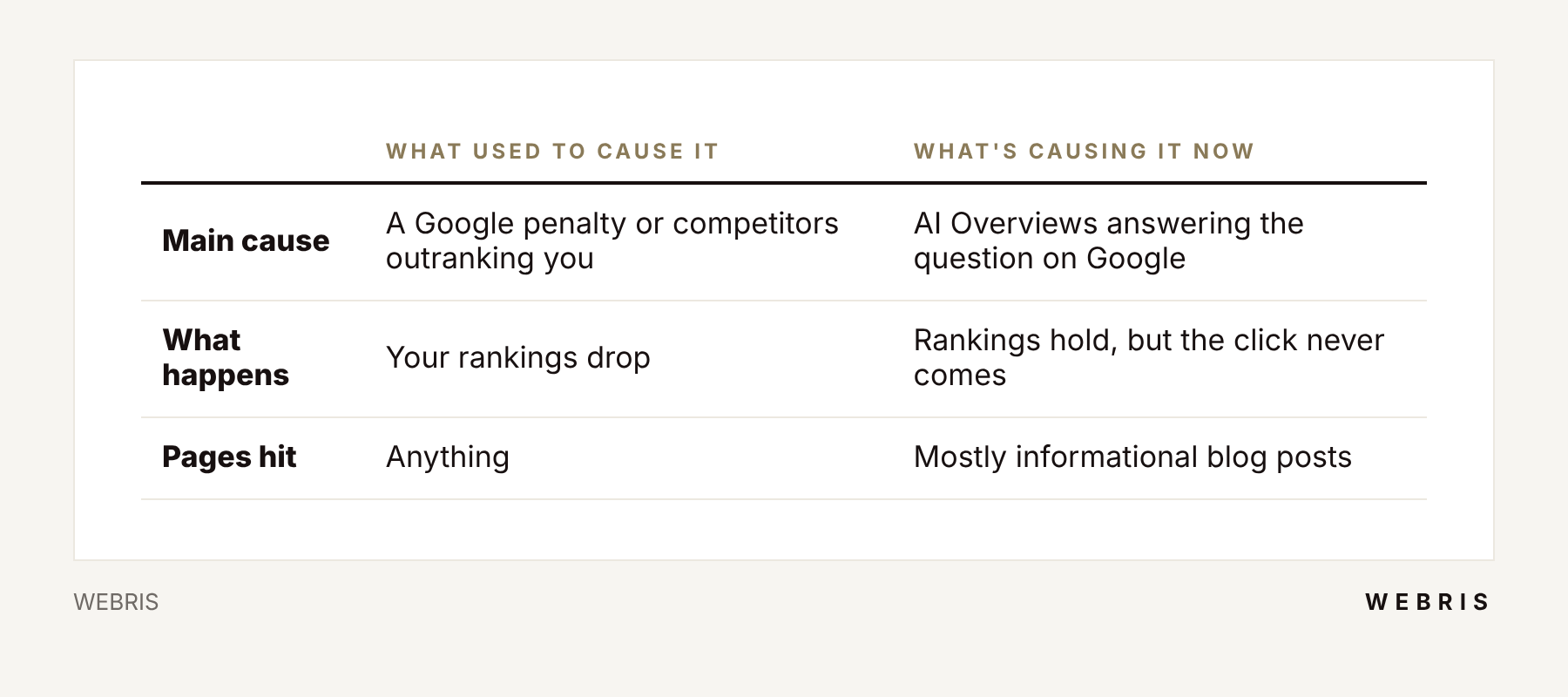
Your law firm's website traffic is most likely dropping because Google's AI Overviews now answer informational searches at the top of the page, so fewer people click through to your site.
Penalties and competitors still happen. They're just no longer the most common reason.
The Usual Suspects: Penalties, Competitors And Your Agency
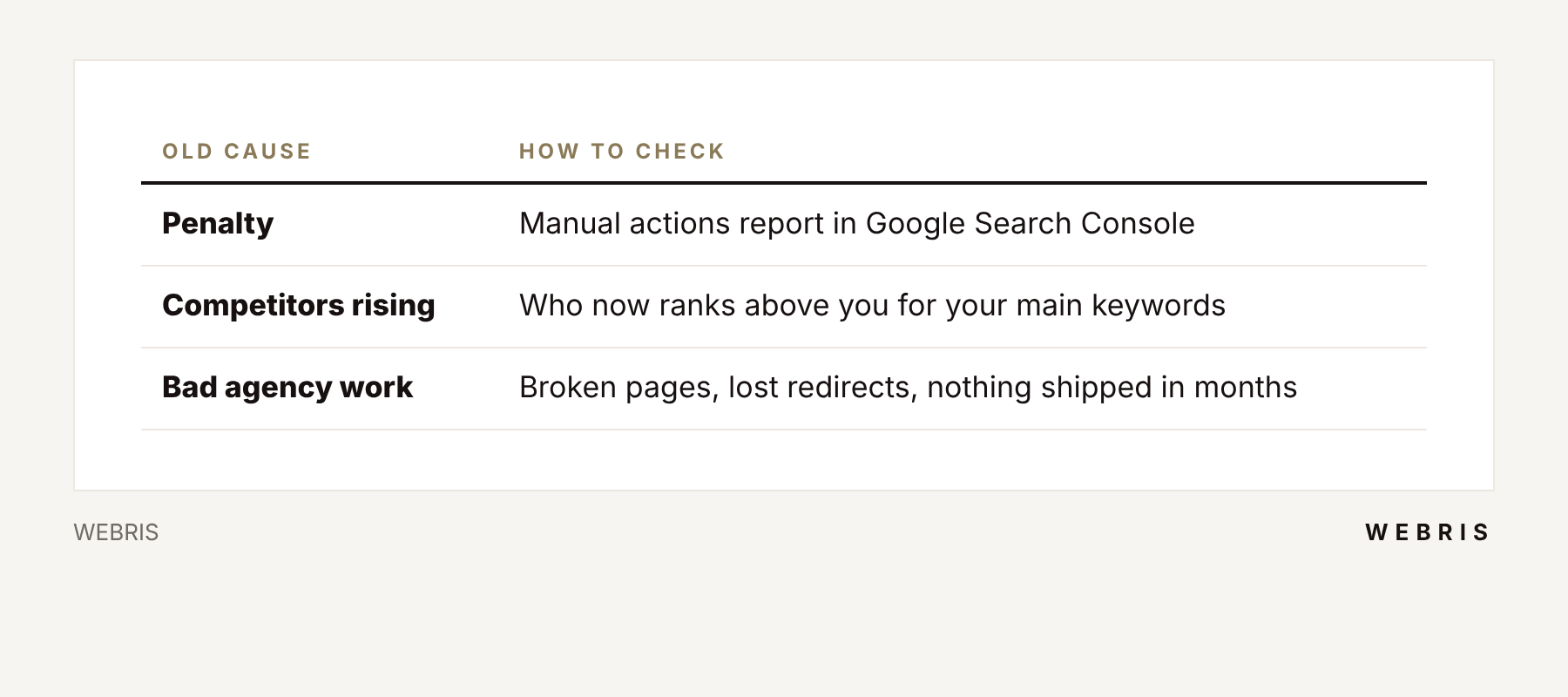
Historically, a drop in organic traffic from Google came down to three things:
- ❌ A penalty. Google flagged your site for spammy links or thin content.
- ❌ Competitors rising. Another firm outworked you and pushed you down.
- ❌ Bad work. Your agency broke something or stopped doing anything.
Being an agency guy myself, I'm not going to pick on your agency without seeing the work. Check these first. We covered the technical causes in 6 reasons your law firm's website is losing organic traffic.
The Real Cause Now: Visibility Over Clicks
I've been doing SEO for 20 years. I hate saying this, but search is moving toward visibility instead of clicks.
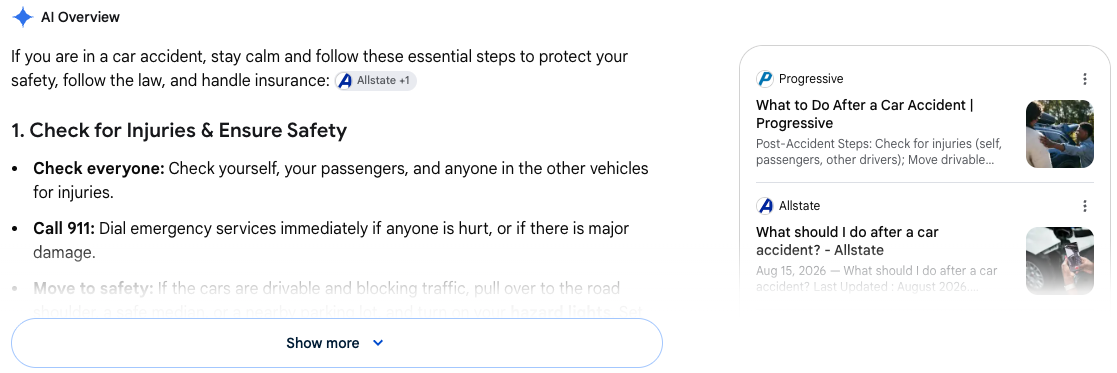
Search "what to do after a car accident." That's 7,000 searches a month in the U.S., according to Ahrefs. Google answers it right at the top with an AI Overview.
Look at who it cites: Progressive and Allstate. Insurance companies, not law firms.
That page on your site used to pick up traffic. Now the AI gets the attention.
How AI Overviews Are Eating Your Informational Traffic
An AI Overview is the AI-written summary Google shows above the regular results. It answers the question on the results page.
For informational searches, the click that used to go to your blog never happens.
What The Click Data Says
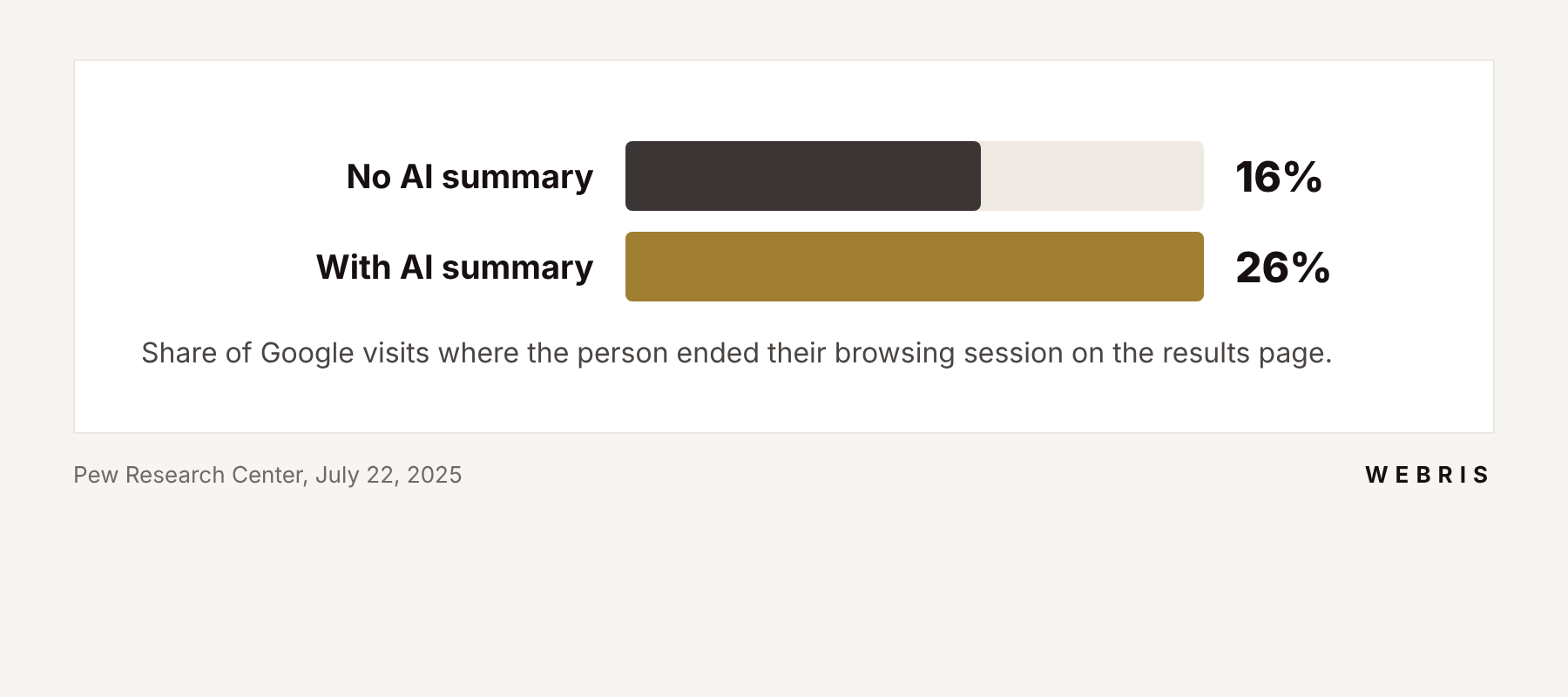
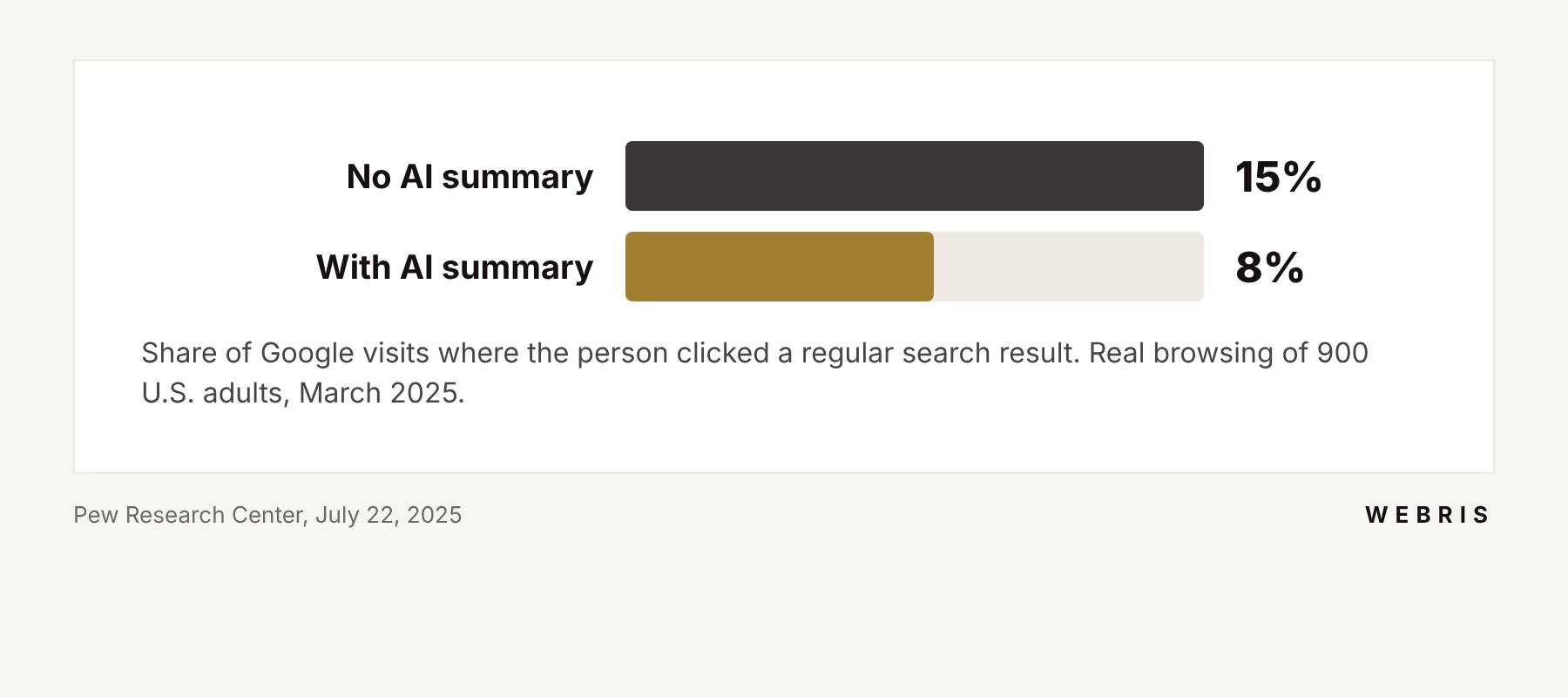
Pew Research Center tracked the real browsing of 900 U.S. adults in March 2025. Here's what it found:
| What Pew measured | With an AI summary | Without one |
|---|---|---|
| Clicked a regular search result | 8% | 15% |
| Clicked a link inside the AI summary | 1% | n/a |
| Ended their browsing session | 26% | 16% |
Read that again. When an AI summary shows up, clicks on regular results drop by almost half.
And more people just leave. They got the answer.
Why Your Agency's "AI Citation" Report Isn't A Win
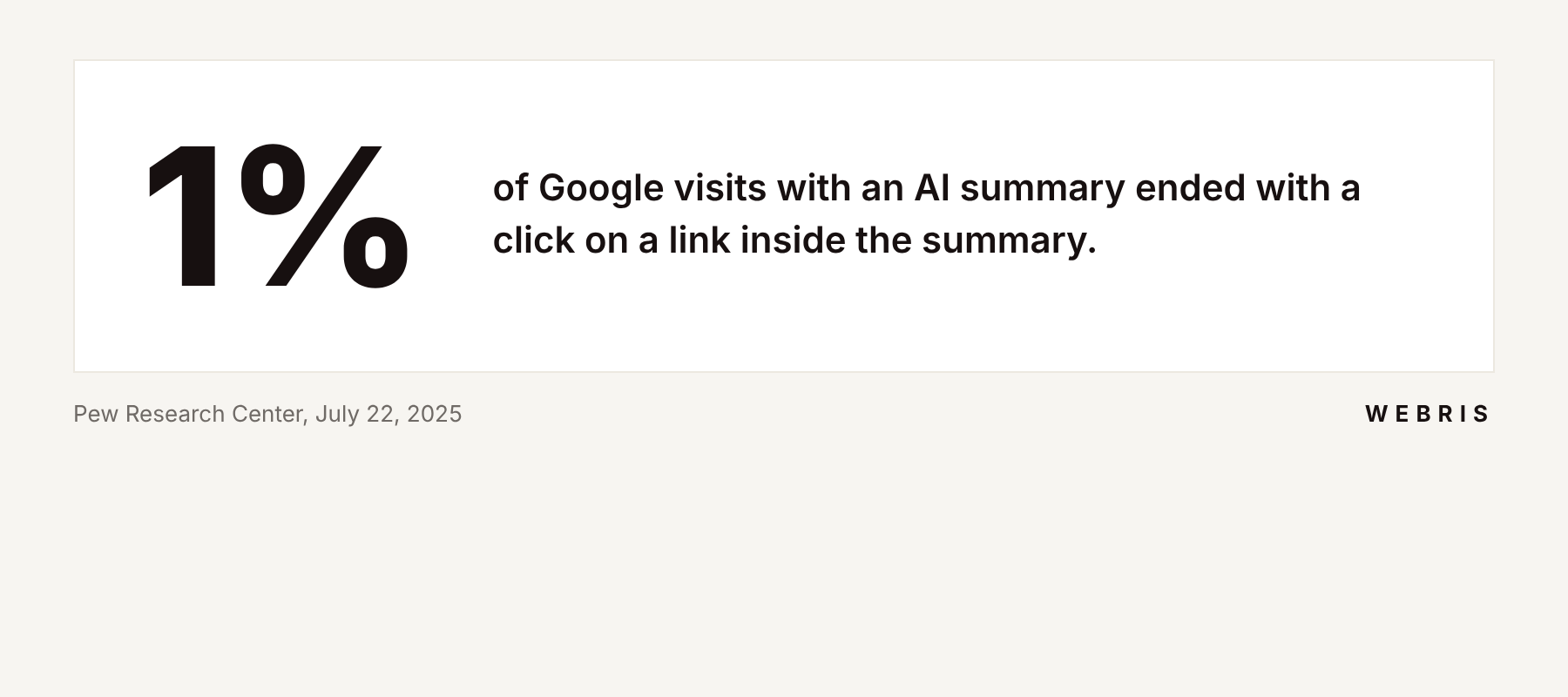
There are still links to your website inside those AI Overviews. I know your agency is probably reporting that as a win.
Nobody clicks them. Pew measured it at 1%.
And why would they? People don't want to click through and read a 10,000 word blog post. They want the answer.
This is better for searchers. It's worse for your traffic graph. And it should change your SEO strategy more than anything else.
Is Losing Blog Traffic Actually Hurting Your Firm?
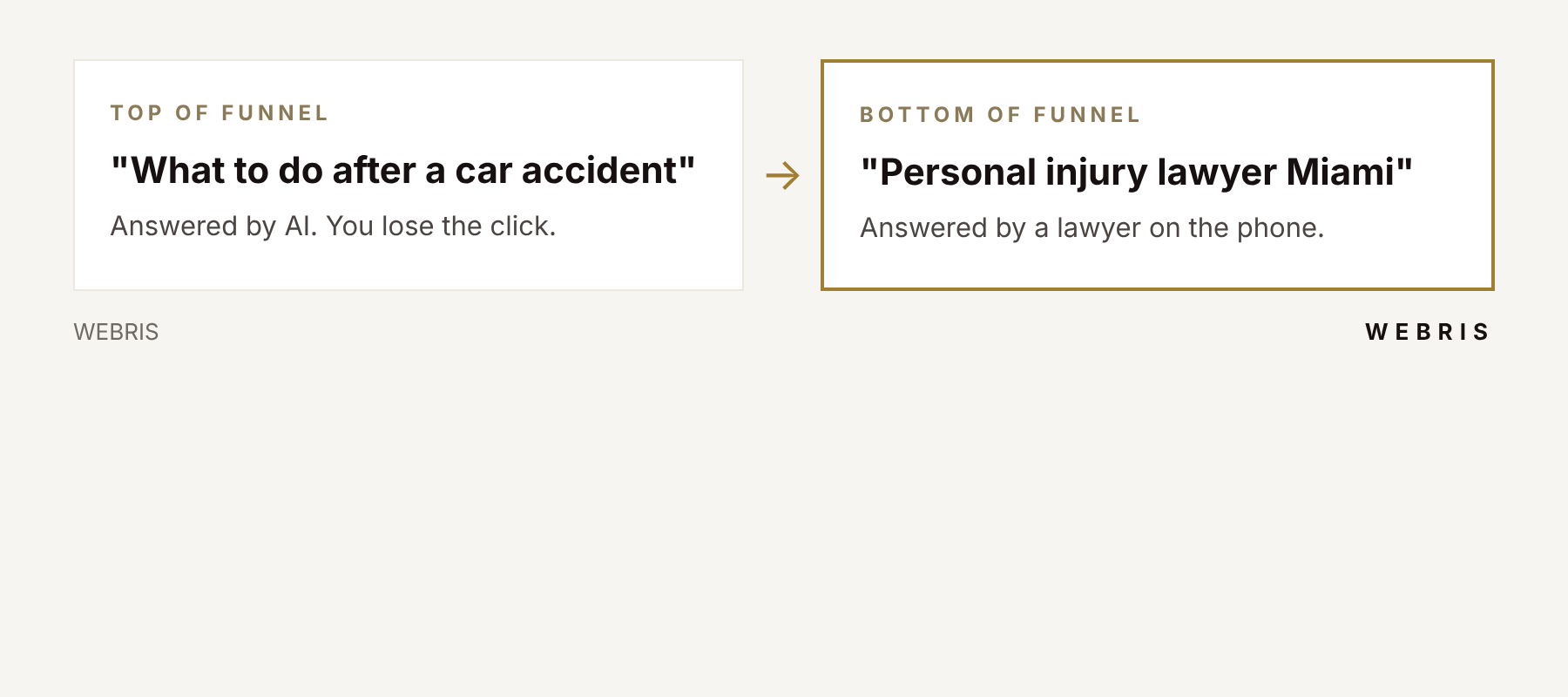
Probably not. Most of the traffic law firms are losing came from informational queries that never signed cases.
Traffic loss used to be my easiest pitch: "Look, you're shedding traffic." Now I dig into which pages are dropping first.
Informational Queries Vs. Bottom-Funnel Queries
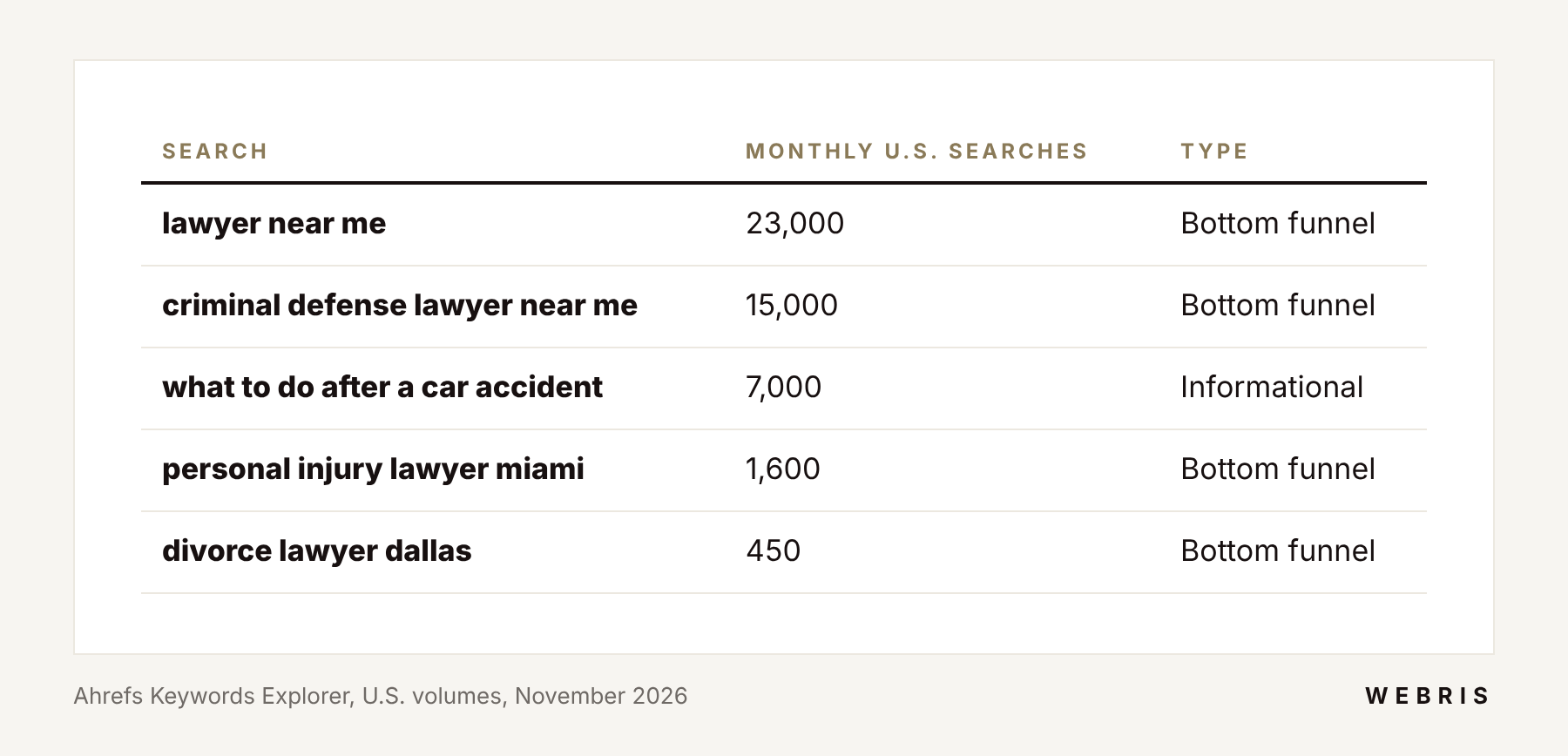
A bottom-funnel query is a search from someone ready to hire a lawyer. It's the search that makes your phone ring.
| Search | Monthly U.S. searches | Type |
|---|---|---|
| lawyer near me | 23,000 | Bottom funnel |
| criminal defense lawyer near me | 15,000 | Bottom funnel |
| what to do after a car accident | 7,000 | Informational |
| personal injury lawyer miami | 1,600 | Bottom funnel |
| divorce lawyer dallas | 450 | Bottom funnel |
Volumes are from Ahrefs Keywords Explorer, November 2026.
When I look closer at the pages losing traffic, they're almost always informational. Those visits were probably never driving business anyway.
What Google Shows For A Money Keyword
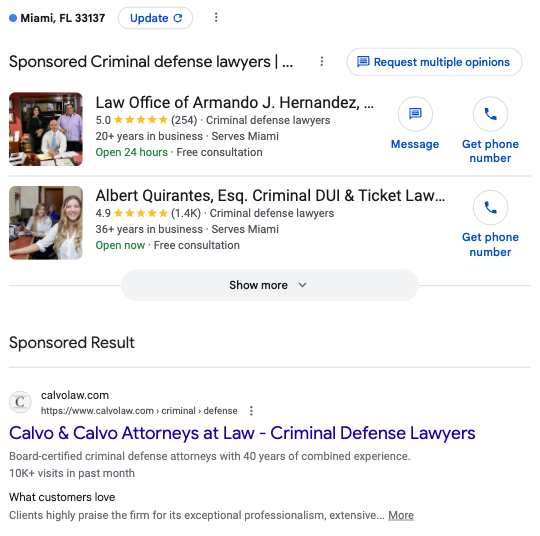
Search a bottom-funnel keyword like "personal injury lawyer Miami" or "divorce lawyer Dallas." Here's what you get, in order:
- Local Service Ads
- Pay-per-click ads
- The Google Maps pack
- Practice area pages and home pages
No blog posts. Blog content doesn't qualify to rank for that traffic.
That's why your practice area pages matter more than your blog ever did.
Should Your Law Firm Stop Writing Blog Content?
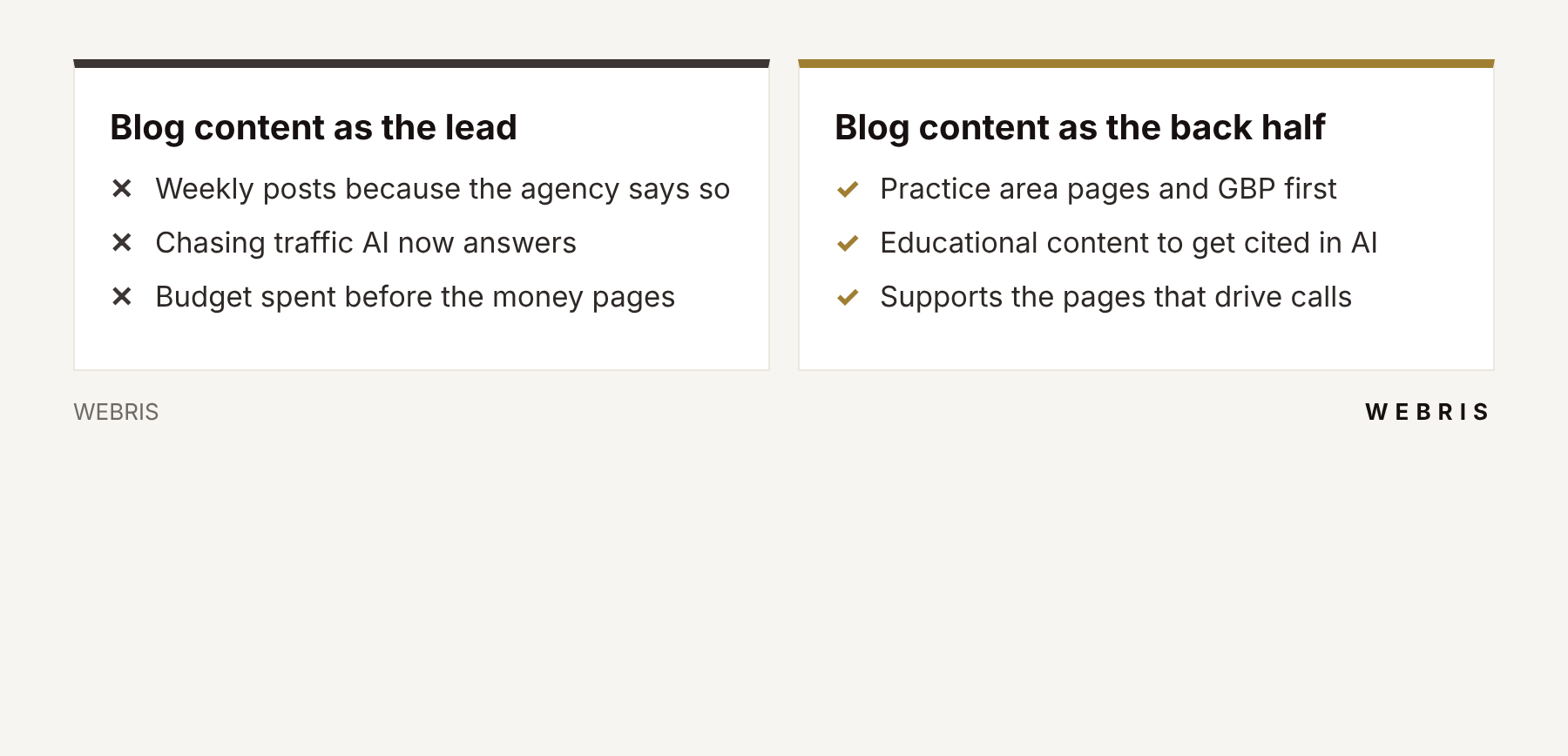
No, but it shouldn't lead your campaign. Blog content is the back half of the strategy, not the front.
I talk to so many of you who've been convinced you need an active blog. That's not the case.
There is value in it:
- ✅ Getting cited in AI Overviews for informational questions.
- ✅ Getting cited in ChatGPT when someone researches their situation.
- ✅ Building authority behind your practice area pages.
So keep some educational content on your site. Just don't spend your budget there first. Here's how we approach content marketing for law firms.
Is SEO Dead For Law Firms?
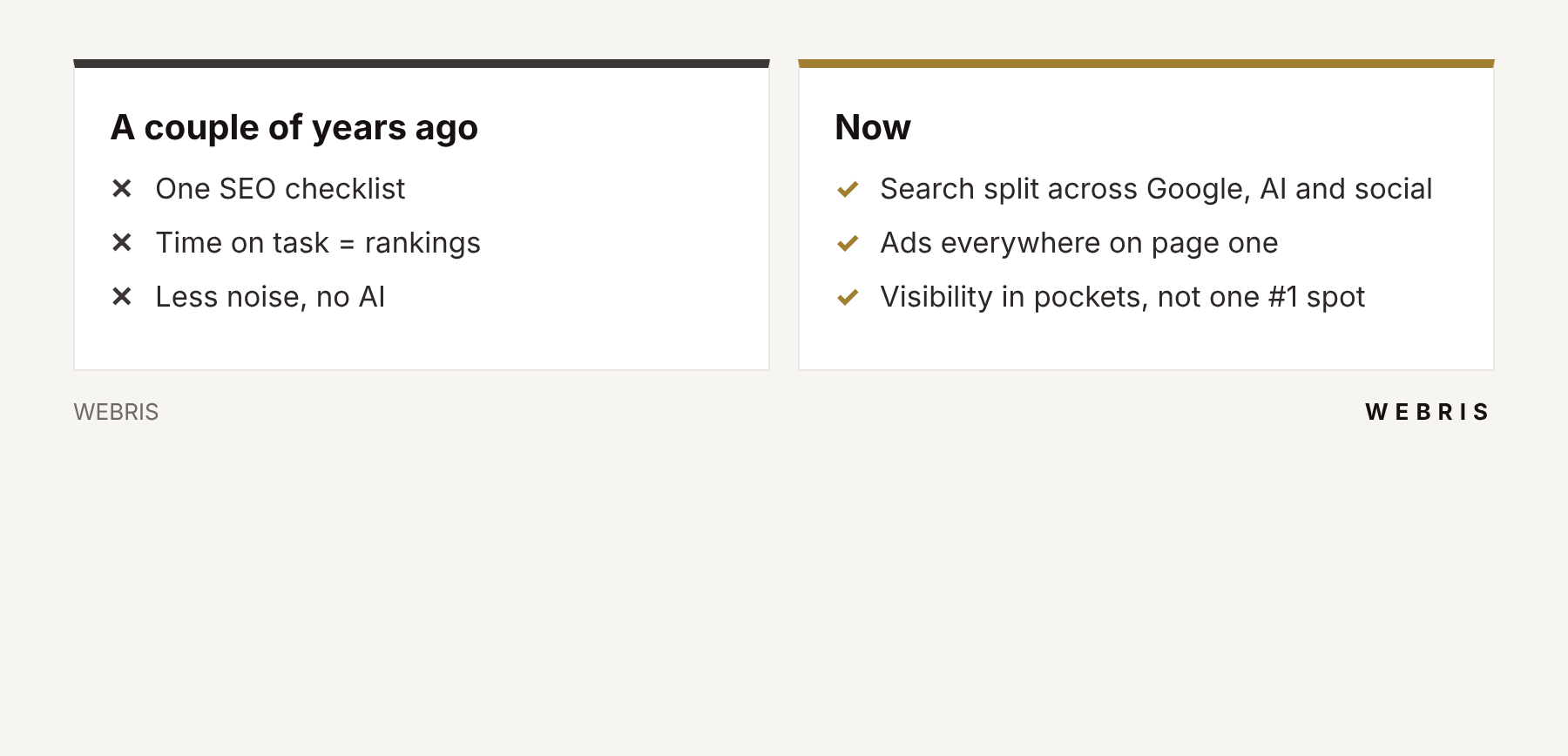
SEO isn't dead. The linear version of it is.
A couple of years ago, SEO was a checklist. Do the work, give it time on task, and you'd rank.
There was less noise, less competition, and no AI. Now search is fragmented.
It's not about ranking first in Google anymore. If that's still the pitch you're getting, run for the hills. More on this in why your law firm's SEO isn't working anymore.
Where Your Clients Are Searching Now
Your future clients are searching on Google, inside AI assistants, and on social media. You need to be honest about that before you spend another dollar.
Google Still Owns Search, But It Sells The Top Of The Page
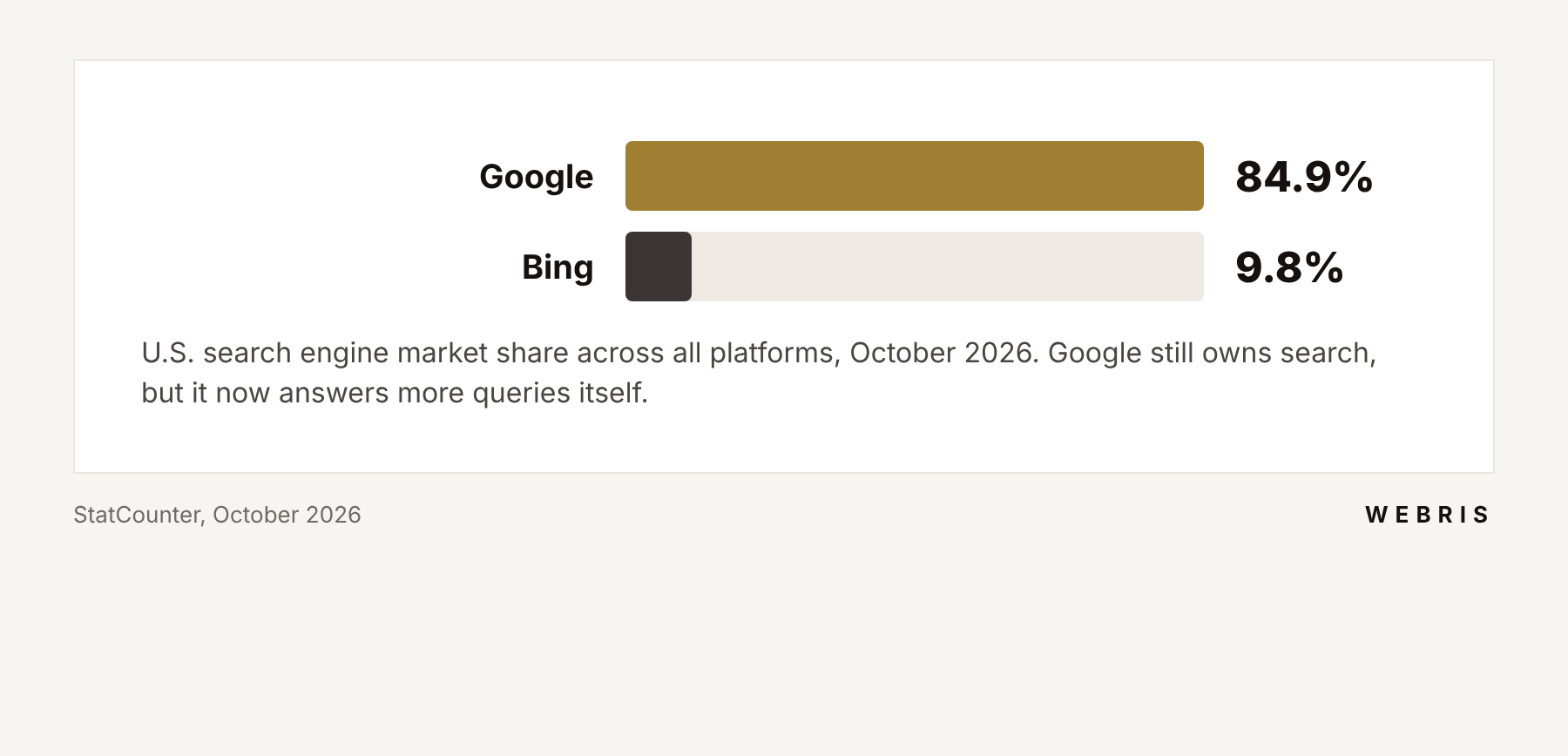
According to StatCounter, Google held 84.93% of the U.S. search market in October 2026.
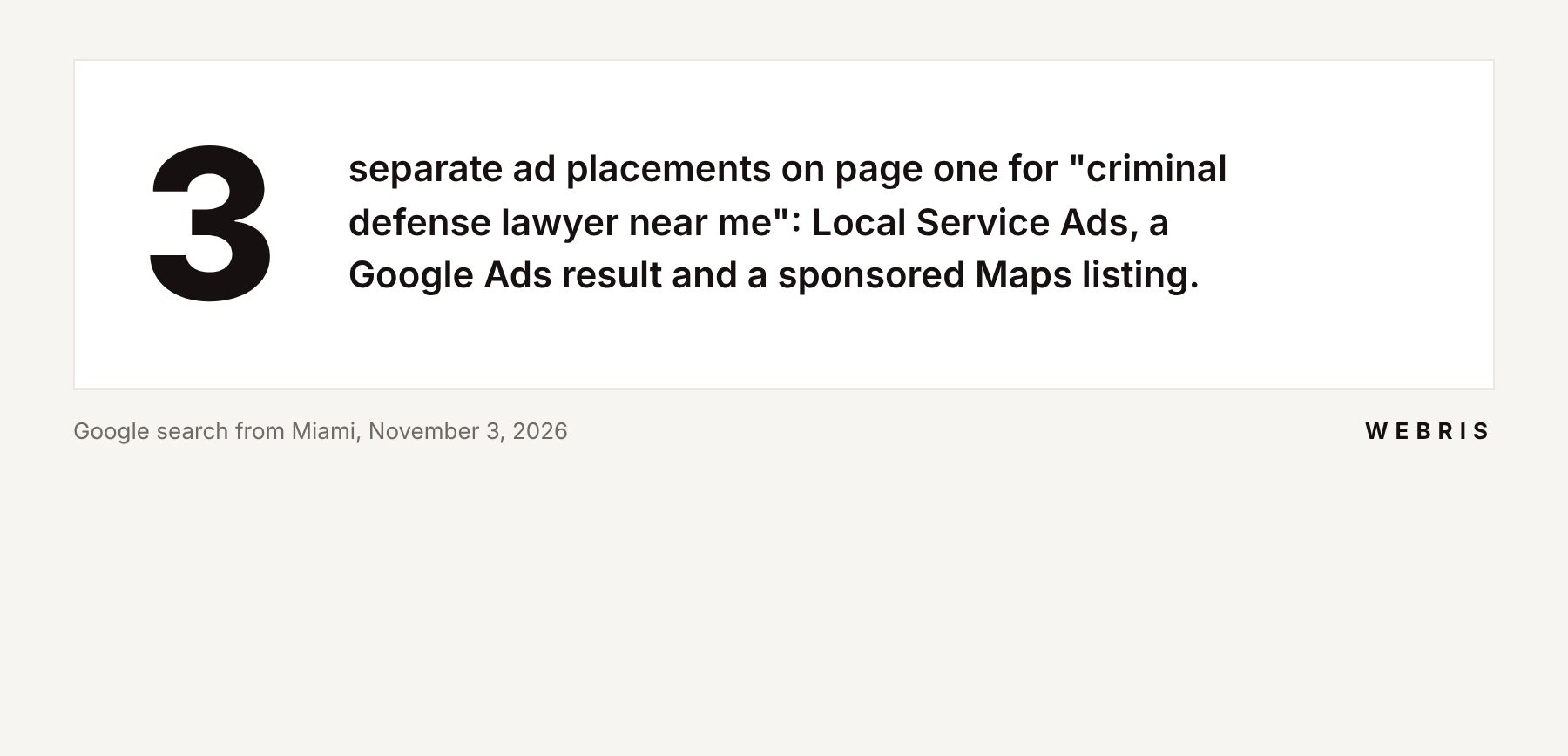
But type in your keywords and you'll see ads everywhere. For "criminal defense lawyer near me," I counted three separate ad placements on page one.
Google is a publicly traded company. They're going to get their money. Your strategy has to factor that in.
ChatGPT And AI Assistants Are Taking A Bite
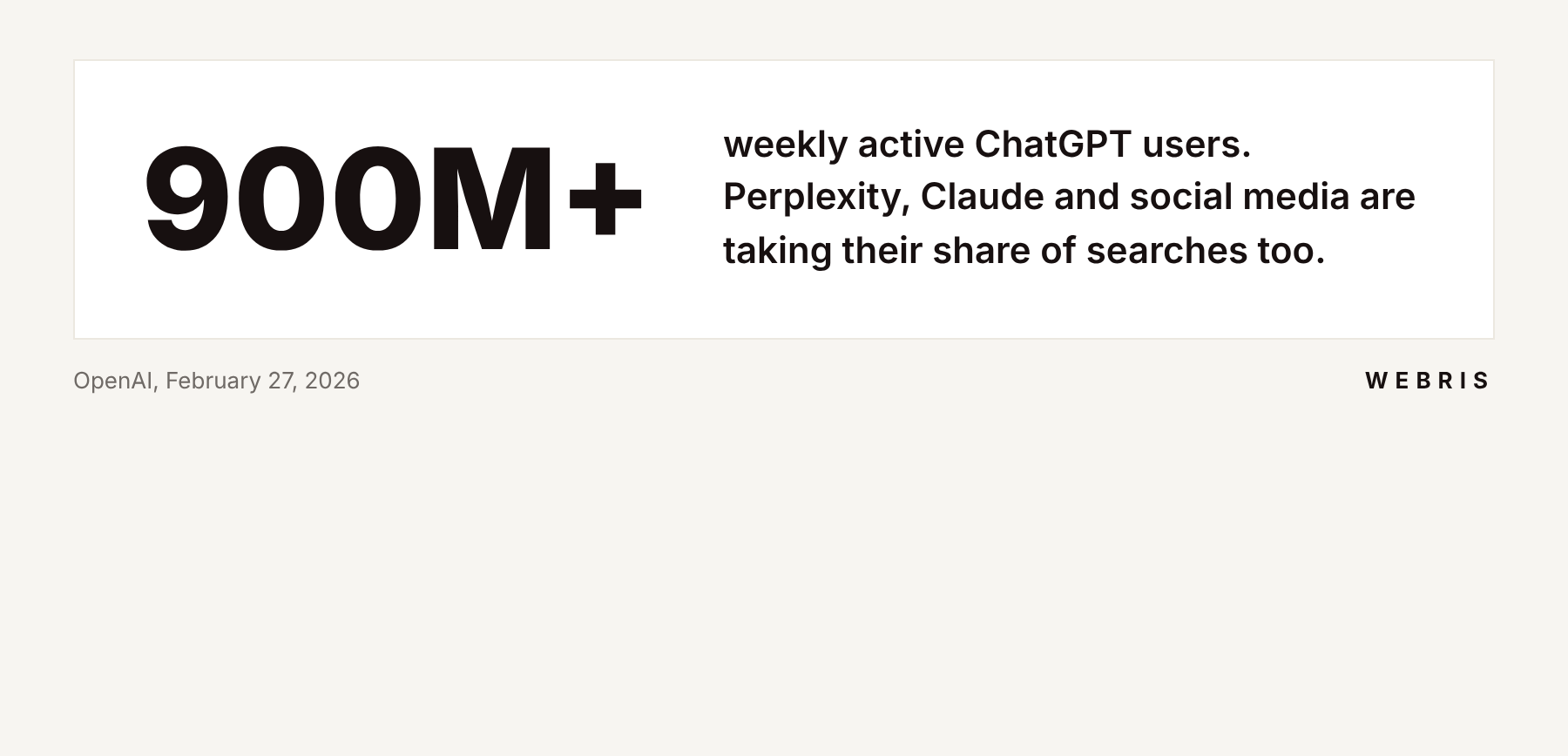
OpenAI reported more than 900 million weekly active users on ChatGPT in February 2026.
ChatGPT, Perplexity and Claude are all taking a piece of search. Social media is pulling attention too.
That's not a reason to panic. It's a reason to show up in more places.
What To Do Instead: A Horizontal Search Strategy
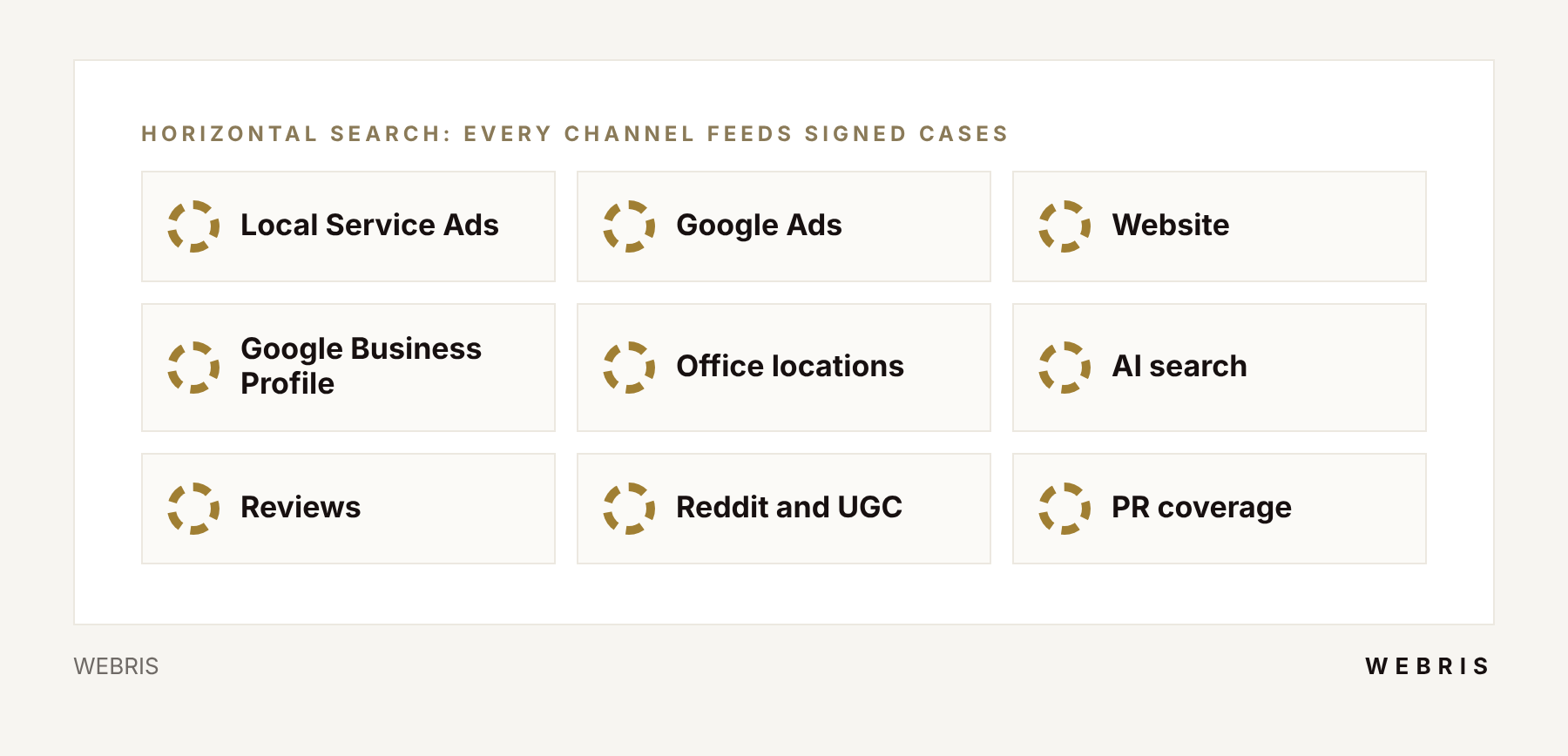
A horizontal search strategy means getting pockets of visibility across every channel, for the queries that drive business value. The vertical approach was all about the website and the traffic graph.
Here's what that looks like.
Run Local Service Ads
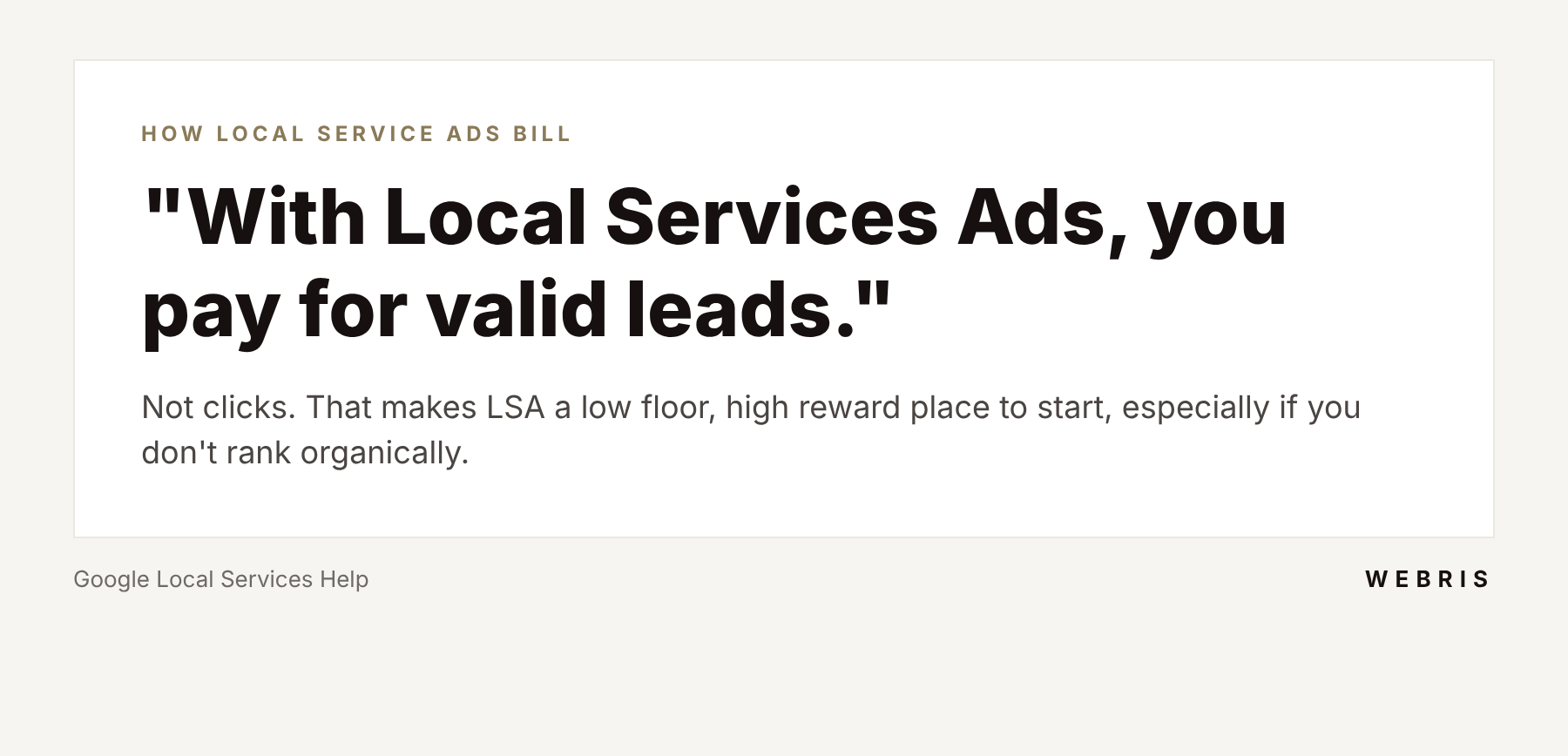
I call Local Service Ads a low floor, high reward platform. According to Google, "with Local Services Ads, you pay for valid leads." Not clicks.
You don't have to spend much there. If you're not ranking organically, you should be on LSA. Easy.
Here's our full breakdown of Local Service Ads for lawyers.
Use PPC To Prospect New Case Types
Pay-per-click ads are expensive. But they're the fastest way into a new practice area or case type.
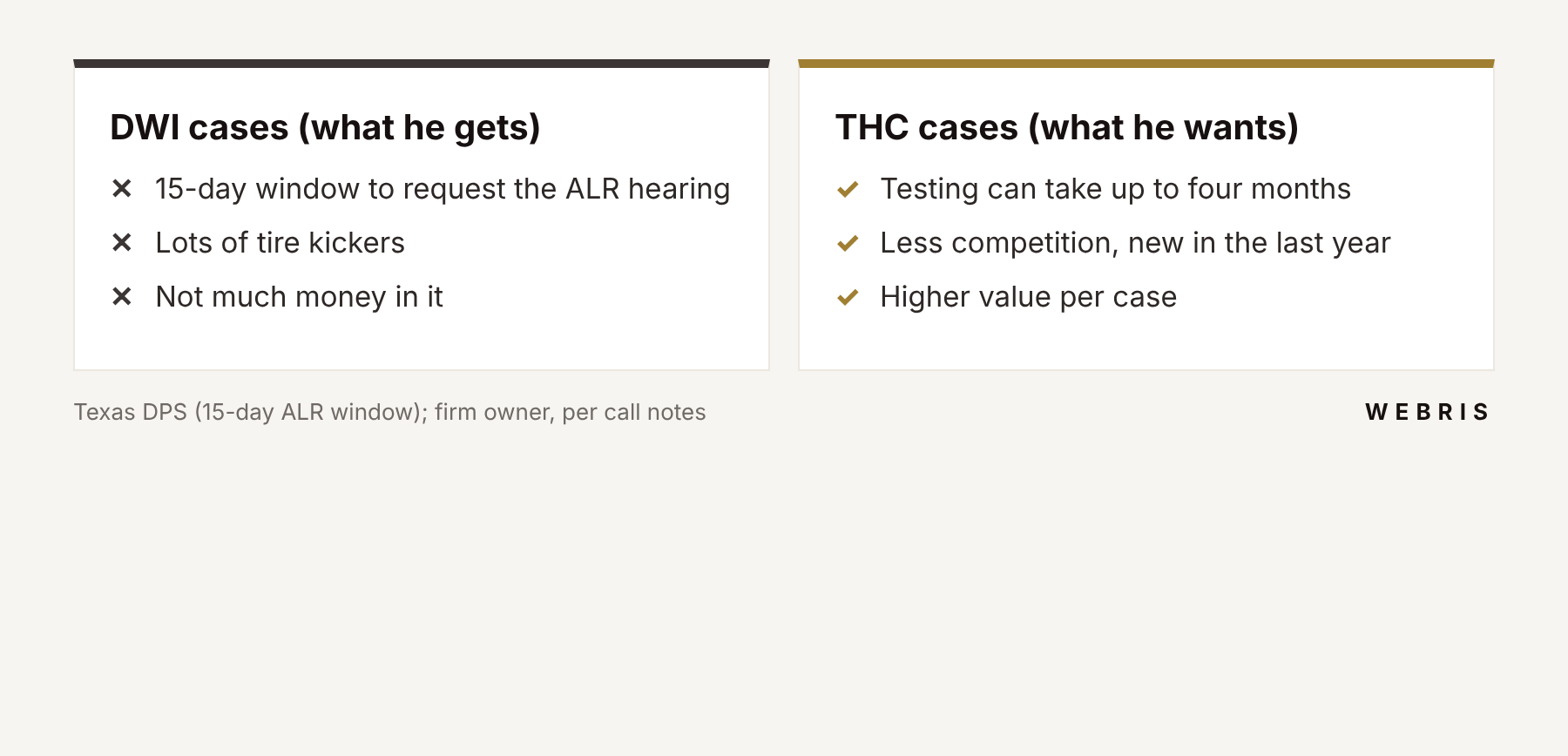
I just got off a call with a large criminal defense firm in Texas. He's ranking first in the Maps pack and getting plenty of calls.
The problem: a lot of them are DWI. He told me those come with a lot of tire kickers and not much money.
They're also a race against the clock. Texas DPS gives a driver 15 days to request a license revocation hearing.
What he wants is THC cases. Texas tightened its hemp rules in July 2026, making possession of noncompliant products a state jail felony, so the case type is new and wide open.
He told me testing on those cases can take up to four months. More time, more value, less competition.
We could build THC content for his website and wait months for it to rank. Or:
- ✅ Run a tight PPC campaign on THC keywords only.
- ✅ Use a strict negative keyword list.
- ✅ Spend $5,000 to $10,000 a month, not a statewide budget.
That drives business value right away. Here's more on PPC for law firms, and how to keep it from filling your intake with junk leads.
Treat Your Website As A Business Card
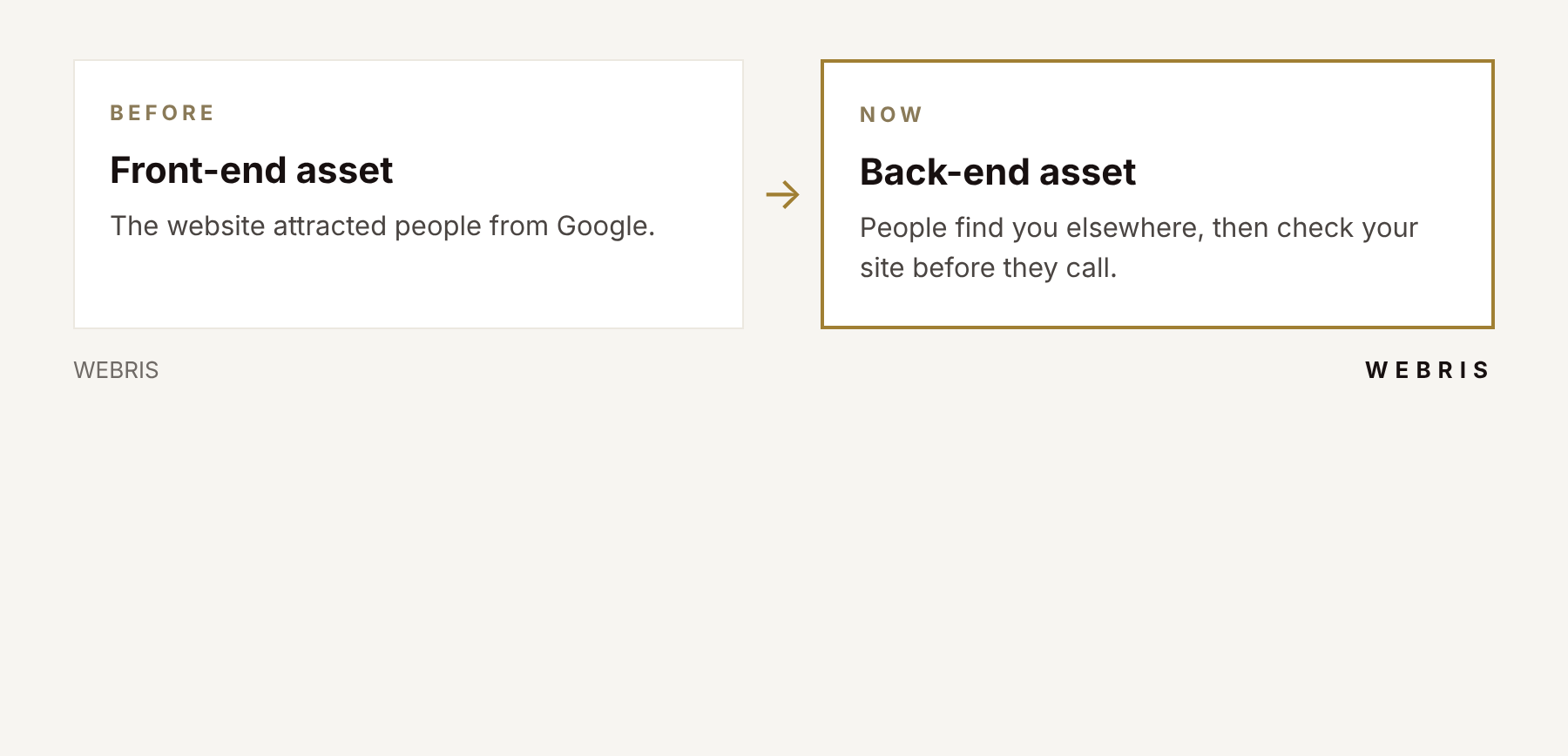
Your website isn't the front-end marketing asset it used to be. It's a back-end asset people use to convert.
They find you somewhere else. Then they check your site before they call.
So it has to be right:
- ✅ Proper structure and practice area pages.
- ✅ The right content on those pages.
- ✅ Fast, clean and good-looking.
Our attorney SEO work starts here.
Make Your Google Business Profile Your #1 Asset
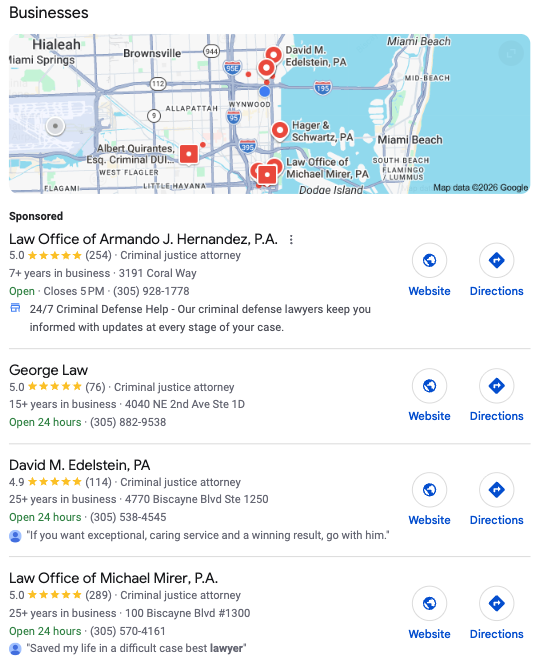
Your Google Business Profile is worth more than your website now. It's a front-end asset that goes out and gets leads.
Someone types "lawyer near me." Your profile sits in the Maps pack with your phone number, and on a phone it's one tap to call.
They don't even visit your website. They just call.
According to Google, local results are "mainly based on relevance, distance, and popularity." Here's how we handle local SEO for attorneys.
Open Offices Where Your Clients Search
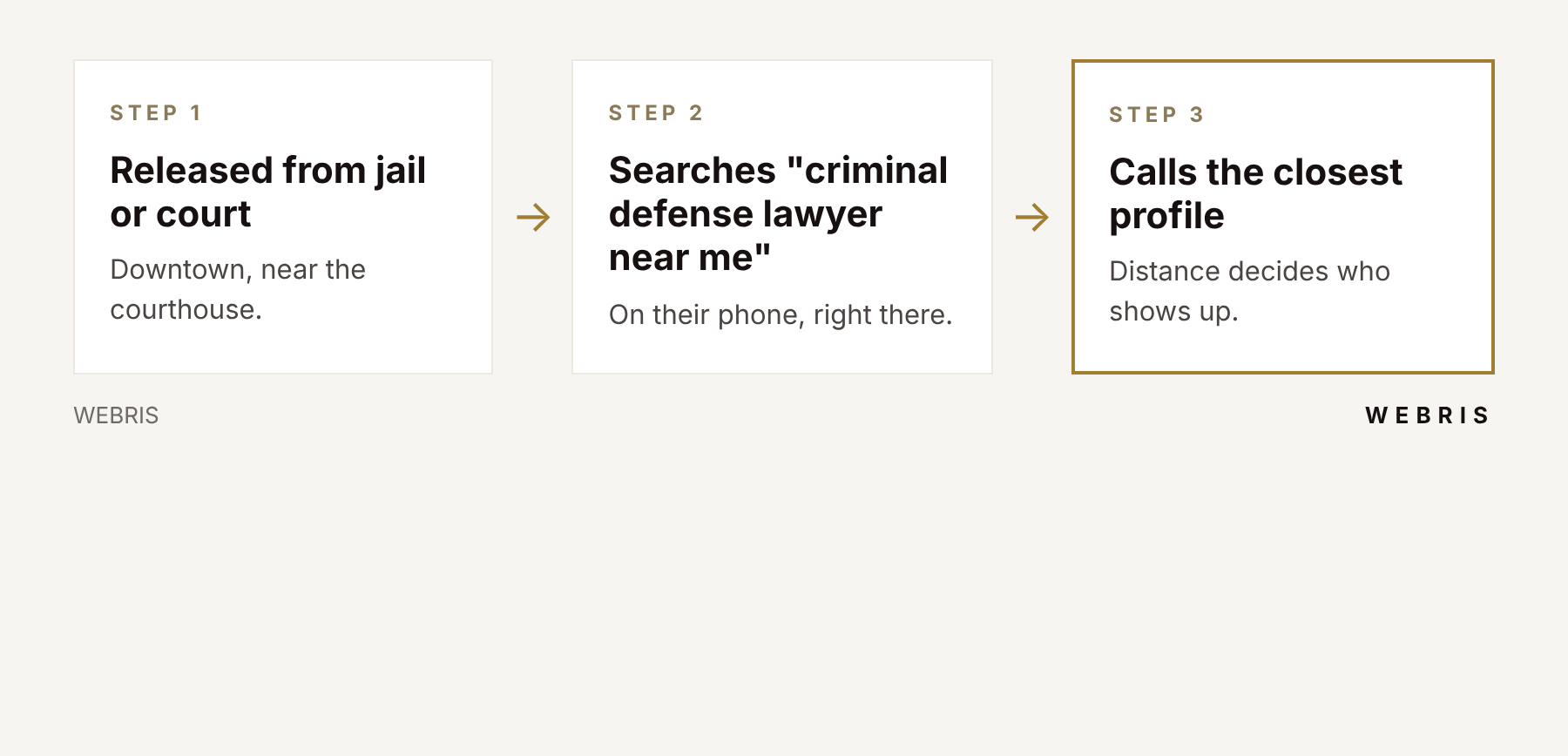
Distance is one of Google's local ranking factors. So where your office sits decides which searches you show up for.
For that Texas firm, I pitched opening offices across the state, close to the downtown courthouses.
Why? Someone gets arrested. They walk out of jail or the courthouse. They pull out their phone and type "criminal defense lawyer near me."
You want to be the closest profile when they do. We broke down how to pick locations in how lawyers should choose an office location for local SEO.
Get Recommended In ChatGPT And AI Search
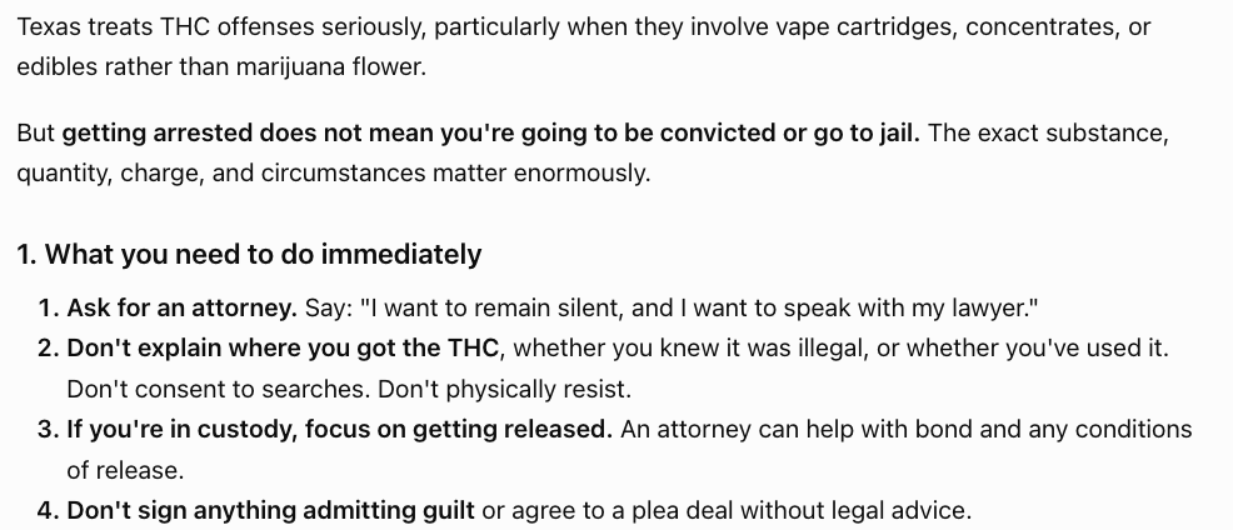
AI search isn't just Google. It's ChatGPT, Perplexity and every other assistant.
The informational part of those conversations gets very few clicks. Someone types "I just got arrested for THC, I don't know what to do," and ChatGPT walks them through it.
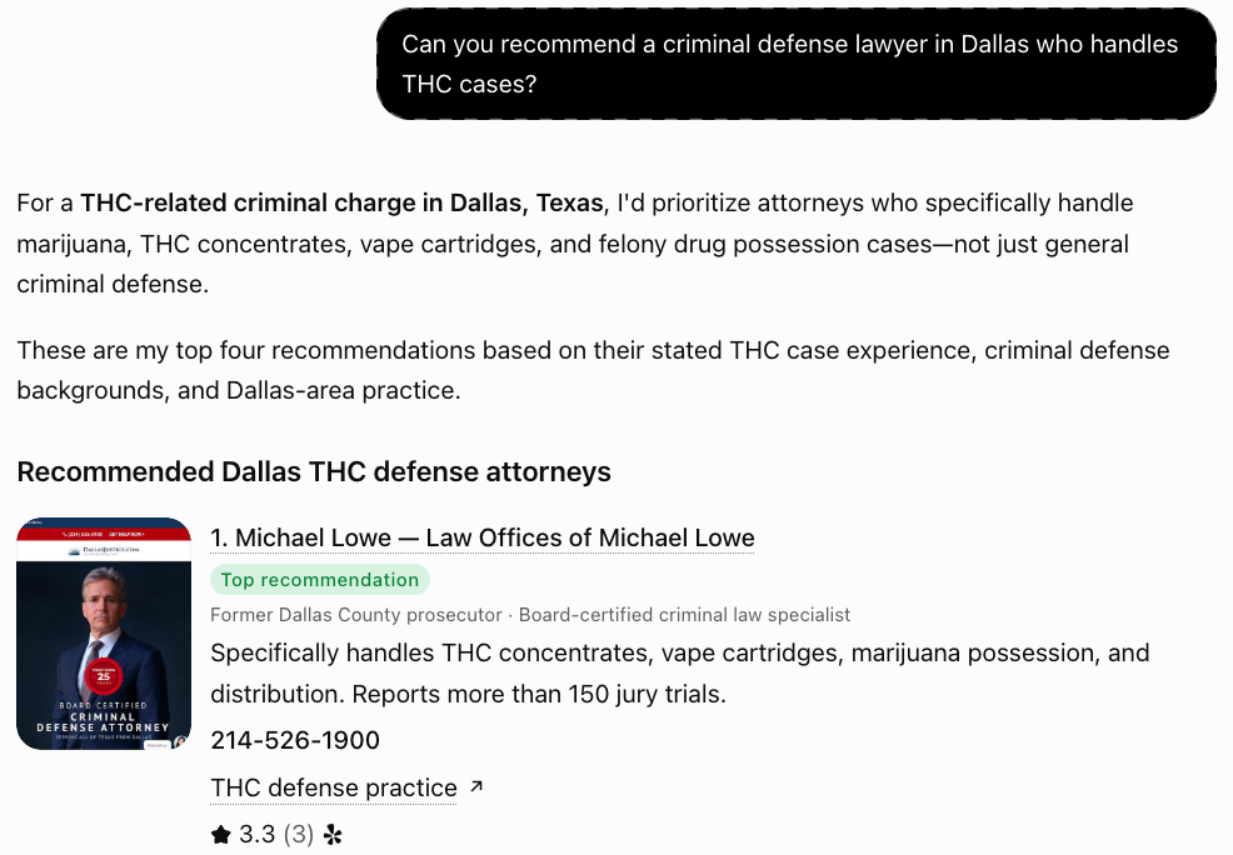
What you want to rank for is the next question: "Can you recommend a lawyer who handles this?"
Look at the answer. The top recommendation has a phone number right there. That's where they click to call.
Here's how law firms rank in ChatGPT, and our GEO approach for lawyers.
Build Reputation: Reviews, Reddit And PR
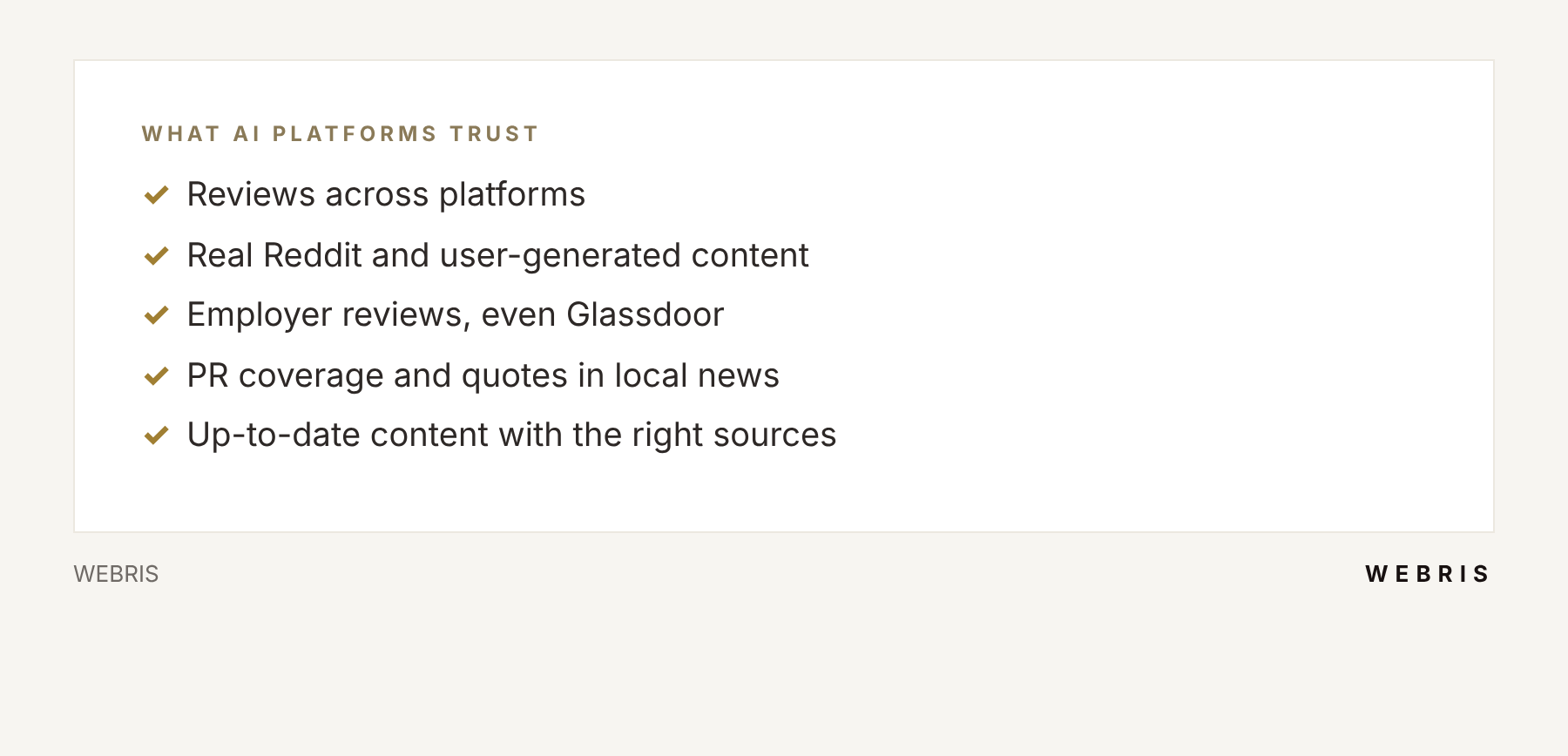
Getting recommended by AI comes down to reputation, authority and expertise.
Content plays into it. Your pages need the right sources and up-to-date laws and guidelines.
But it's also about what other people say about you:
- ✅ Reviews across platforms. Here's our guide to getting more lawyer reviews.
- ✅ User-generated content. These platforms love Reddit. You can't BS your way through Reddit with a fake account.
- ✅ Employer reviews. We've even seen Glassdoor show up as a source.
- ✅ PR coverage. Local news quoting you on new laws, or writing about your results.
Vertical SEO Vs. Horizontal Search: What Changed
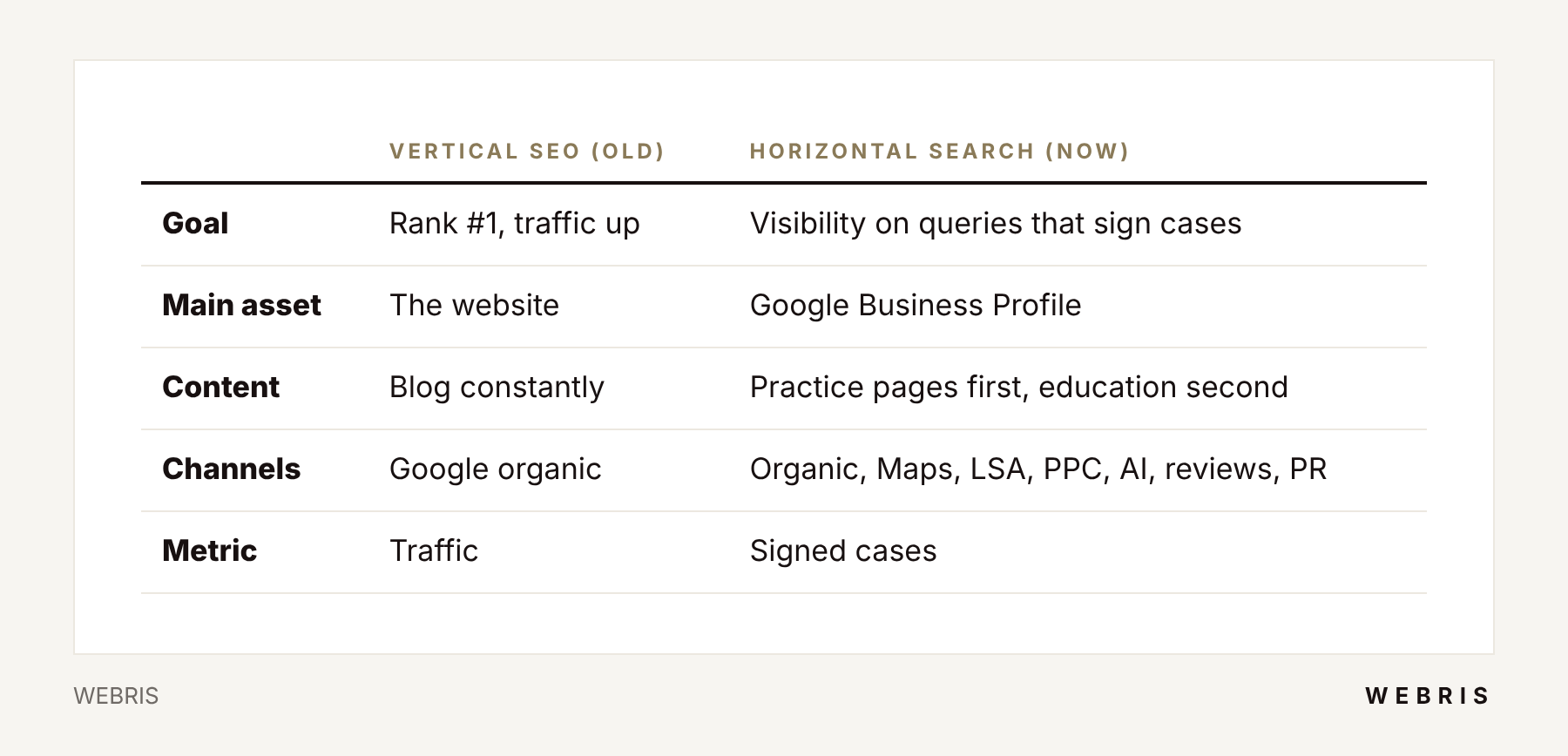
| Vertical SEO (old) | Horizontal search (now) | |
|---|---|---|
| Main goal | Rank #1, traffic up | Visibility on queries that sign cases |
| Main asset | The website | Google Business Profile |
| Content | Publish blogs constantly | Practice pages first, education second |
| Channels | Google organic | Organic, Maps, LSA, PPC, AI assistants, reviews, PR |
| Metric | Traffic | Signed cases |
How To Check Whether Your Traffic Drop Matters
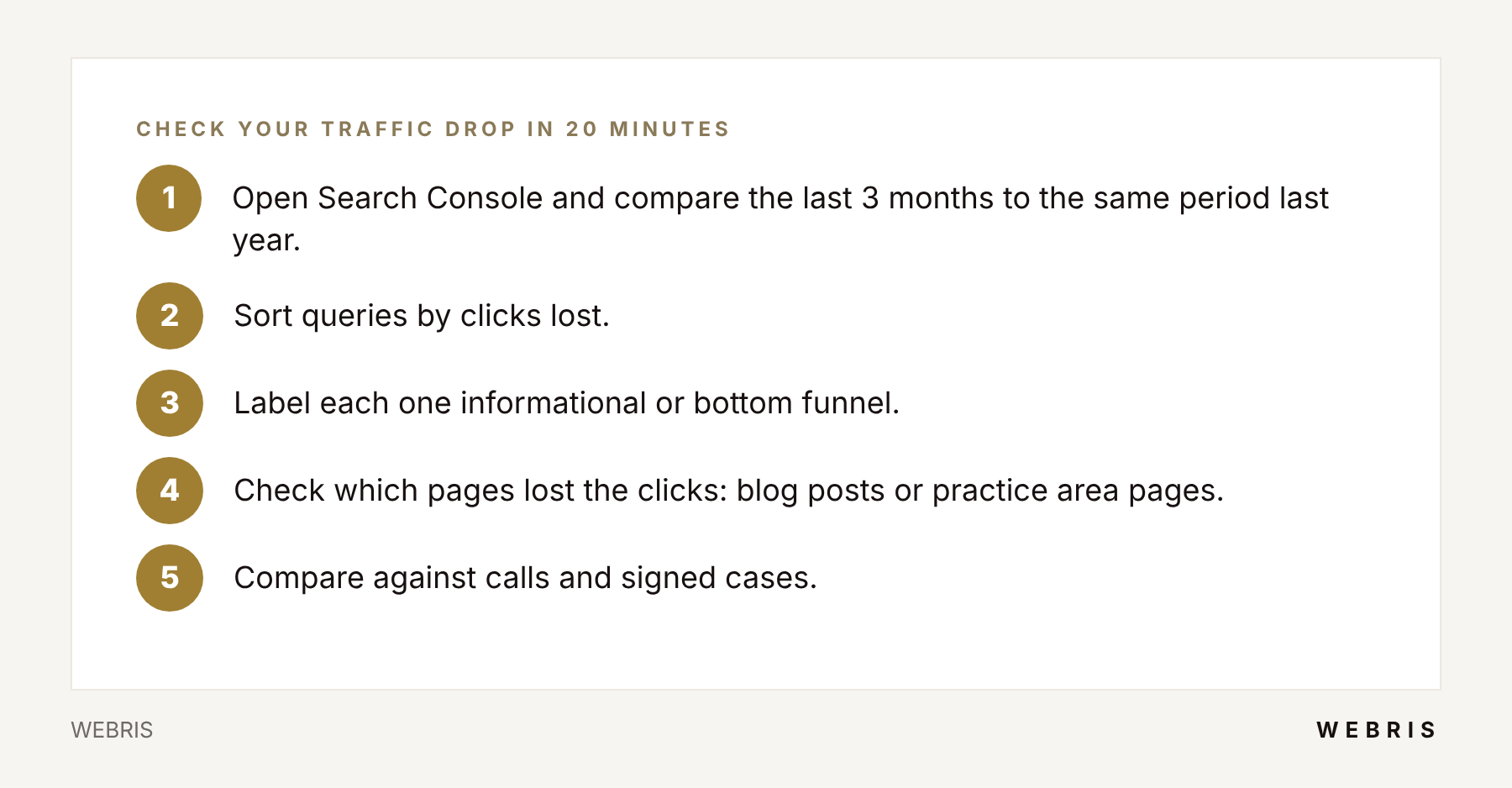
You can diagnose this yourself in about 20 minutes.
- Open Google Search Console. Go to Performance and compare the last 3 months to the same period last year.
- Sort queries by clicks lost. Look at which searches dropped the most.
- Label each one. Is it informational ("what to do after...") or bottom funnel ("lawyer near me")?
- Check the pages. If the losses are blog posts, that's AI. If they're practice area pages, you have a real problem.
- Compare to calls and signed cases. If cases held steady while traffic fell, the traffic wasn't the business.
If your bottom-funnel pages are dropping, that's worth a hard look. If it's your blog, it's probably nothing you can fix.
For the full playbook, see our law firm SEO guide.
Focus On Making Money, Not Traffic
You can try to rank first for keywords all day. In this market, you're jamming a square peg into a round hole.
Look into why traffic is falling. Then let it go.
The only metric that matters is signed cases. Whatever you're paying for marketing, it should come back double or triple.