
Your law firm can now advertise inside ChatGPT.
OpenAI opened ads to licensed U.S. attorneys at the end of August 2026. Almost nobody is running them yet.
I've been running ChatGPT ads for our own agency for months. The results are mixed. I'll show you every number.
And I'm still begging every one of our clients to test it.
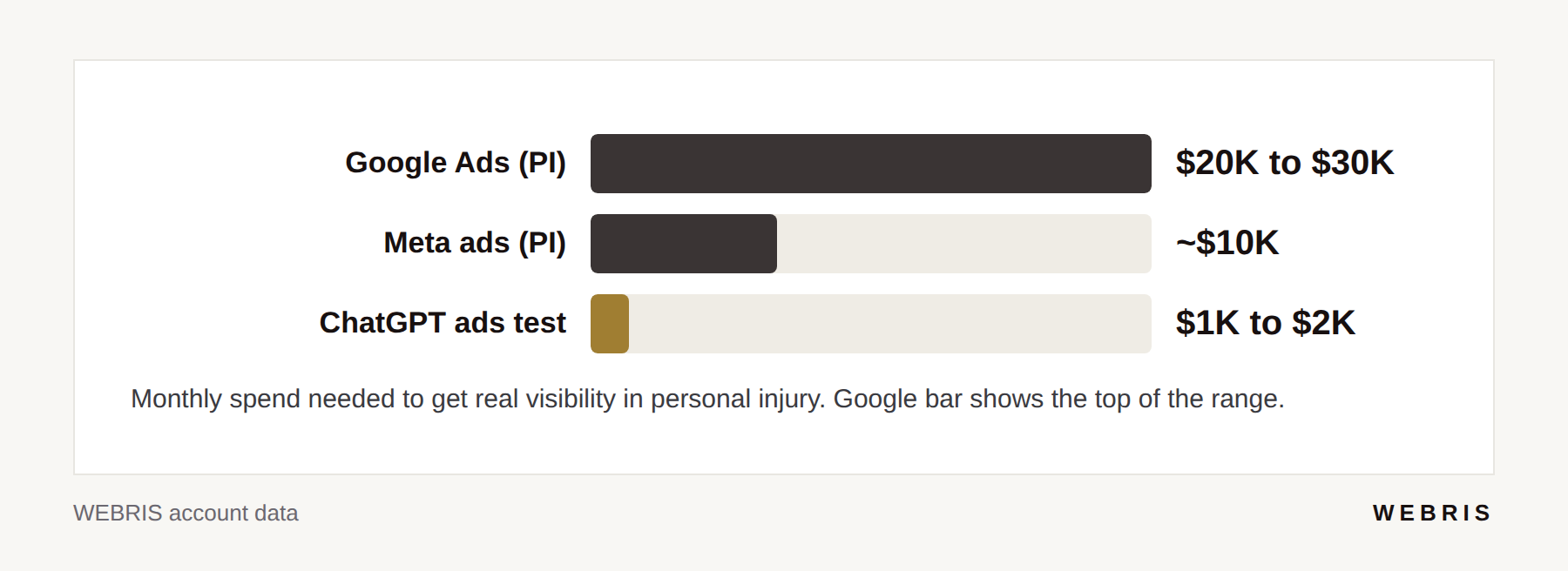
Here's the short version. Google Ads in personal injury takes $20,000 to $30,000 a month to break through. Meta takes about $10,000. ChatGPT takes $1,000 to $2,000.
Low floor. High ceiling.
Can Law Firms Advertise On ChatGPT?
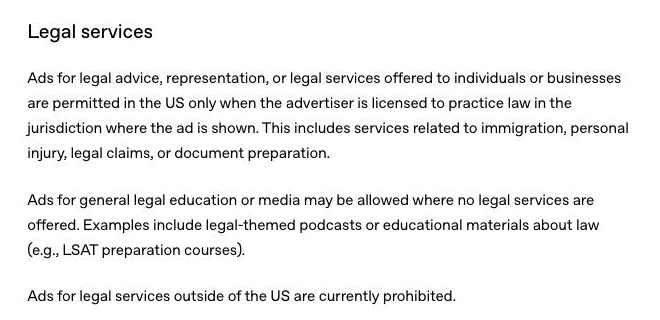
Yes. Since August 2026, licensed U.S. attorneys can run ChatGPT ads for legal services. You can only show ads where you're licensed to practice.
According to OpenAI's advertising policies, ads for legal advice, representation or legal services are permitted in the U.S. only when the advertiser is licensed to practice law in the jurisdiction where the ad is shown. The policy names personal injury and immigration specifically.
OpenAI made that change in version 1.5 of the policy, in August 2026. Before that, legal services ads were banned outright.
I covered the full policy change and account setup in ChatGPT ads are now open to law firms. This post covers what happens after you launch.
Why A Low-Floor, High-Ceiling Channel Matters For Your Firm
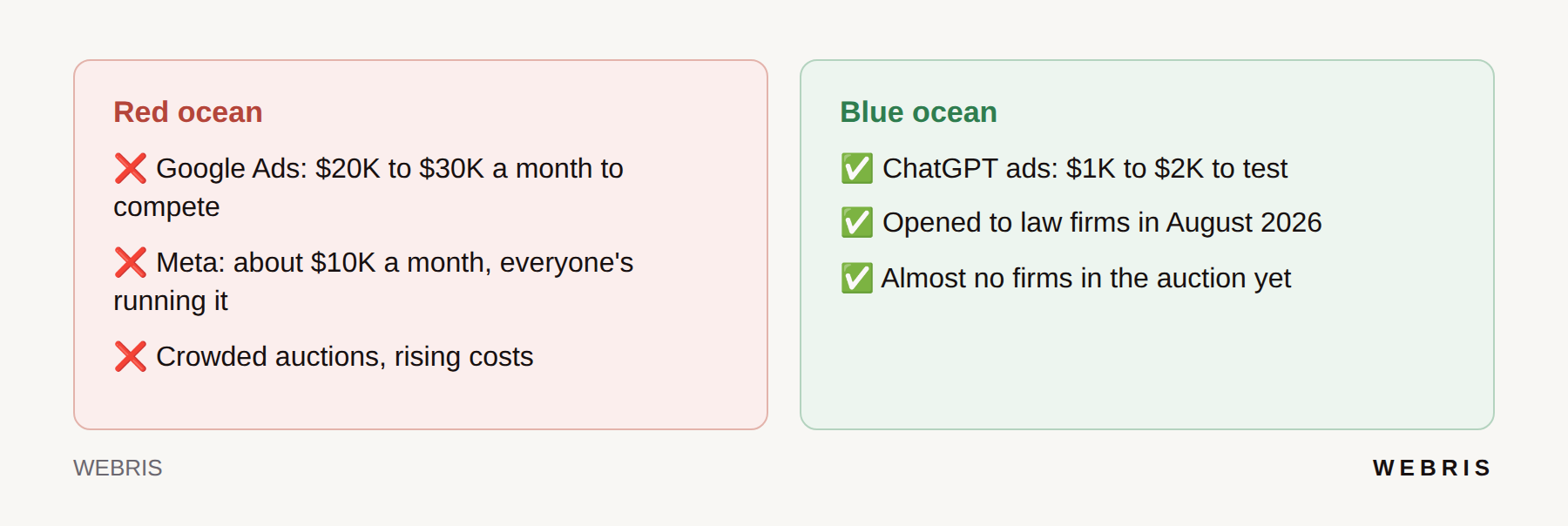
A low-floor, high-ceiling channel is one you can test for very little money that could scale into a major source of cases. ChatGPT ads are that right now.
I've been doing marketing for almost 20 years. I've worked with Target. I've worked with Best Buy.
There's nothing like personal injury advertising.
You're up against firms that will do anything to make sure you can't breathe. Google and Meta are a red ocean. Everybody's there, and the auctions show it.
So when a sliver of blue ocean shows up, you jump on it.
Why Paid Media Beats Organic When You Find A Winner
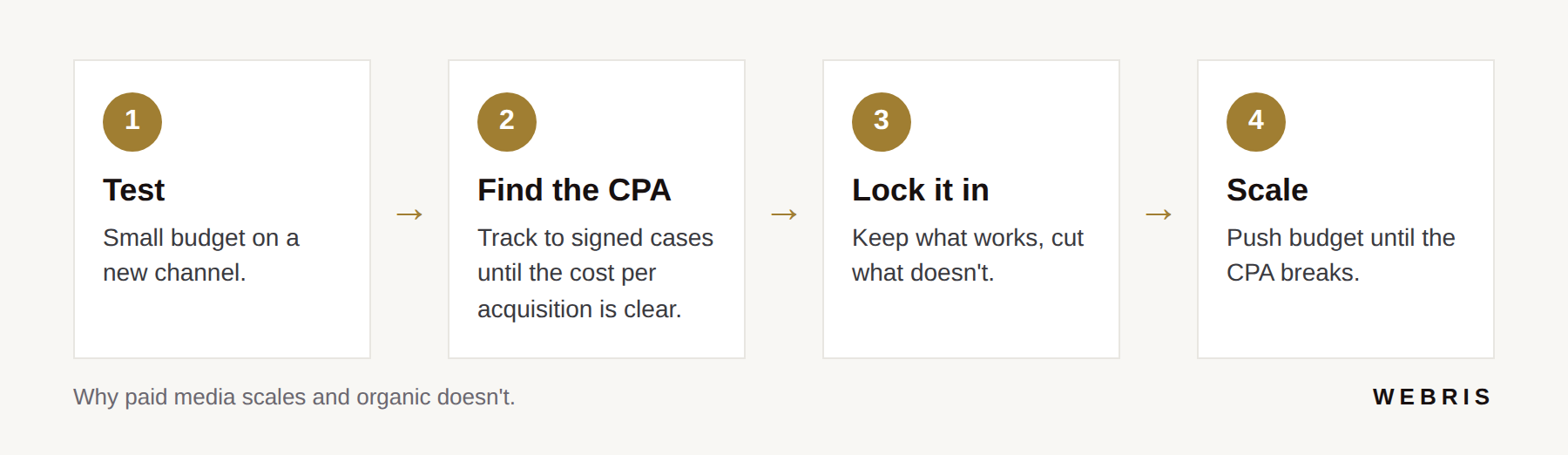
Organic marketing is slow and capped. You can only rank so many pages and collect so many reviews.
Paid media scales. Once we find the cost per acquisition (CPA) and lock it in, we keep pushing budget until it breaks.
That's why a new paid channel is worth more than it looks. If ChatGPT ads work for you, you've got another channel you can turn up.
You can see how we model that for Google in our PI Google Ads forecast.
The "$1 Per Click On Google" Lesson
Some of the firms we work with have been in business for 50 years.
They tell me about the good old days. "I was one of the first advertisers on Google. I was paying $1 a click."
Those opportunities don't come around anymore. Every channel is saturated.
ChatGPT ads are the closest thing to that moment we've seen in years. First movers get the data, the learnings and the cheap auctions.
Our ChatGPT Ads Results So Far
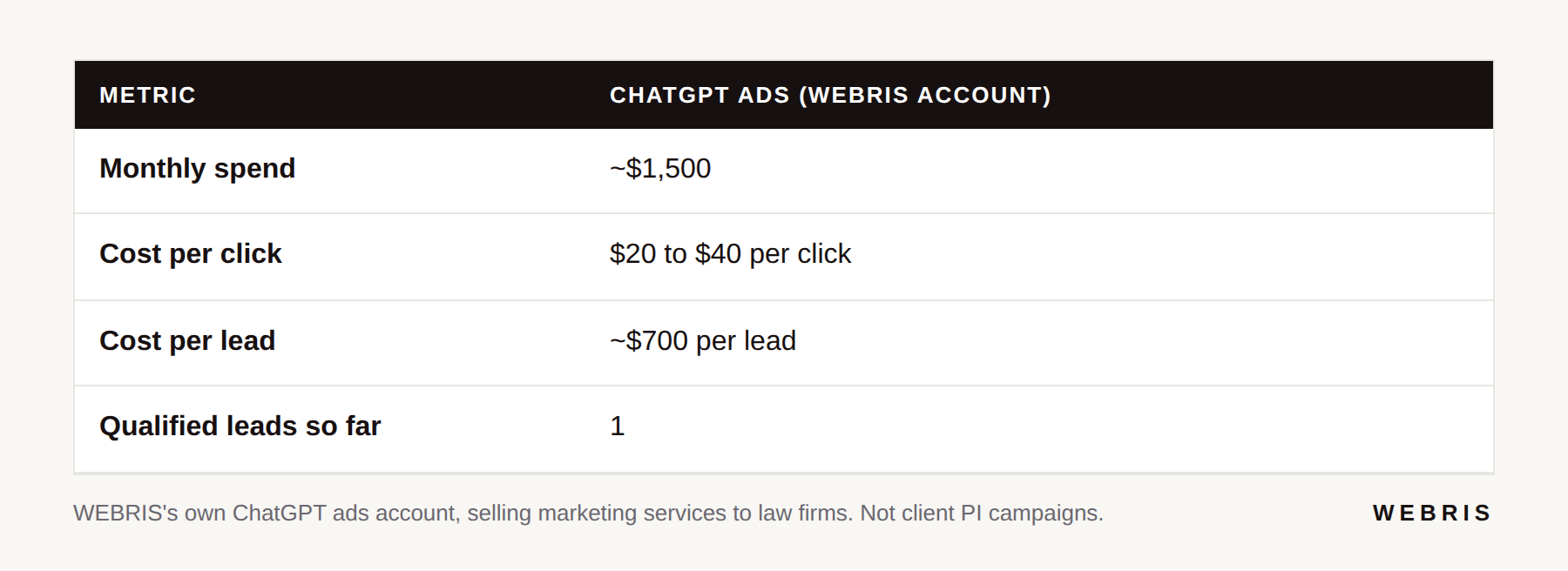
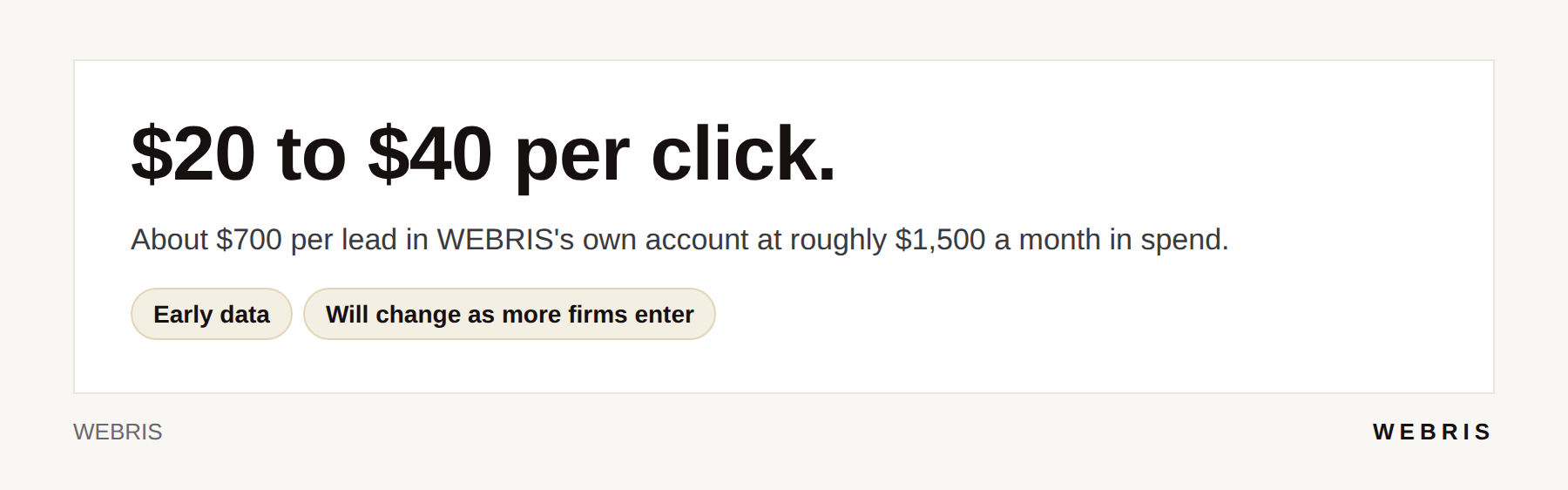
We've been spending about $1,500 a month on ChatGPT ads for our own agency. Clicks cost $20 to $40, and leads have cost about $700 each.
I'll be honest. The results are mixed.
| Metric | ChatGPT ads (WEBRIS account) |
|---|---|
| Monthly spend | ~$1,500 |
| Cost per click | $20 to $40 per click |
| Cost per lead | ~$700 per lead |
| Qualified leads so far | 1 |
These are ads for WEBRIS itself, selling marketing to law firms. They are not client PI campaigns. Your numbers will be different.
ChatGPT Ads vs. Meta Ads: Cost Per Qualified Lead
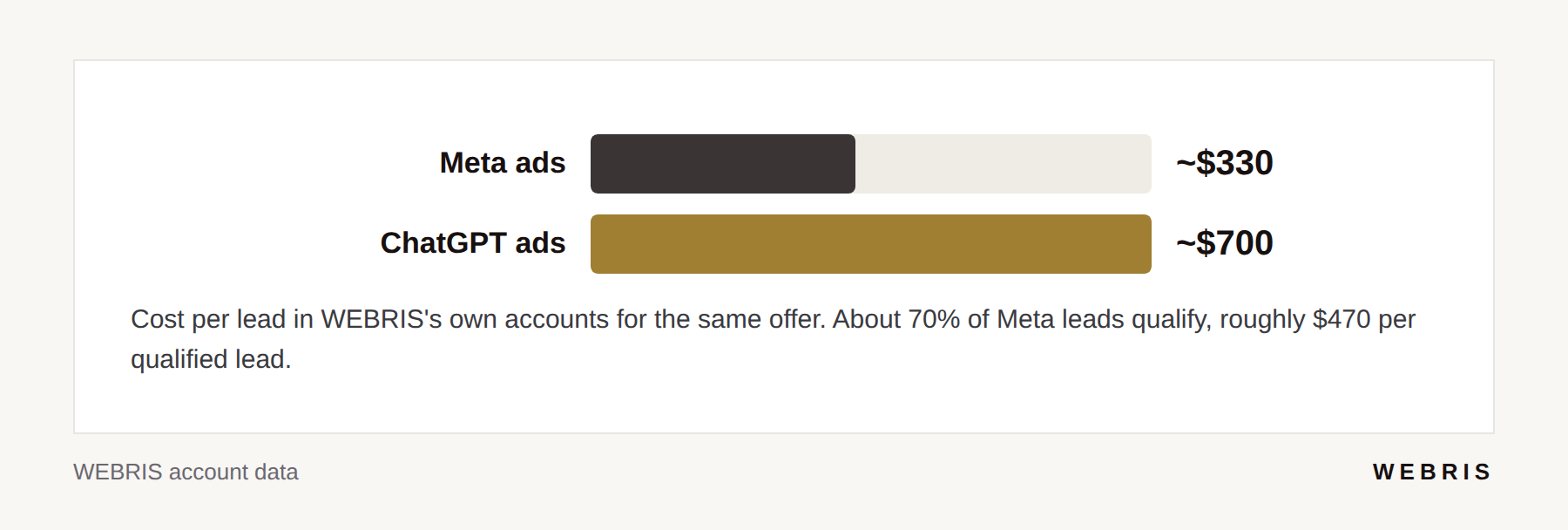
Compare that to our Meta funnels for the same offer.
We pay about $330 per lead on Meta, and about 70% of those leads qualify. That works out to roughly $470 per qualified lead.
| Meta ads | ChatGPT ads | |
|---|---|---|
| Cost per lead | ~$330 | ~$700 |
| Qualified rate | ~70% | 1 qualified lead so far |
| Cost per qualified lead | ~$470 | Not enough data yet |
Read that again: ChatGPT costs us about twice as much per lead as Meta right now.
That's expected on a brand-new platform. The economics don't always make sense in month one.
Here's why our Meta numbers look the way they do: the 3 keys to signed cases from Meta ads.
So Why Keep Spending On It?
I know what you're thinking. "Why would I pay double for a lead?"
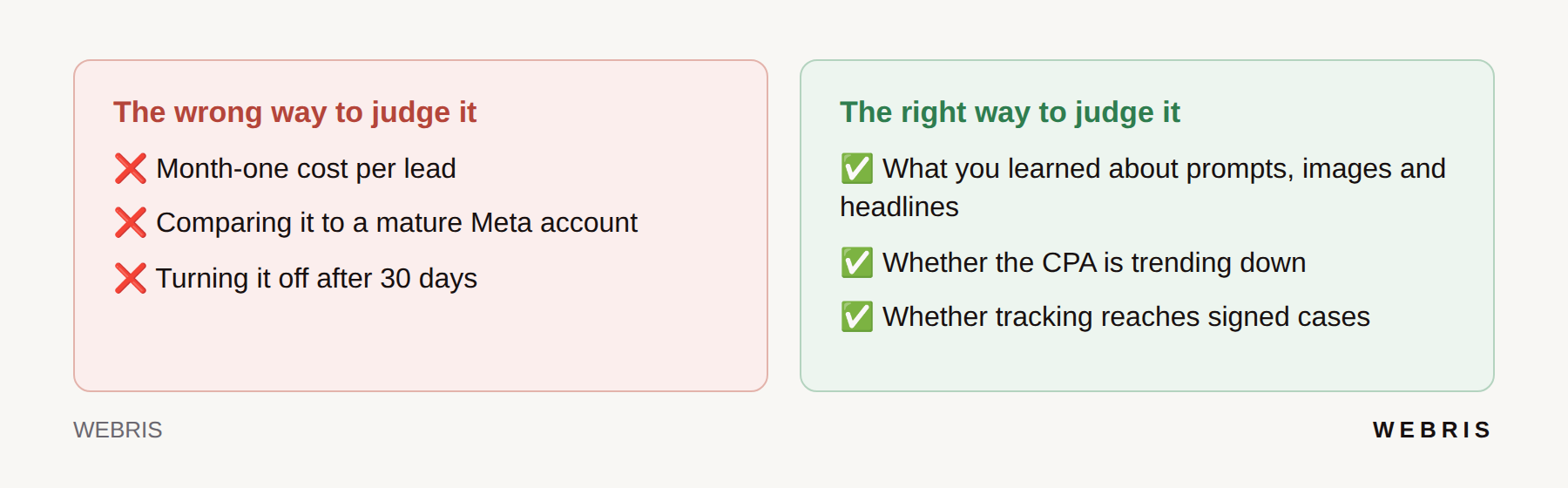
Because right now, this is about data, not economics.
You're buying three things:
- ✅ Learnings on which prompts, images and headlines work, before your competitors know the platform exists
- ✅ A process (tracking, landing pages, intake) that's ready when the auction matures
- ✅ Insight for cross-channel media buying that very few firms in the country will have
ChatGPT isn't going away. Getting in now is like advertising on Google or Meta as one of the first movers.
How ChatGPT Ads Targeting Works
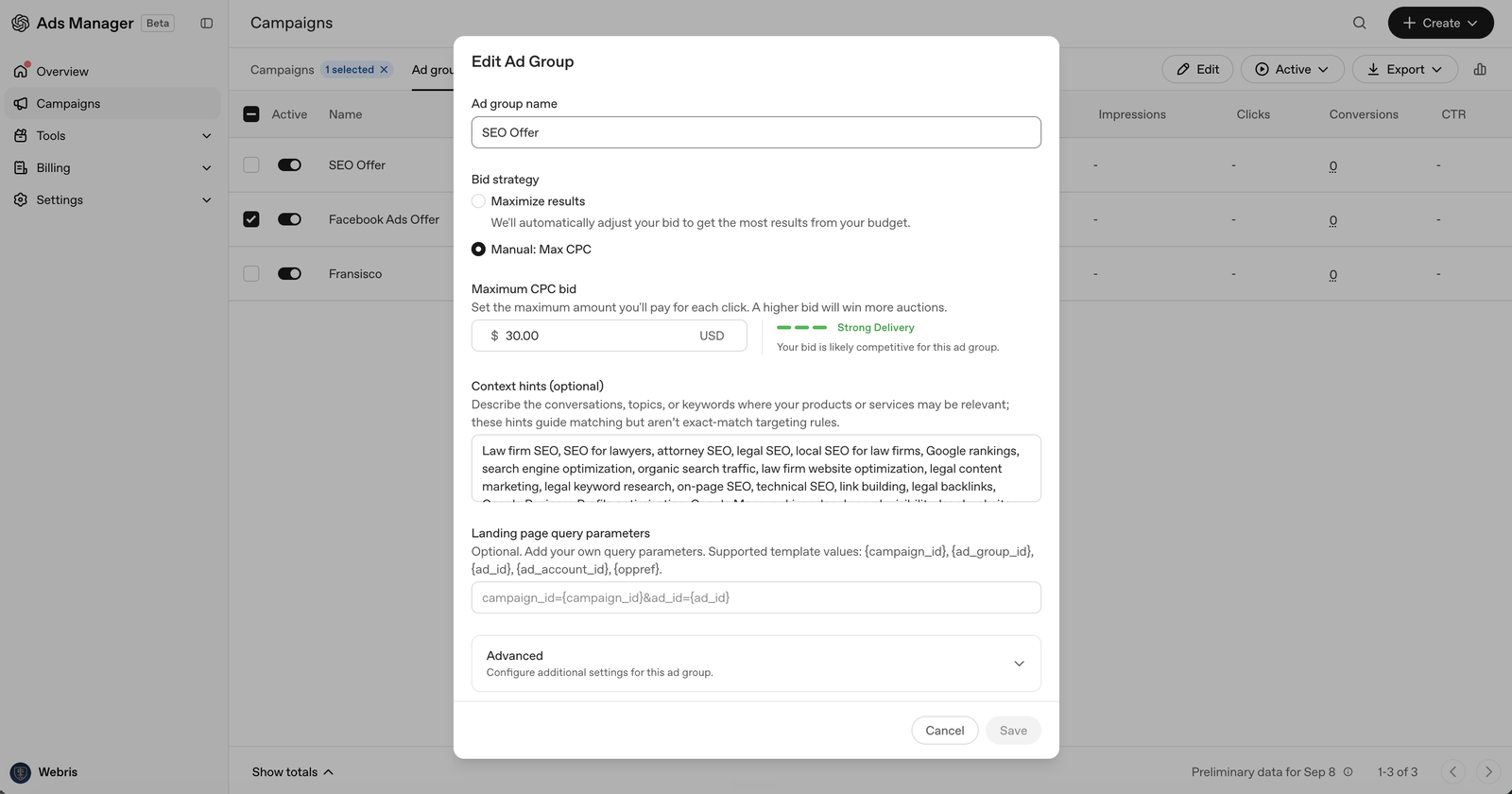
ChatGPT ads don't target keywords. You describe who you want to reach in a box called "context hints," and ChatGPT matches your ad to relevant conversations.
That's the biggest mental shift from Google.
Google is linear. Someone types "car accident lawyer near me." We can see the search, the ranking and the ad.
ChatGPT is a conversation. Someone dealing with a divorce or a business dispute could be talking to ChatGPT for weeks. Your ad shows up somewhere along the way.
According to OpenAI's announcement of its ad approach (January 16, 2026), ads appear at the bottom of answers when there's a relevant sponsored product or service based on the current conversation. They're labeled and kept separate from the answer.
Use ChatGPT To Write Your Targeting Prompt
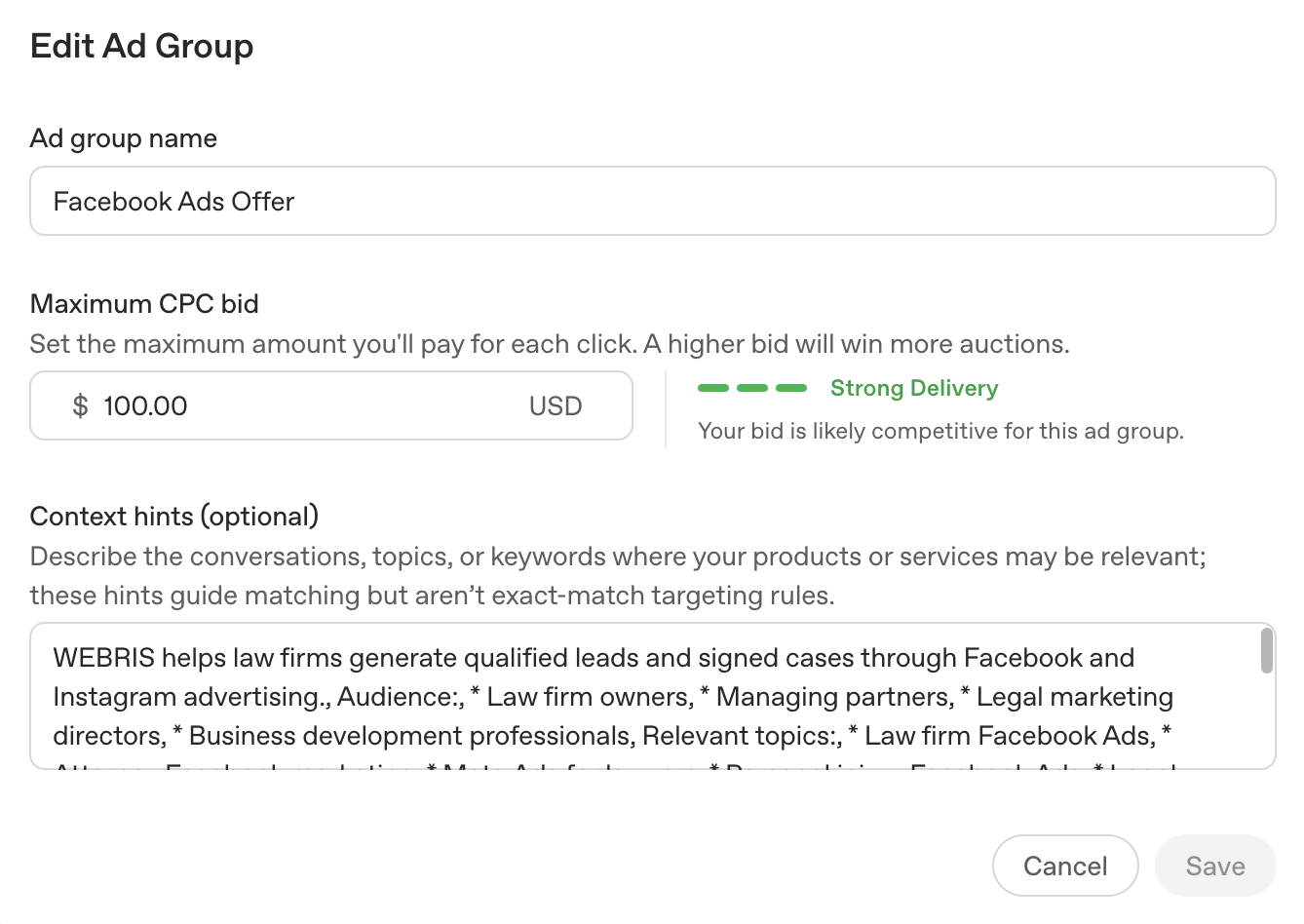
Here's a trick that works.
Ask ChatGPT to write the targeting prompt for you. Give it the practice area, the case type and your market, and have it describe who you want to reach.
Then make each prompt hyper-specific to one case type. A car accident prompt. A truck accident prompt. A child custody prompt.
The more specific the context, the better the match.
Why ChatGPT Ads Work More Like LSAs Than Google PPC
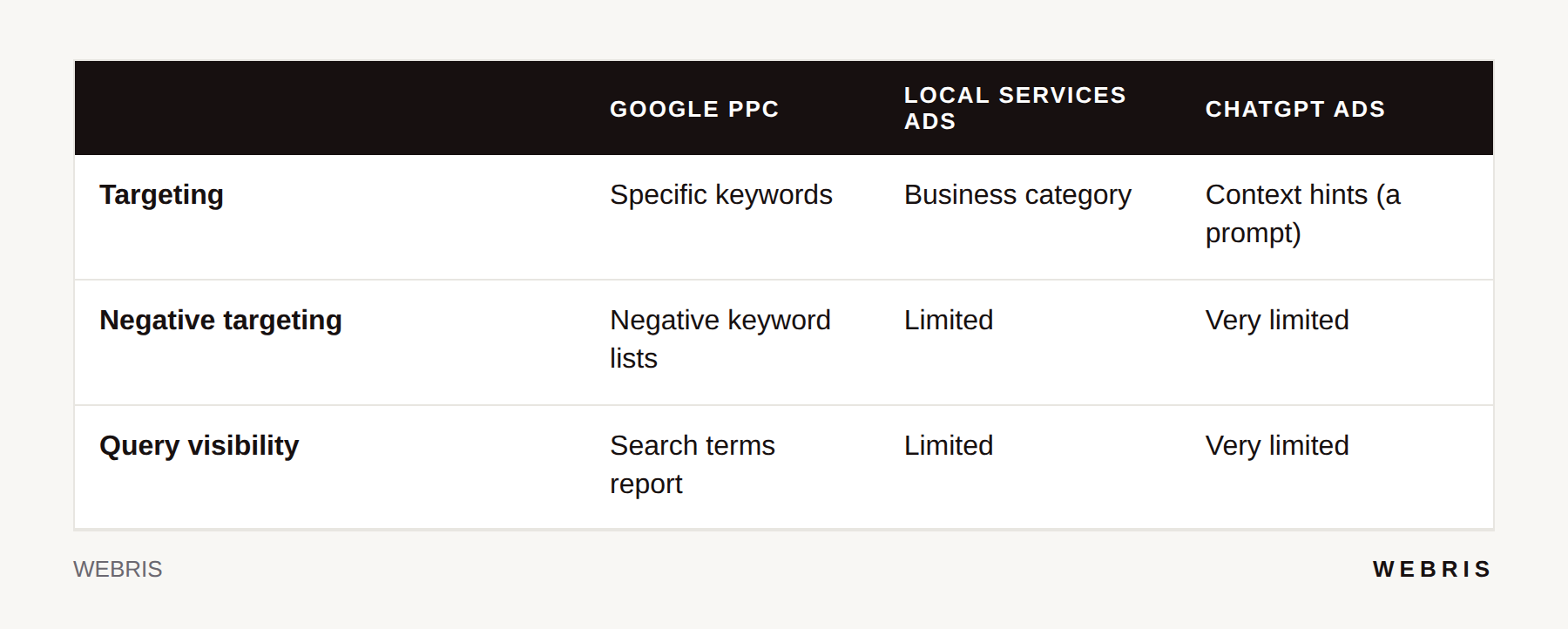
If you've run Local Services Ads, this will feel familiar.
LSAs show up at the category level. Tell Google you're a personal injury lawyer and you show up for pretty much everything under that umbrella.
Traditional Google PPC gives you control. You can block premises liability with negative keywords if you only want car accidents.
ChatGPT ads sit closer to LSAs. You get less control and less visibility into exactly what triggered the ad.
| Google PPC | Local Services Ads | ChatGPT ads | |
|---|---|---|---|
| Targeting | Specific keywords | Business category | Context hints (a prompt) |
| Negative targeting | Negative keyword lists | Limited | Very limited |
| Query visibility | Search terms report | Limited | Very limited |
For a deeper look at Google-side control, see PPC for law firms.
ChatGPT Ads Only Show To Free Users
This one surprises people.
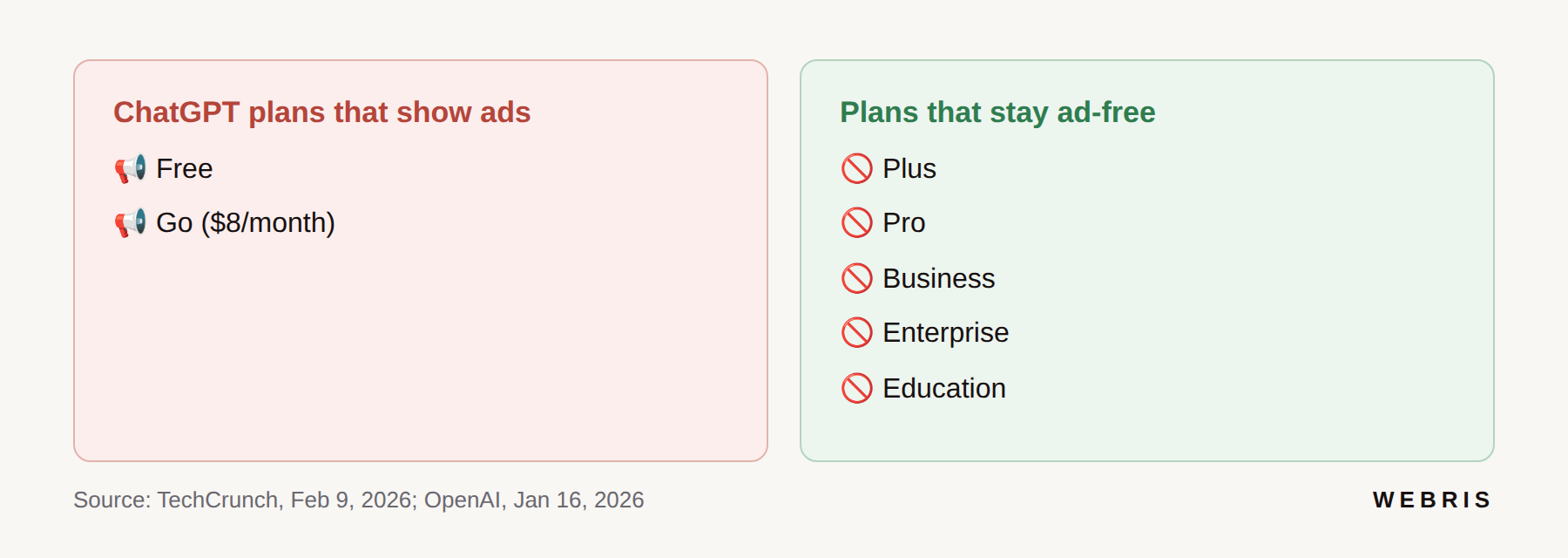
I don't see ads in my ChatGPT account because I pay for it. Ads only show on the Free and Go plans.
Per TechCrunch's report on the rollout, OpenAI started testing ads in the U.S. on February 9, 2026, on the Free and Go ($8/month) tiers. Plus, Pro, Business, Enterprise and Education stay ad-free.
OpenAI also says it won't show ads to users it believes are under 18, or next to sensitive topics like health, mental health and politics.
So you're reaching part of the market, not all of it. But ChatGPT's free user base is huge, and OpenAI is working to grow it.
How We Set Up ChatGPT Ad Campaigns For Law Firms
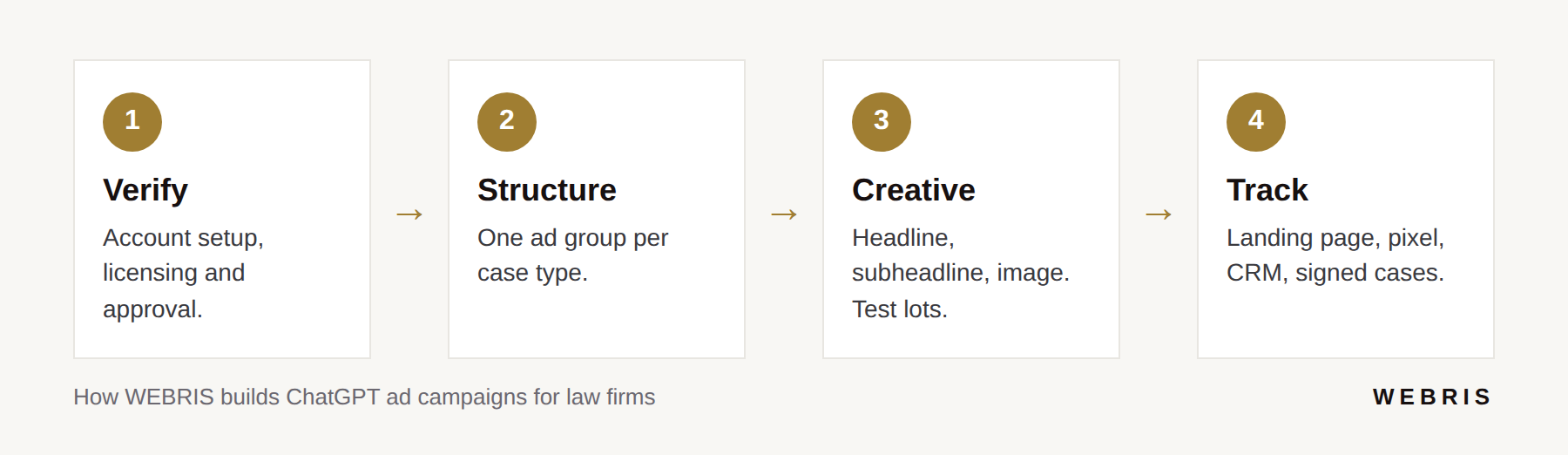
We build one ad group per case type, a dedicated landing page for each, and tracking that runs all the way to signed cases.
Account Setup And Verification
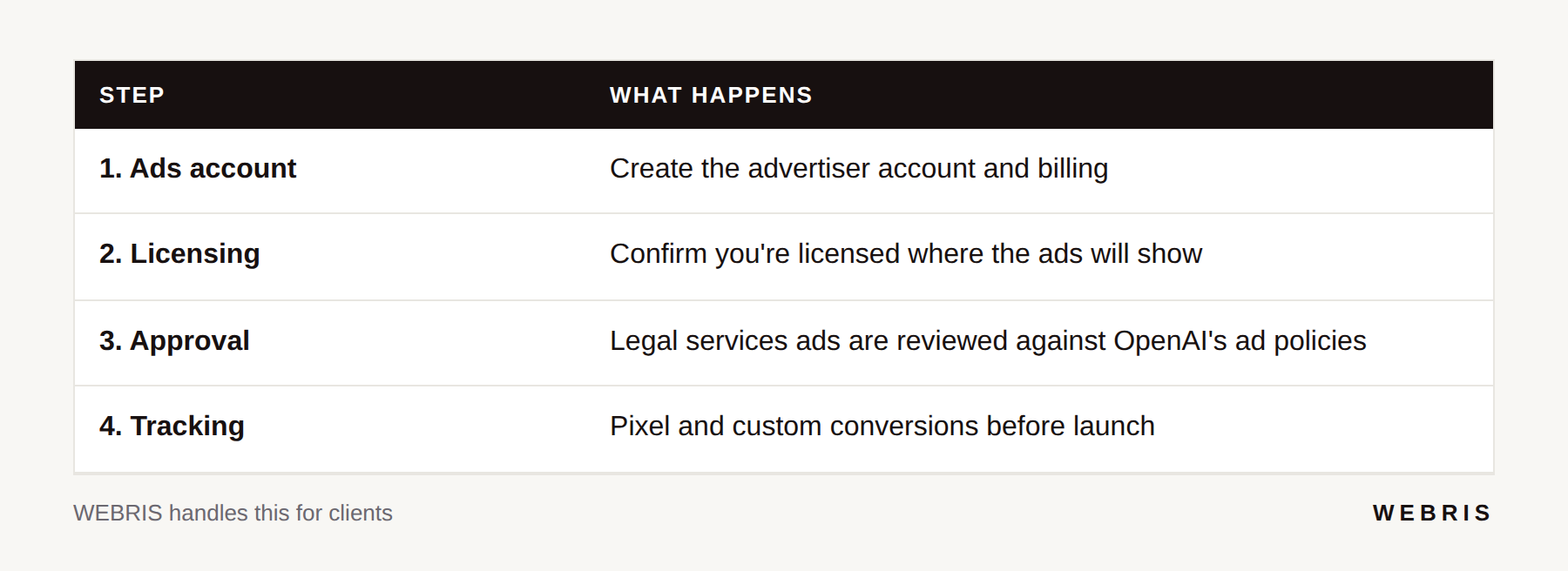
There's some red tape to get through first. Your account needs setup, licensing verification and approval.
We handle all of that for our clients. You're busy enough.
Campaign Structure: One Ad Group Per Case Type
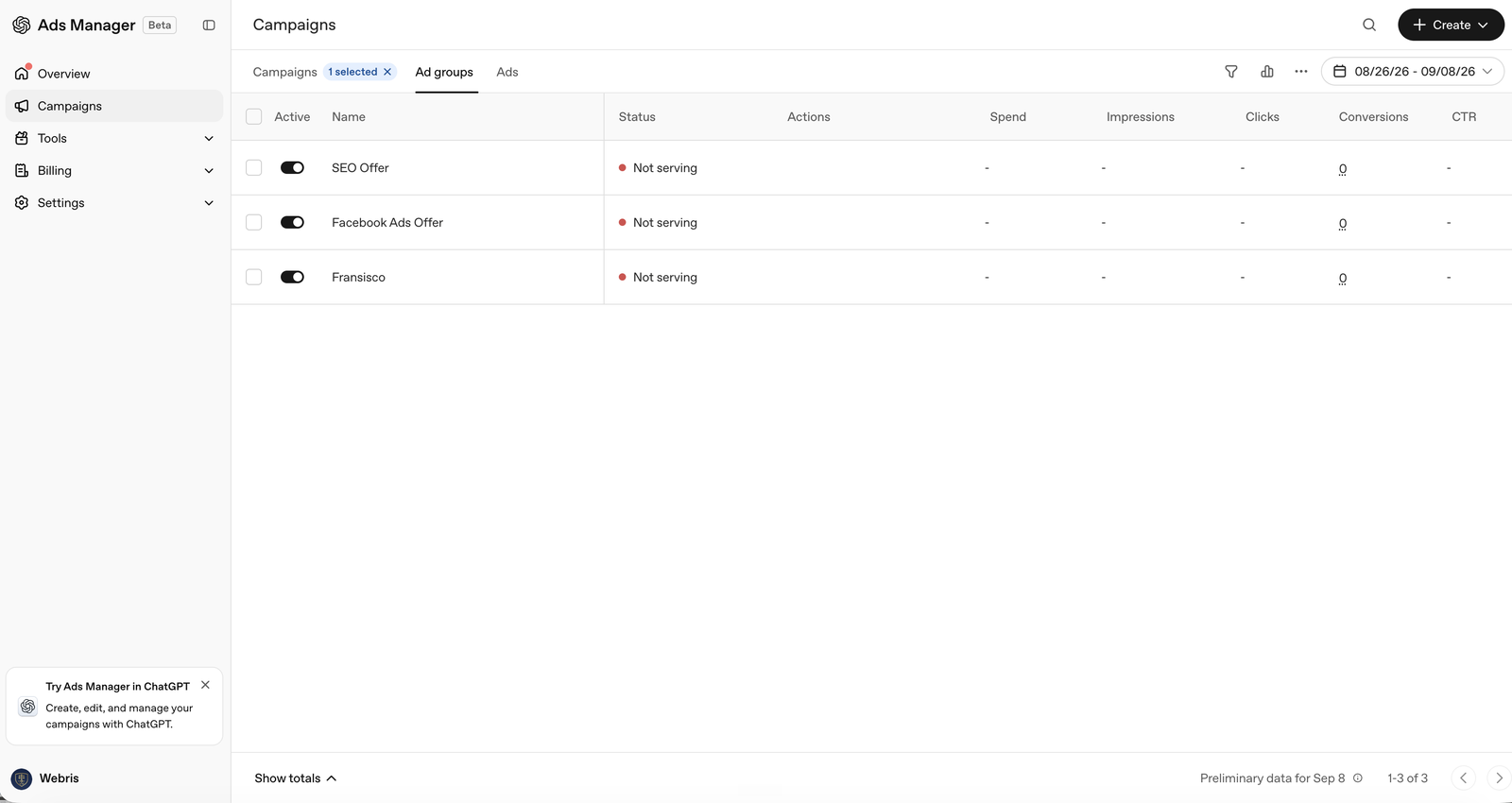
The ads manager looks a lot like Meta or TikTok. It uses the standard three-level structure:
| Level | What you set there |
|---|---|
| Campaign | The objective |
| Ad group | The targeting (your context hints) |
| Ad | The creative and landing page |
Targeting lives at the ad group level, so every case type gets its own ad group.
Under a personal injury campaign we'd build:
- Car accidents
- Truck accidents
- Premises liability
Family law gets the same treatment: divorce and child custody, each in its own ad group.
That keeps the context hyper-specific. It also keeps your reporting clean by case type.
Compared to Meta, the options are thin. Meta has endless controls for geo, demographics and custom audiences. ChatGPT basically says: give me a couple of sentences on who you want, and we'll figure out the rest.
Creative Testing: Headline, Subheadline, Image
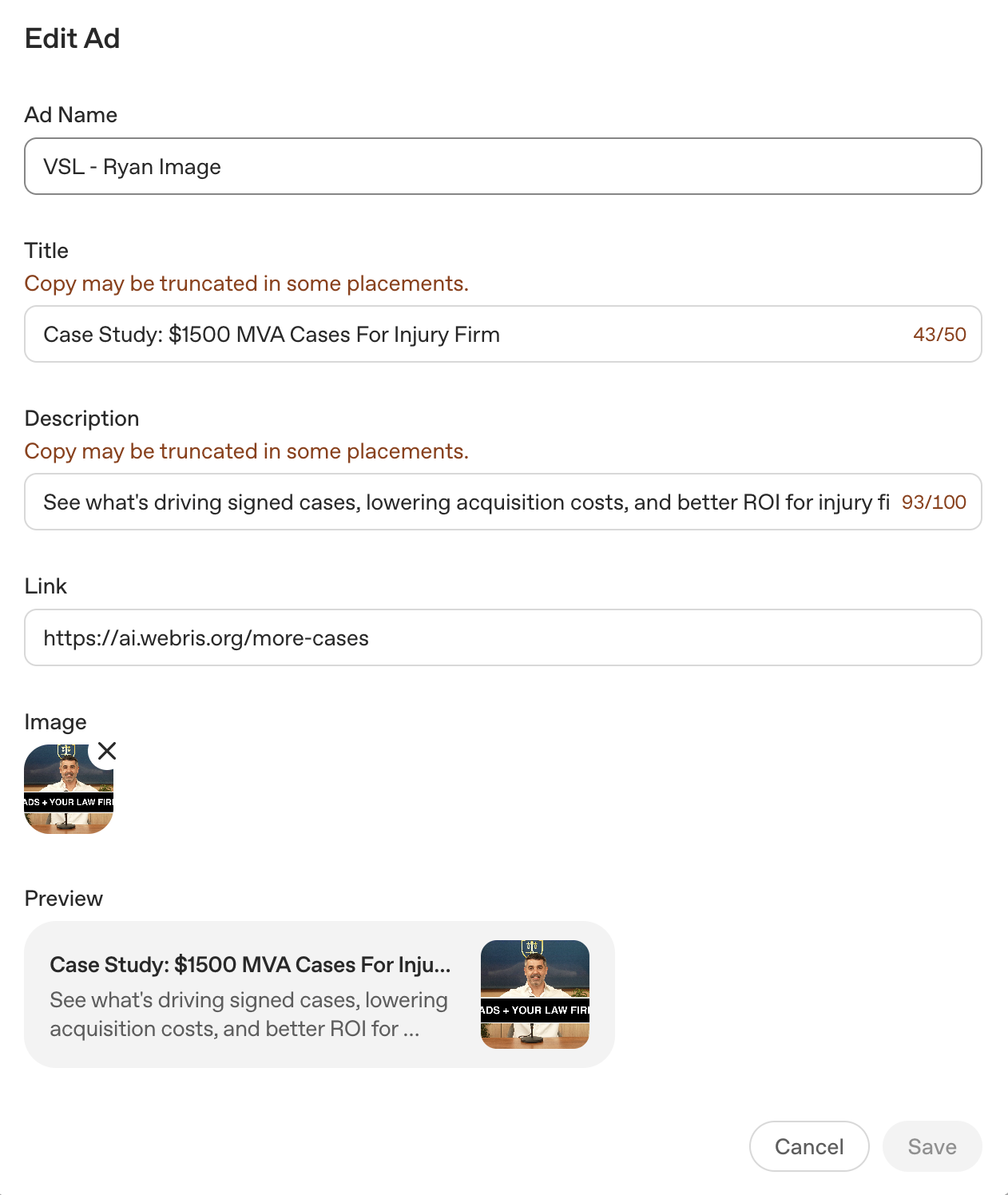
Creative is what we're testing hardest right now.
You don't get much space. A title (50 characters), a description (100 characters), an image, and a link to a landing page.
So every element matters. We're testing:
- Photos of the attorneys
- Photos of the accident or the situation
- Different headline angles by case type
Landing Pages And Tracking To Cost Per Case
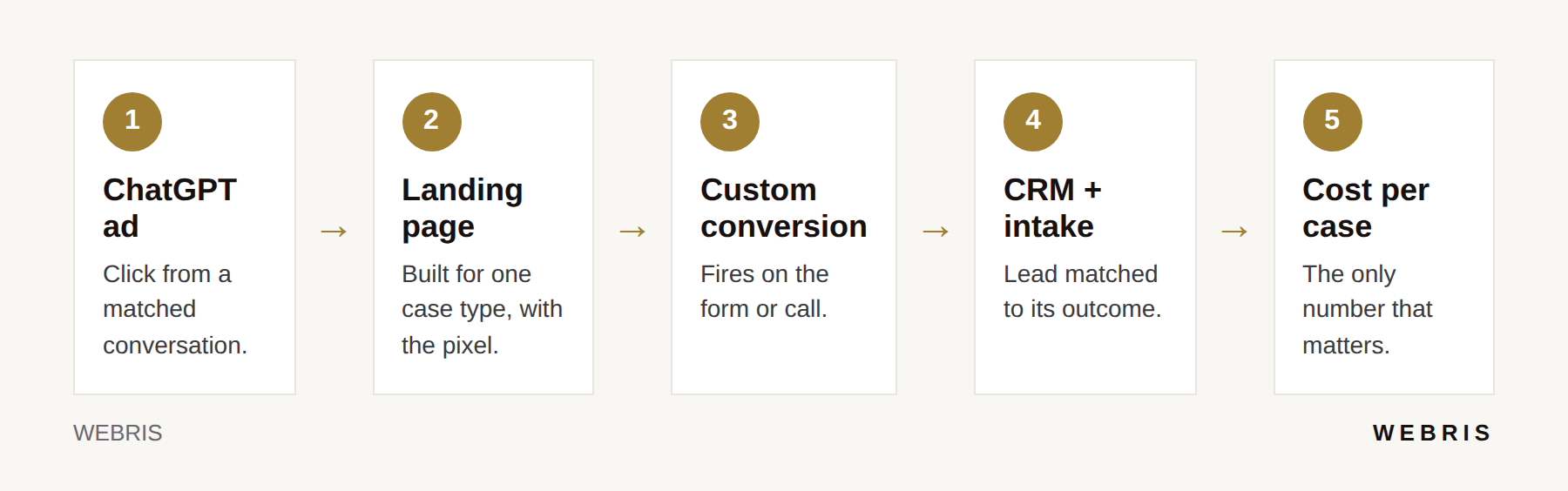
Every ad group gets its own landing page. It works like a paid search landing page, built for that one case type.
Then we track everything:
- A pixel goes on the landing page.
- We set up custom conversions (a bit tricky, but we've done it about a dozen times).
- Conversions pass into your CRM and intake.
- We match leads to outcomes.
ChatGPT reports cost per click, cost per lead and cost per conversion. With the CRM connection, we can also see cost per signed case.
That's the only number that matters. More on the setup in lead tracking for lawyers and law firm landing pages.
What A ChatGPT Ads Test Should Look Like
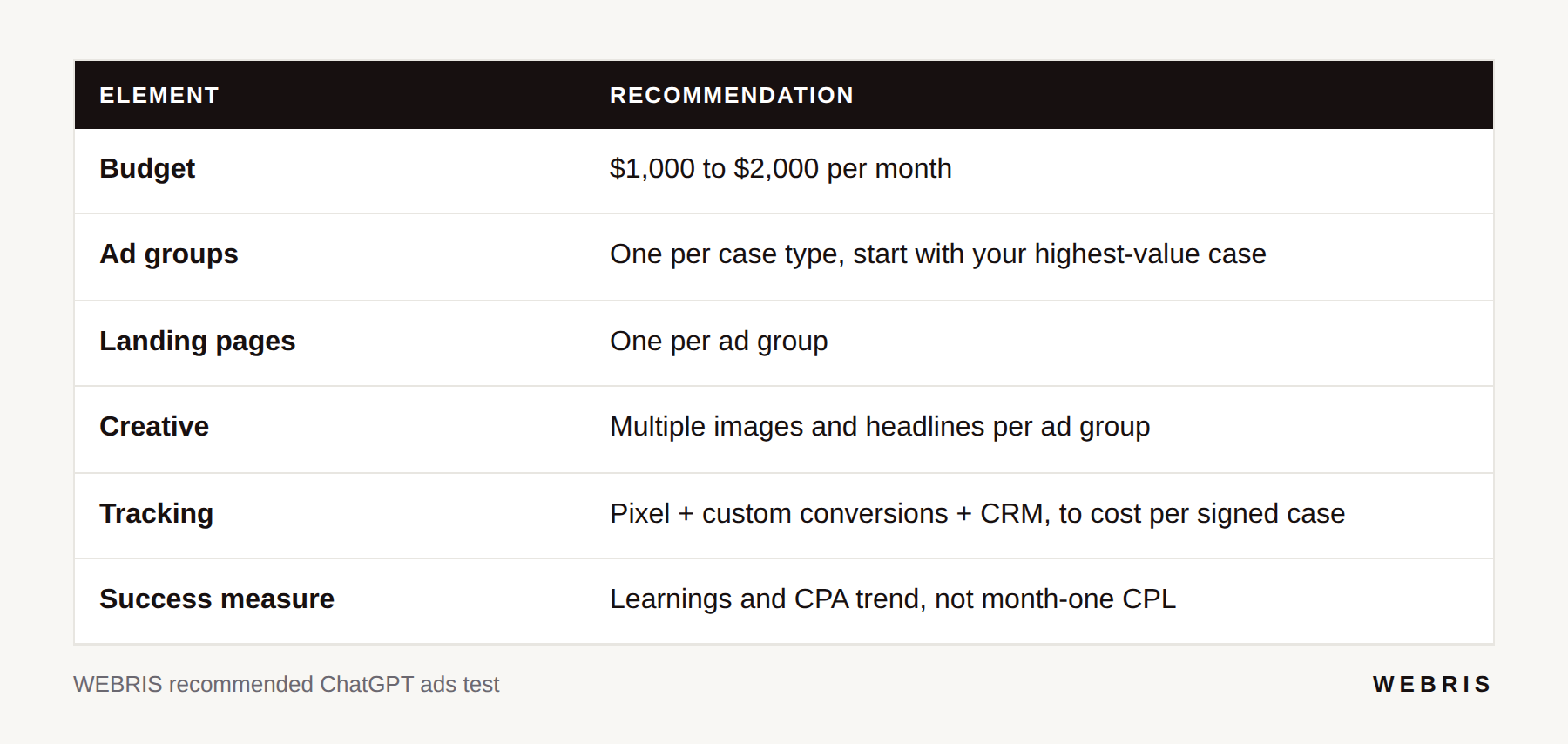
Start with $1,000 to $2,000 a month, a few case-type ad groups, and full tracking from day one.
| Element | Recommendation |
|---|---|
| Budget | $1,000 to $2,000 per month |
| Ad groups | One per case type, starting with your highest-value case |
| Landing pages | One per ad group |
| Creative | Multiple images and headlines per ad group |
| Tracking | Pixel + custom conversions + CRM, to cost per signed case |
| Success measure | Learnings and CPA trend, not month-one CPL |
Every injury case is a one-time client. You always need more, and you always need new channels.
That's why I think this is the best new opportunity we've had in a while.
FAQ
How Much Do ChatGPT Ads Cost For Lawyers?
In our own account, clicks cost $20 to $40 per click and leads about $700 each. That's at about $1,500 a month in spend.
These numbers are from early tests and will change as more firms enter the auction.
Can I Target Specific Keywords With ChatGPT Ads?
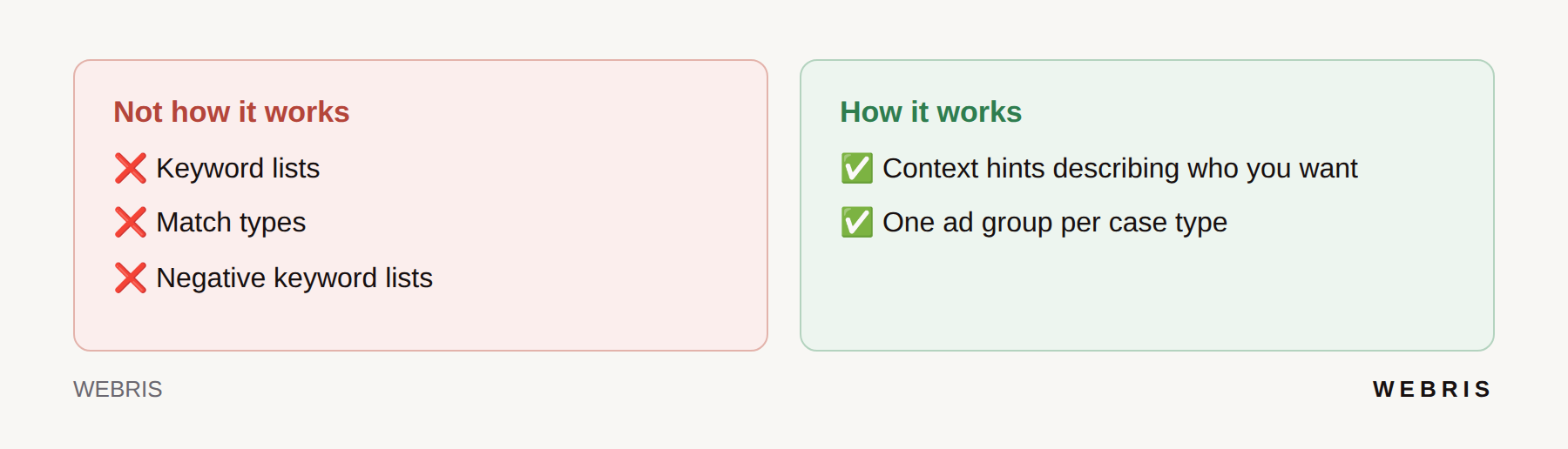
No. ChatGPT isn't a keyword platform. You describe who you want to reach in context hints, and ChatGPT matches your ad to relevant conversations.
Should ChatGPT Ads Replace Google Or Meta?
No. Google and Meta are where your proven cost per case lives. ChatGPT is a low-cost test you run alongside them.
Showing up in ChatGPT's answers organically is a separate play. That's GEO for lawyers.